Author: KC2NJ

  • Repeaters: What They Are and How to Use Them (v2)

    Repeaters: What They Are and How to Use Them (v2)

    This article is an updated and modernized version of concepts presented in the ARRL document “Repeaters – what are they and how to use them”. The focus here remains traditional analog FM repeater operation.

    What Is an FM Repeater?

    VHF and UHF FM repeaters remain one of the easiest ways for new amateur radio operators to get on the air, meet local operators, participate in nets, and support public-service and emergency communications. Although newer digital and internet-linked systems are now common, traditional analog FM repeaters continue to be widely used and are an important part of amateur radio.

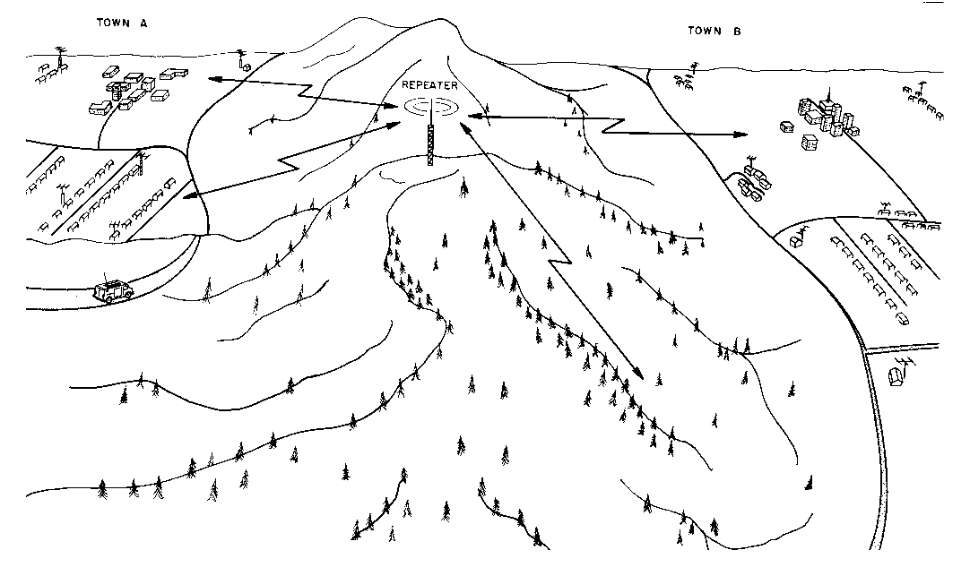
    A repeater receives a signal on one frequency and retransmits it on another frequency. Because repeaters are often located on towers, tall buildings, mountains, or other favorable sites, they can greatly extend the range of handheld, mobile, and fixed stations.

    The basic idea is simple: your radio transmits to the repeater, and the repeater retransmits your signal over a much wider area than your station could usually cover by itself.

    Simplex vs. Repeater Operation

    In simplex operation, two stations communicate directly on the same frequency. No repeater is involved. This is the simplest form of VHF/UHF FM communication.

    In repeater operation, your radio listens on the repeater’s output frequency and transmits on the repeater’s input frequency. The repeater receives your signal on its input and retransmits it on its output. This allows stations that might not be able to hear each other directly to communicate through the repeater.

    Repeater Output, Input, and Offset

    Repeaters use two frequencies:

    • Output frequency: the frequency the repeater transmits on and the frequency you listen to.
    • Input frequency: the frequency the repeater receives on and the frequency you transmit on.

    The difference between the input and output frequencies is called the offset or shift. The offset amount and direction vary by band and local band plan. On many 2-meter FM repeaters, for example, the standard offset is 600 kHz. On many 70-centimeter repeaters, the standard offset is 5 MHz.

    Repeater listings usually show the repeater’s output frequency, offset direction, and any access tone required. This article explains the operating concepts. Specific radio-programming steps vary by manufacturer and model.

    Access Tones: CTCSS, PL, and DCS

    Many FM repeaters require an access tone. The most common type is CTCSS, often called PL. Some repeaters use DCS. These tones help prevent a repeater from being activated by unwanted signals, interference, or distant stations using the same frequency pair.

    If the correct tone is not transmitted, the repeater may not respond even if you are on the correct frequency and using the correct offset.

    Tone access is not privacy. FM repeater communications are still public amateur-radio transmissions.

    Open and Closed Repeaters

    Many repeaters are open repeaters, meaning they are available for use by any properly licensed amateur operator who follows the repeater’s rules and good operating practice.

    Some repeaters are closed repeaters, meaning they are intended only for use by members of a specific group, organization, or authorized users. Closed repeaters are less common, but they may still exist. If you are unsure whether a repeater is open, check with the repeater sponsor, trustee, or local club before using it.

    Listen First

    Before transmitting on a repeater, listen for a while. Make sure the repeater is not already in use. Local operating customs can vary, and a few minutes of listening can tell you a lot about how the repeater is normally used.

    Listening first also helps avoid interrupting an ongoing conversation, a directed net, emergency traffic, or a public-service operation.

    Making Your First Repeater Contact

    If the repeater is quiet and you want to see if anyone is available, do not repeatedly call CQ as you might on HF. On most FM repeaters, simply identify and say that you are listening:

    W1AW listening.

    You may also say:

    W1AW monitoring.

    To call a specific station, give the other station’s call sign followed by your own:

    K1ABC, W1AW.

    To join an ongoing conversation, wait for a pause and give your call sign:

    W1AW.

    One of the stations already using the repeater should acknowledge you and give you a chance to speak.

    If you are testing whether you can access the repeater, identify properly and keep it brief:

    W1AW testing.

    Do Not Kerchunk

    Do not “kerchunk” a repeater by briefly pressing the push-to-talk button without identifying. Keying up a repeater without giving your call sign is improper and may violate identification requirements.

    If you want to test whether you can access the repeater, identify and say “testing.”

    W1AW testing.

    Calling CQ on Repeaters

    Calling CQ is common on HF, but it is usually unnecessary on local FM repeaters. A simple call sign followed by “listening” or “monitoring” is normal practice in many areas.

    Local custom may vary. If experienced local operators use a particular style on a repeater, follow the local practice as long as it is consistent with good amateur procedure.

    Repeater Etiquette

    Repeaters are shared resources. Good operating habits make them more useful for everyone.

    • Listen before transmitting.
    • Identify with your call sign.
    • Keep transmissions reasonably short.
    • Leave a pause between transmissions.
    • Acknowledge stations that try to enter the conversation.
    • Do not monopolize the repeater.
    • Follow the instructions of the repeater trustee, control operator, or net control station.

    During nets, severe weather, public-service events, emergencies, or periods of heavy use, keep transmissions especially brief and leave room for priority traffic.

    Courtesy Tones, Pauses, and Time-Out Timers

    Many repeaters transmit a short courtesy tone after a user stops transmitting. This tone often indicates that the repeater is ready for the next station. Even if a repeater does not have a courtesy tone, it is good practice to leave a short pause before transmitting.

    Pausing between transmissions gives other stations a chance to enter the conversation. It also allows emergency or priority traffic to break in.

    Most repeaters also have a time-out timer. If one transmission continues too long, the repeater may shut down temporarily to protect the equipment and prevent continuous interference. Keep transmissions concise and release the push-to-talk button periodically.

    Identification

    Amateur stations must identify with their FCC-issued call sign at the end of a contact and at least every 10 minutes during a communication.

    You do not need to give the call sign of the station you are talking to, although doing so is common when calling another station or passing a transmission to someone else. The important requirement is that you identify your own station properly.

    Plain Language Is Best

    Use plain language on FM repeaters. If you want to know someone’s location, ask where they are. If you want to know what kind of radio they are using, ask directly.

    Q-signals and radio shorthand have their place, especially in CW and some HF operating, but clear plain language is usually best on local FM repeaters.

    Linked FM Repeaters

    Some analog FM repeaters are linked to other repeaters or internet-connected systems. Examples may include RF-linked repeater networks, EchoLink, AllStarLink, IRLP, or other linking technologies.

    On linked systems, leave a slightly longer pause between transmissions. Key the microphone, wait a moment, and then begin speaking. This helps prevent the first word or two from being cut off and gives other stations time to enter the conversation.

    Avoid rapid back-and-forth exchanges on large linked systems. A short pause helps the system operate more smoothly and gives distant stations a fair chance to participate.

    A Note About Digital Voice and Hotspots

    This guide focuses on traditional analog FM repeaters. Many amateur radio operators also use digital voice systems such as DMR, D-STAR, System Fusion, P25, or NXDN. Some operators also use personal hotspots.

    Those systems may require additional settings such as talkgroups, reflectors, rooms, modules, color codes, time slots, RANs, or NACs. They have their own operating procedures. Even so, the basic habits described here still matter: listen first, identify properly, leave pauses, and be courteous.

    Nets on Repeaters

    Repeaters are often used for nets. A net is an organized on-air gathering, usually directed by a net control station. Nets may be used for club announcements, training, emergency communications practice, weather reporting, public-service events, or general check-ins.

    During a directed net, listen to the net control station and follow instructions. Check in when invited, give your call sign clearly, and keep comments brief unless asked for more detail.

    Do not interrupt a net unless you have emergency or priority traffic.

    Emergency and Priority Traffic

    For emergency or priority traffic, be clear and direct. State your call sign, location, the nature of the emergency, and what assistance is needed.

    “Break break” is commonly used to indicate emergency traffic. Do not use it casually.

    Break break, W1AW with emergency traffic.

    If you hear emergency traffic, stop transmitting unless you are directly involved or able to help. Allow the station with emergency traffic to communicate. If appropriate, help relay the information to the proper authorities.

    In a life-threatening emergency, use 911 or other public-safety channels when available. Amateur radio can be very useful, but it does not replace normal emergency services.

    Moving to Simplex

    If two stations can hear each other directly, consider moving from the repeater to a simplex frequency. This leaves the repeater available for stations that need it.

    One way to check whether simplex might work is to listen on the repeater input frequency. If you can clearly hear the other station on the repeater input, you may be close enough to communicate directly on simplex.

    Use a frequency designated for FM simplex operation. Always listen first and follow your local band plan.

    The 146.520 MHz Calling Frequency

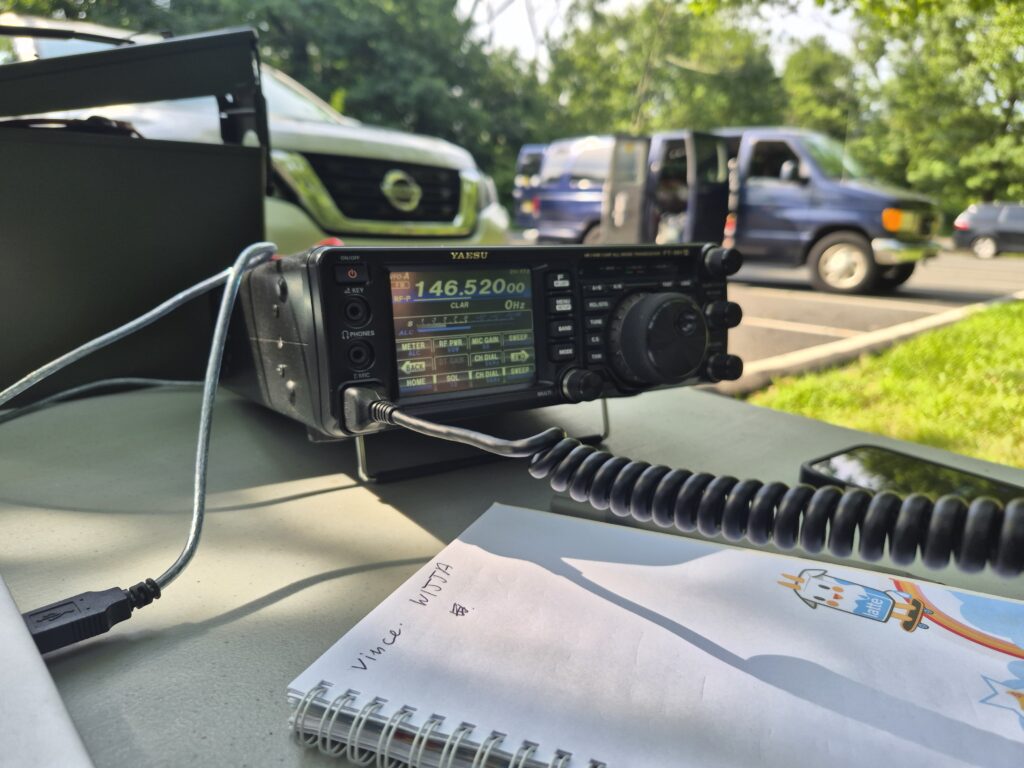
    The national 2-meter FM simplex calling frequency is 146.520 MHz. It is useful for making initial contact, especially while traveling or monitoring for nearby activity.

    Extended rag-chewing is not encouraged on 146.520 MHz. If a conversation is likely to continue, move to another appropriate simplex frequency after making contact.

    Finding Repeaters

    Repeater information can be found through local clubs, repeater sponsors, frequency coordinators, and online repeater directories. Because repeater listings can become outdated, verify the frequency, offset, tone, mode, and access rules before assuming a repeater is active and open for general use.

    Local amateur radio clubs are often the best source of practical information. Club members can tell you which repeaters are active, which nets are beginner-friendly, and what local operating customs are common in your area.

    Common FM Repeater Mistakes

    • Transmitting without listening first.
    • Using the wrong offset direction.
    • Using the wrong access tone.
    • Speaking too quickly after pressing push-to-talk.
    • Not leaving a pause between transmissions.
    • Making long transmissions that hit the time-out timer.
    • Calling CQ repeatedly on a local FM repeater.
    • Kerchunking without identifying.
    • Forgetting to identify every 10 minutes and at the end of a contact.
    • Using 146.520 MHz for extended rag-chewing instead of moving to another simplex frequency.

    Final Thoughts

    FM repeaters are one of the most accessible parts of amateur radio. They help new operators get on the air, support local communication, and provide a place for training, nets, public-service activity, and emergency communications.

    The best way to learn is to listen, identify properly, keep transmissions courteous, and participate. With a little practice, repeater operation becomes natural, and it opens the door to a much larger amateur radio community.
  • South Mountain Reservation: Activation & Meet Up

    South Mountain Reservation: Activation & Meet Up

    South Mountain Reservation: Activation & Meet Up

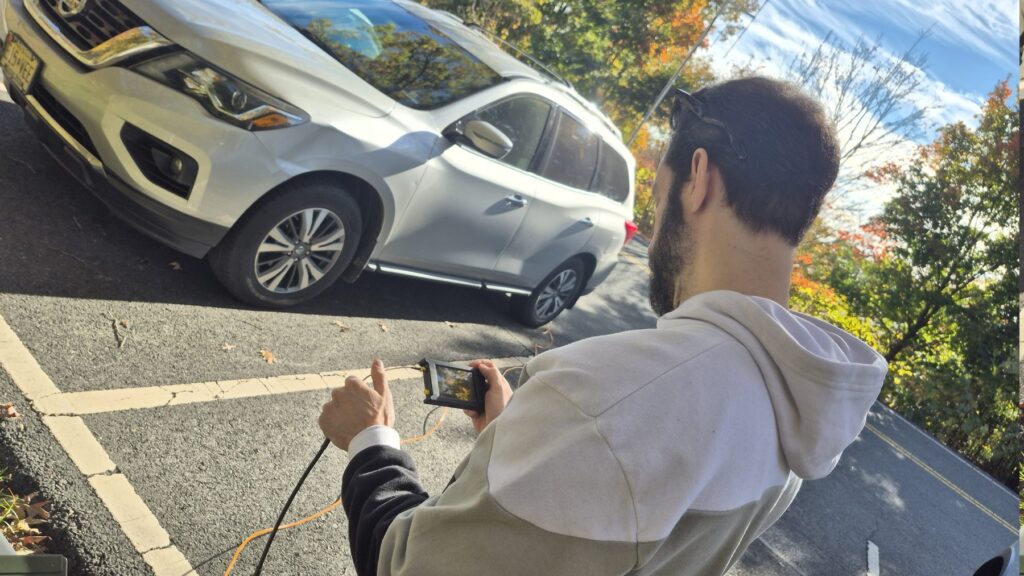
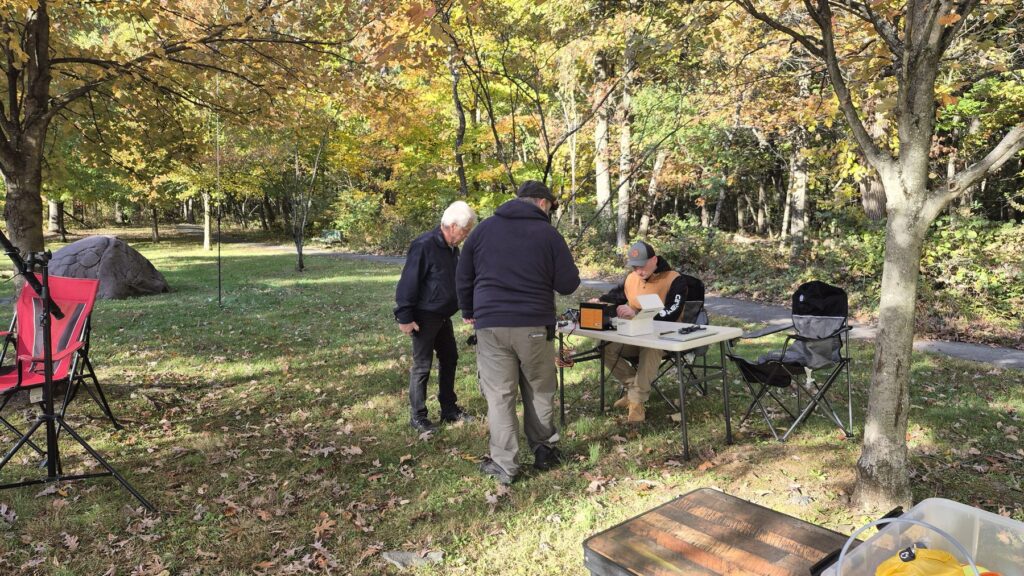
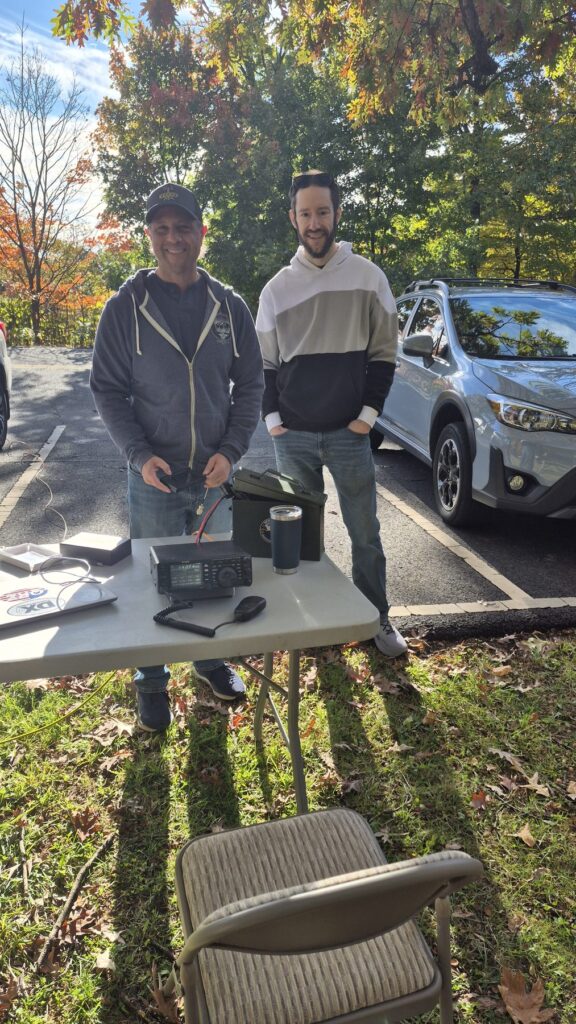
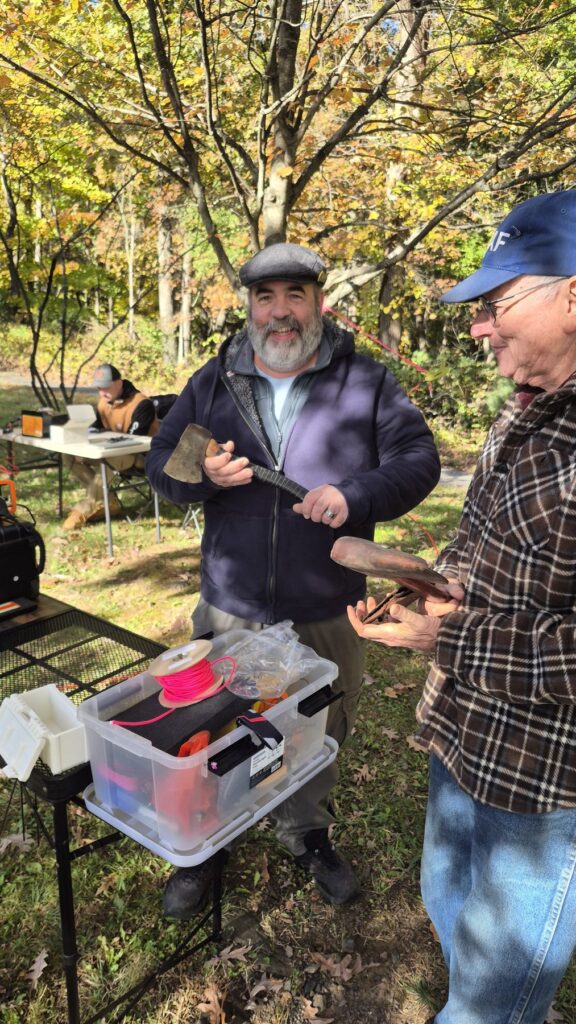
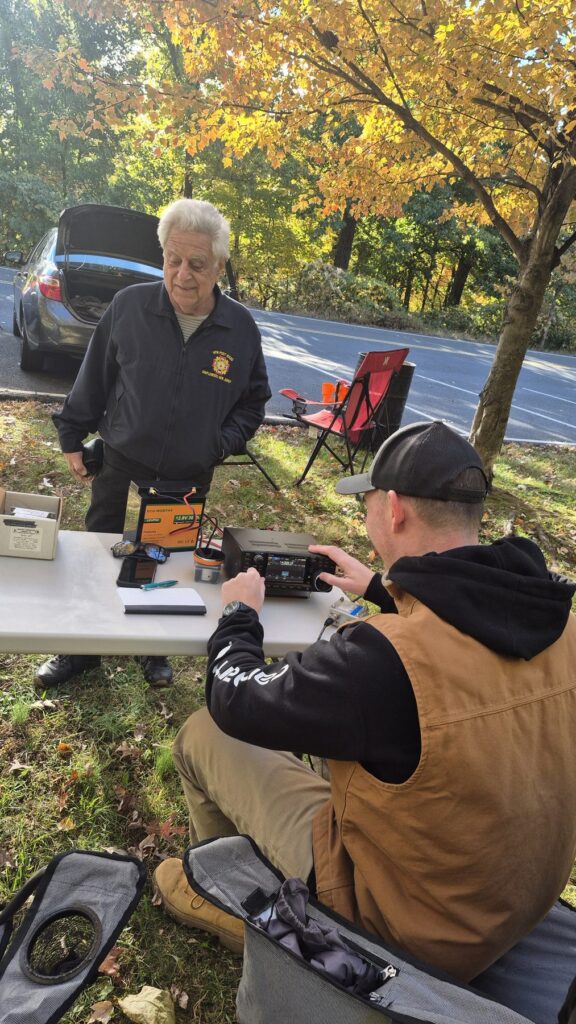
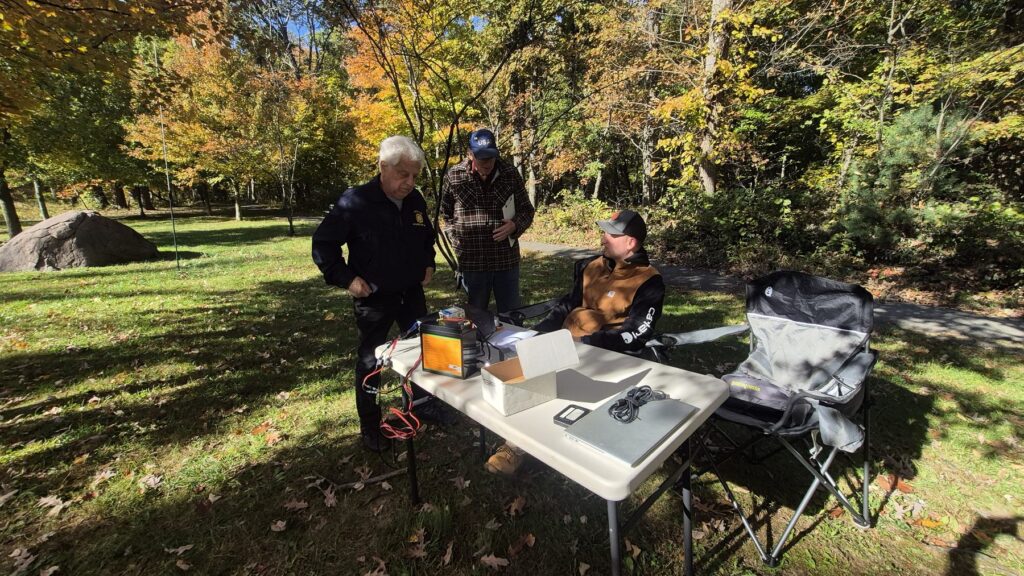
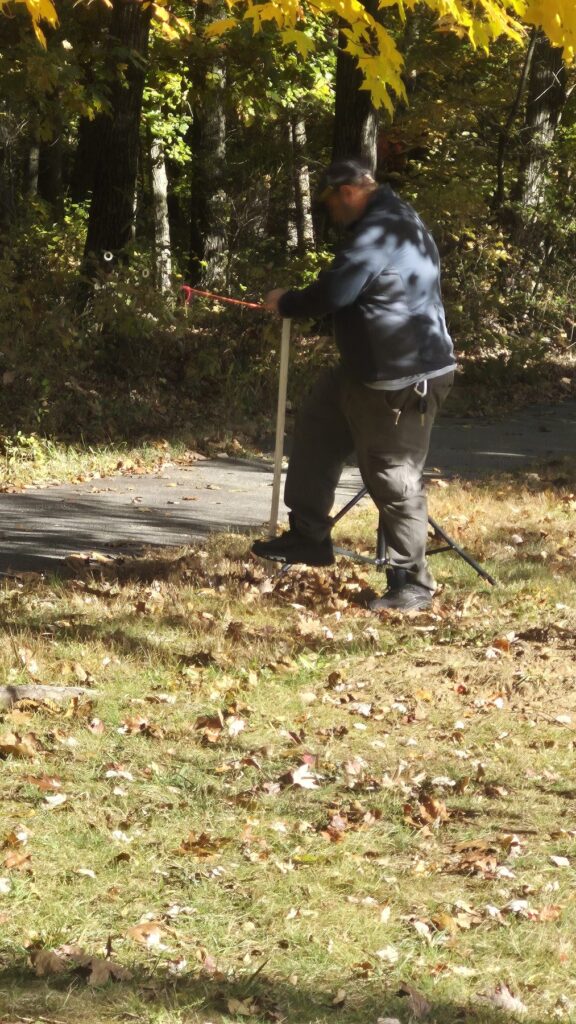
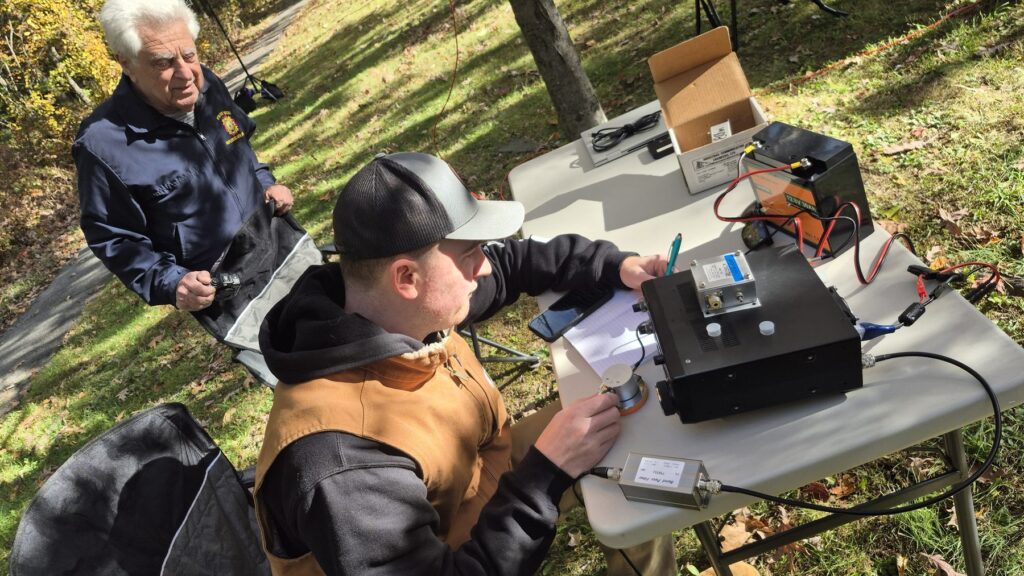
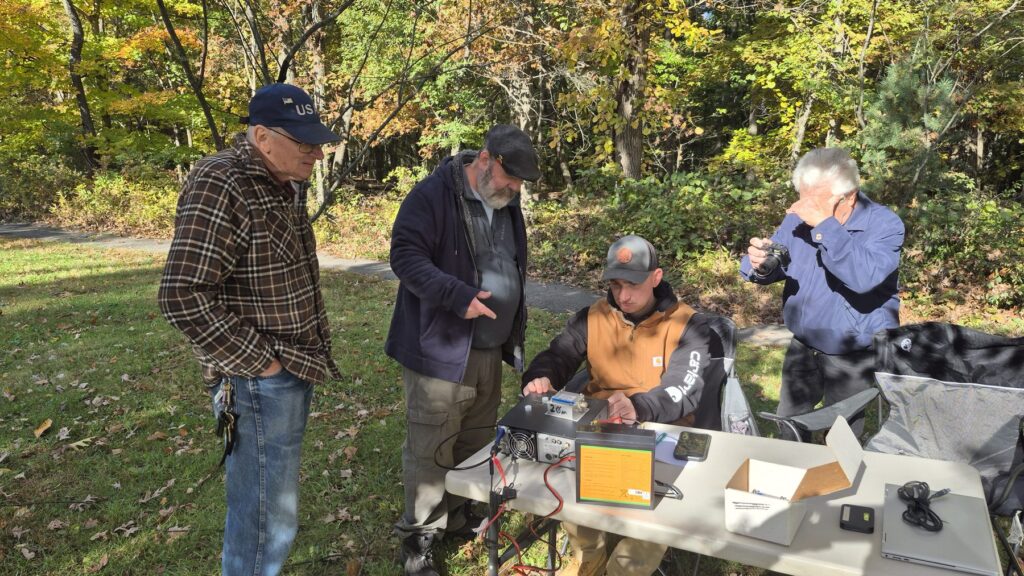
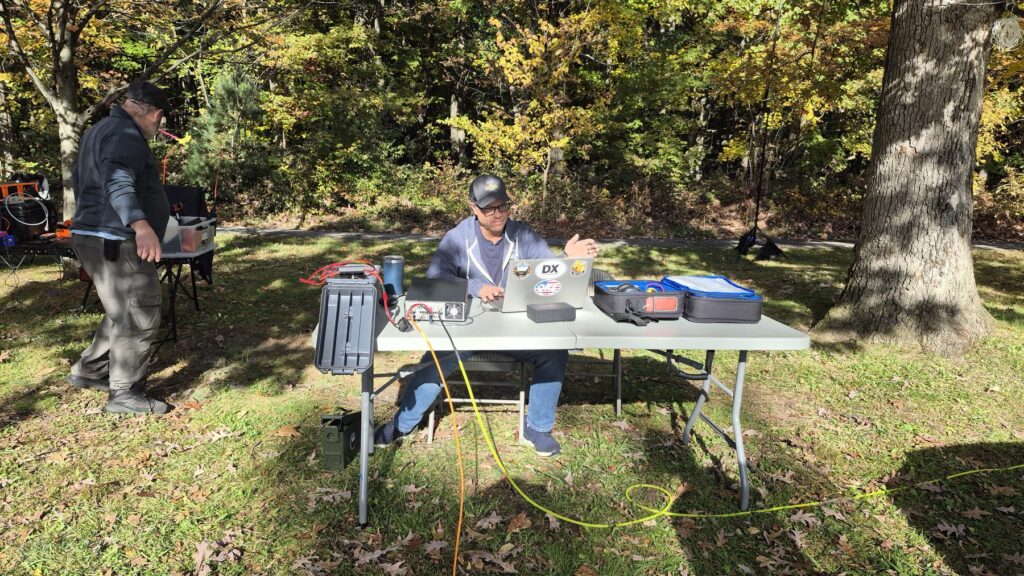
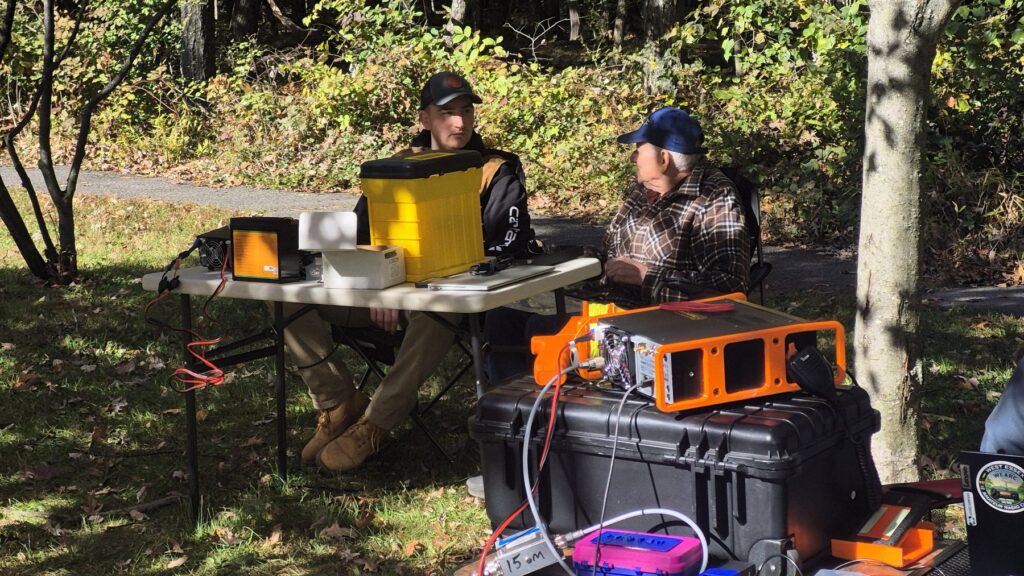
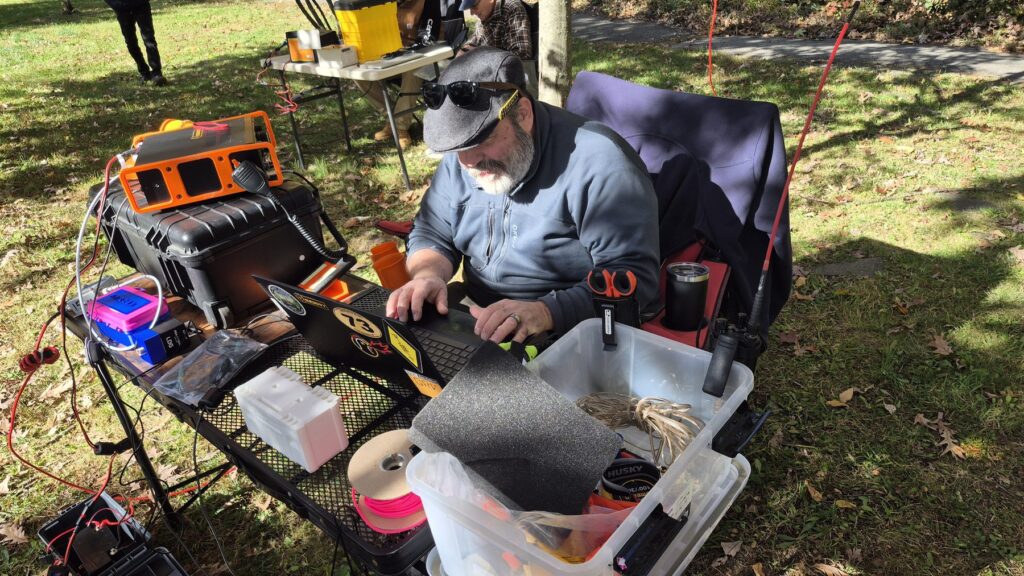
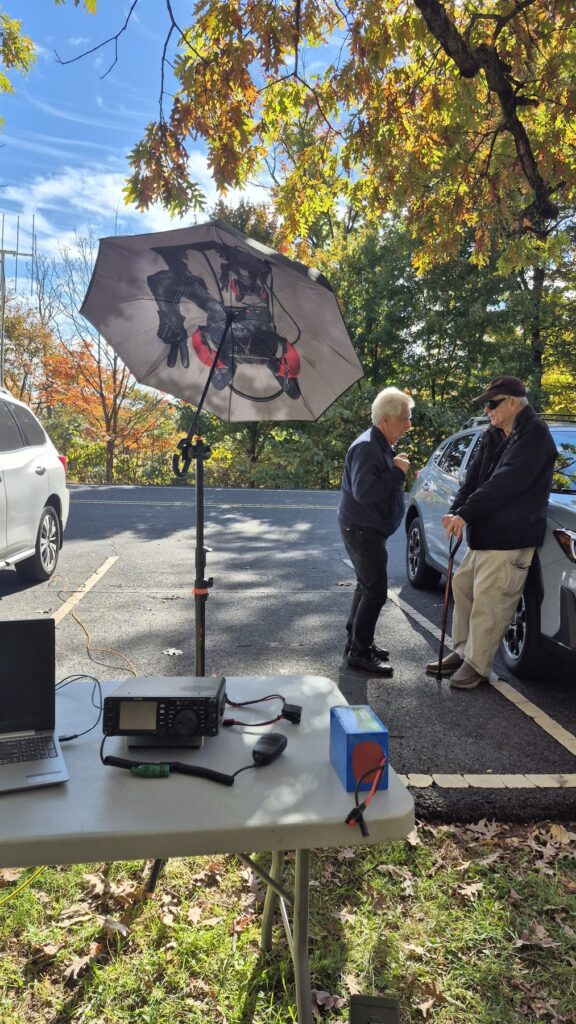
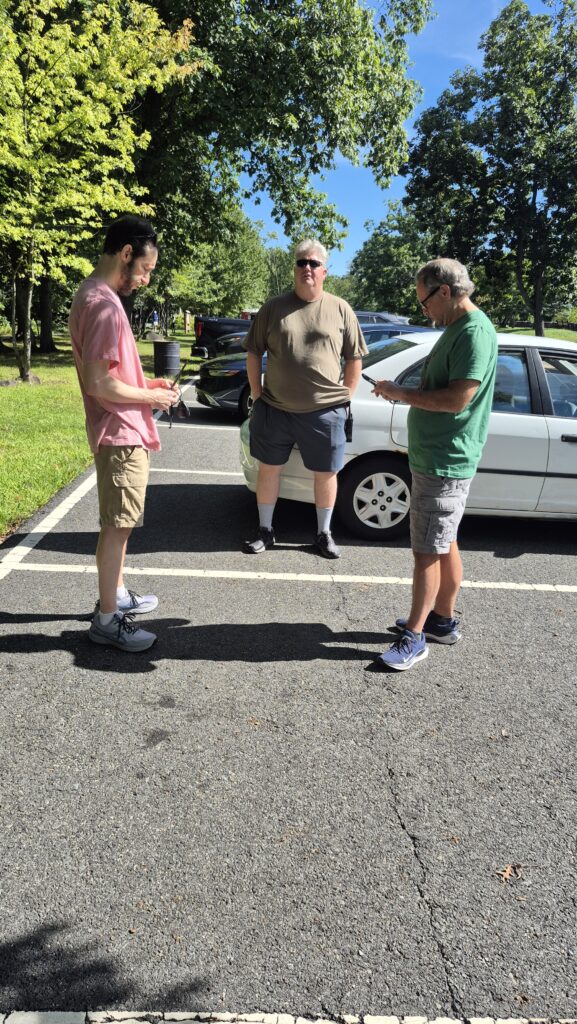
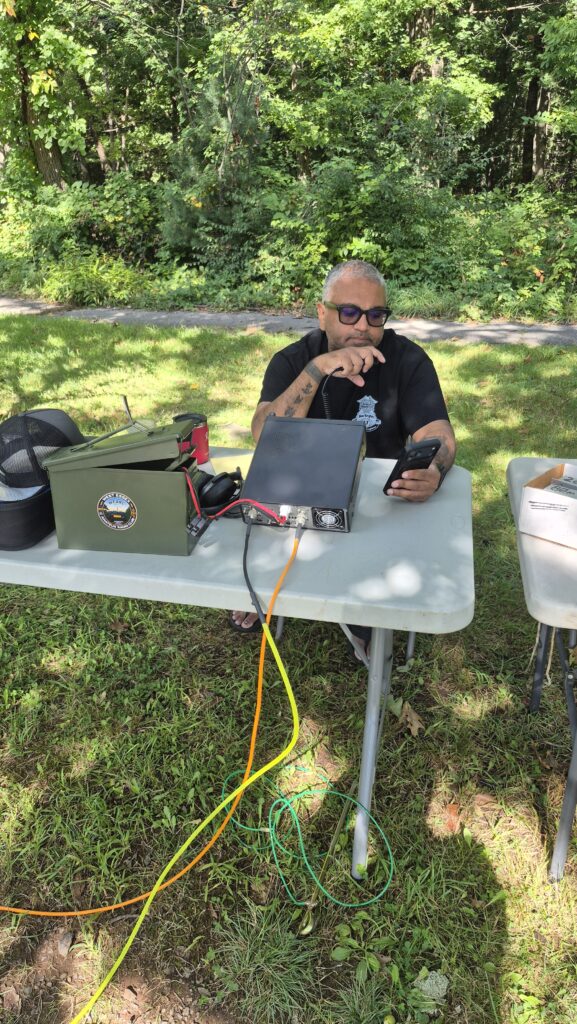
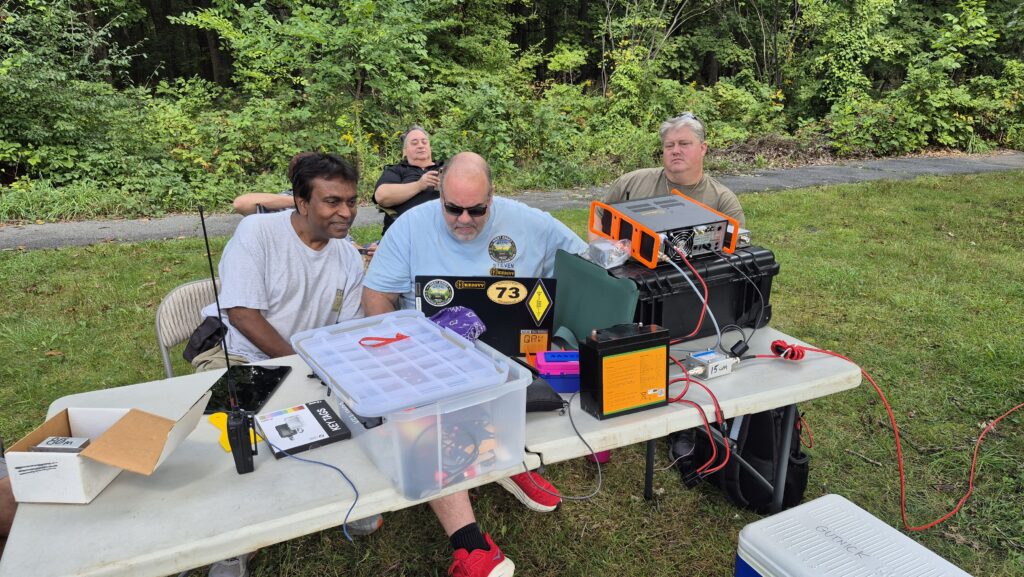
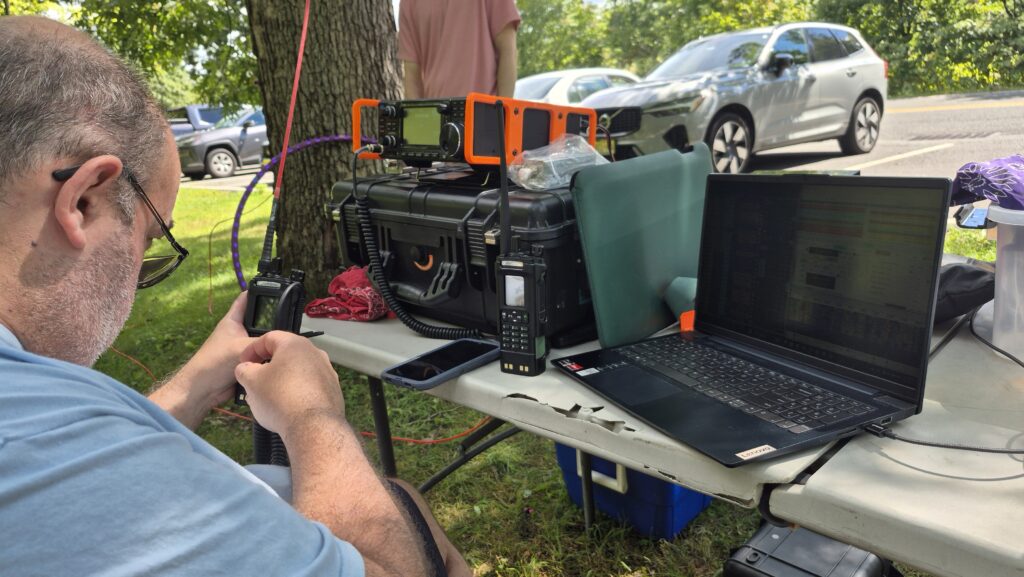
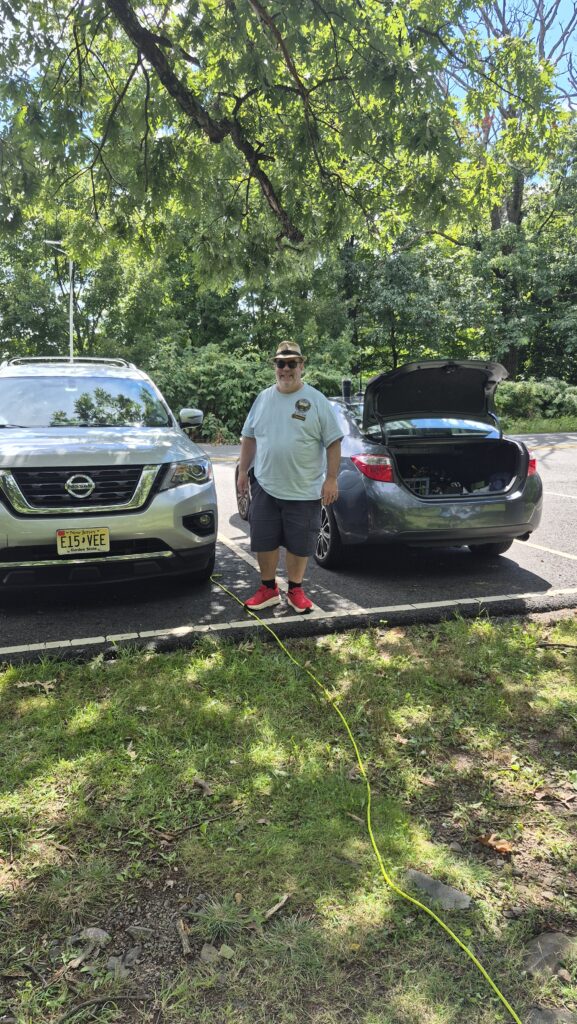
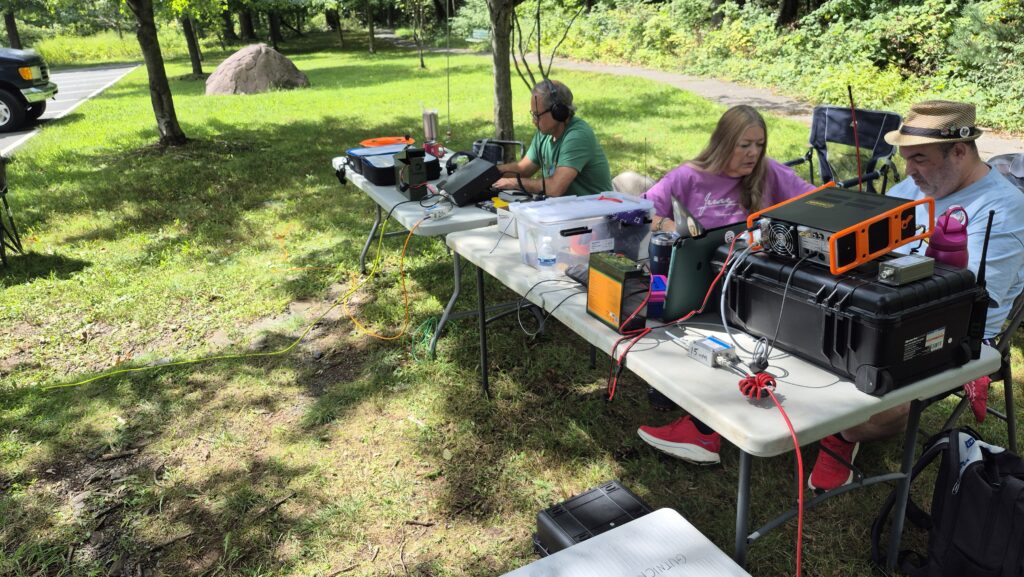
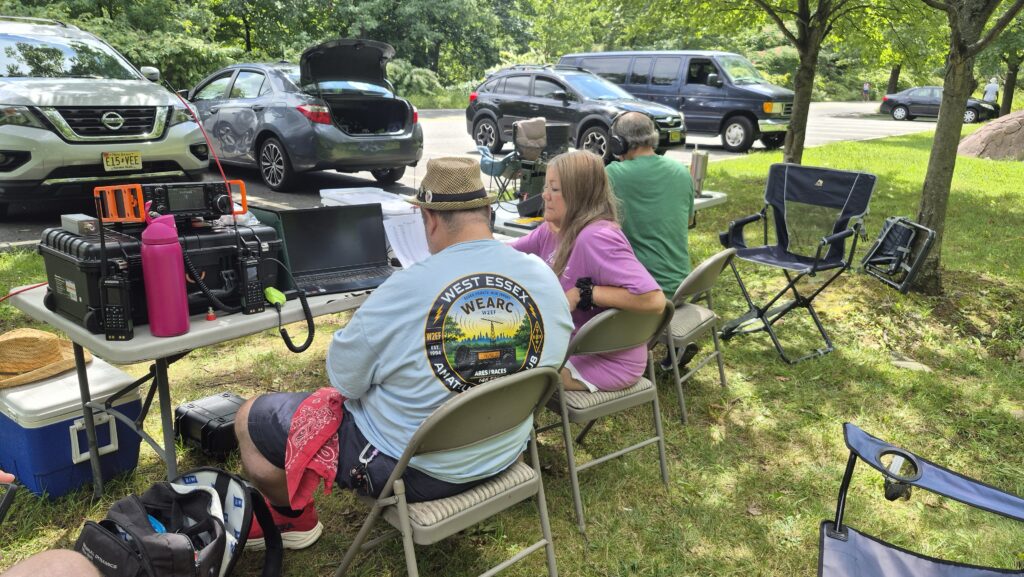
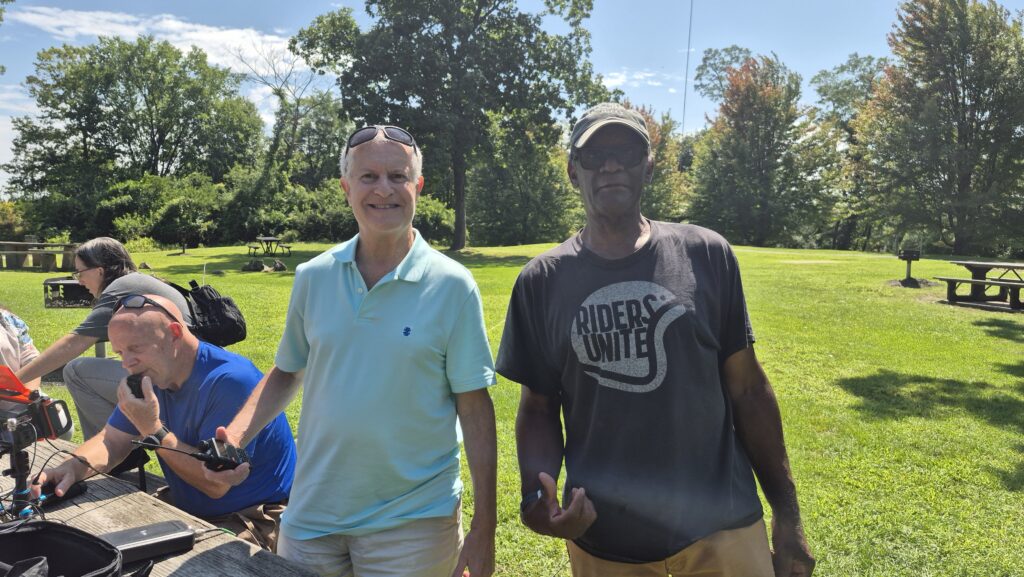
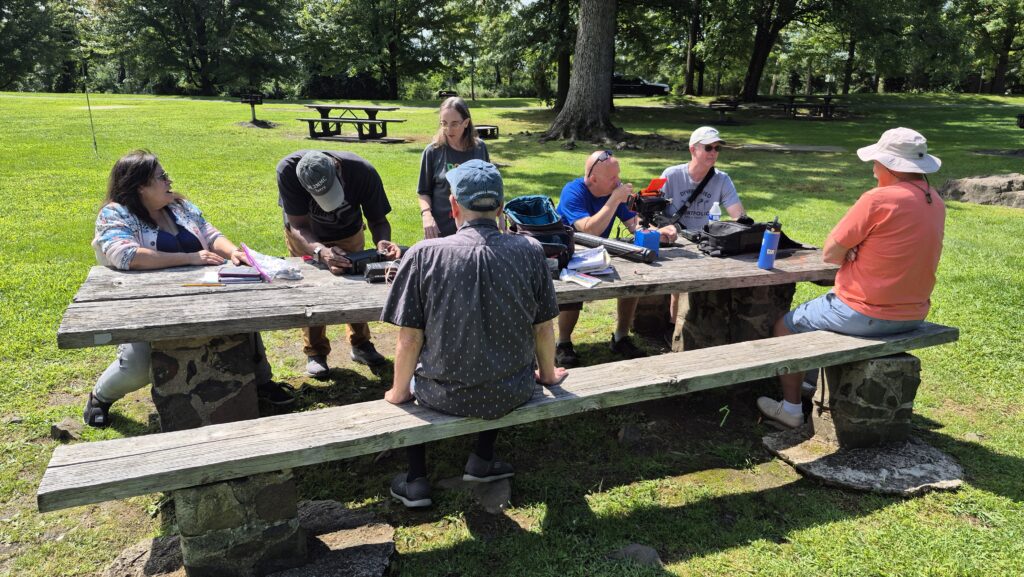
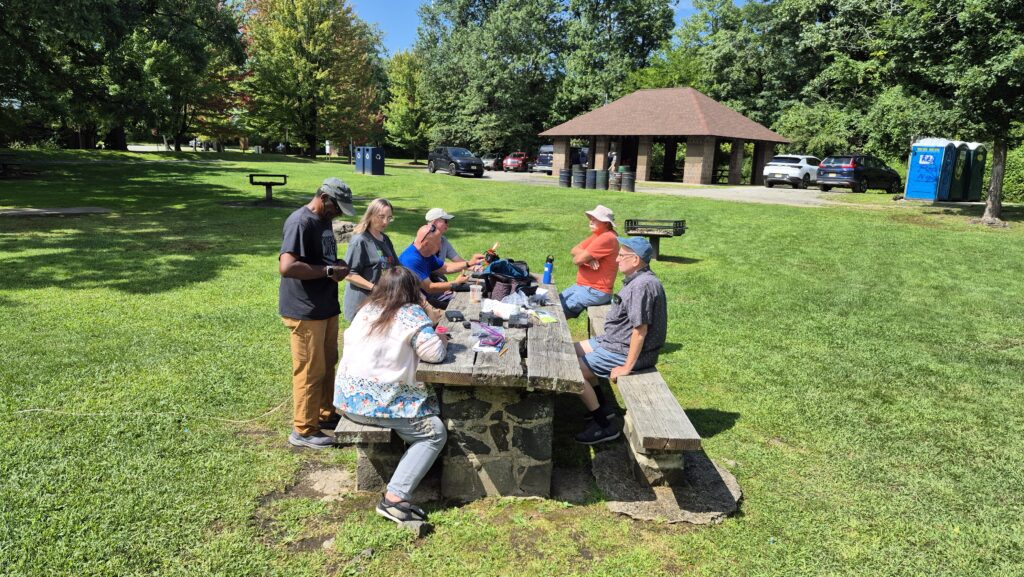
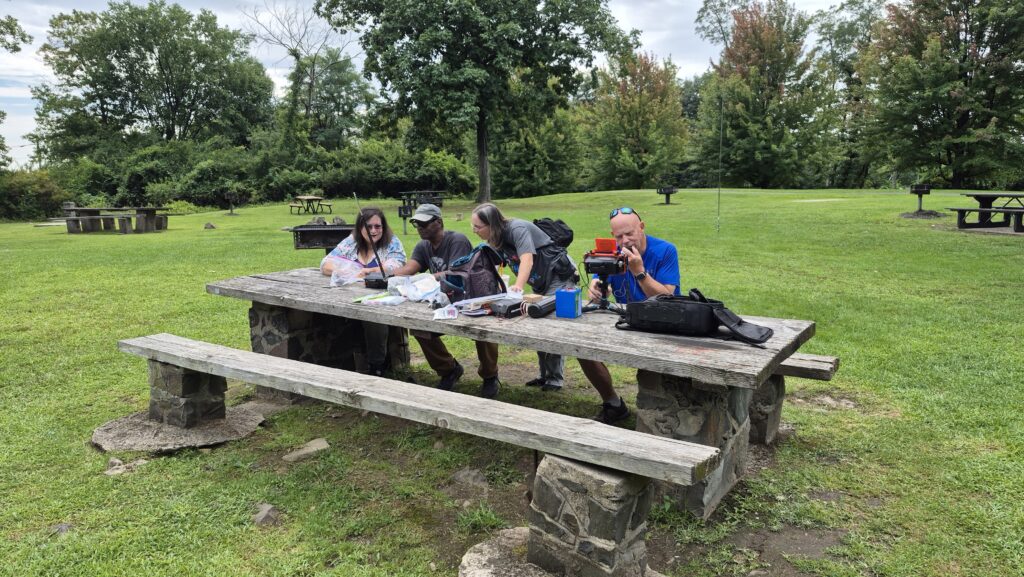
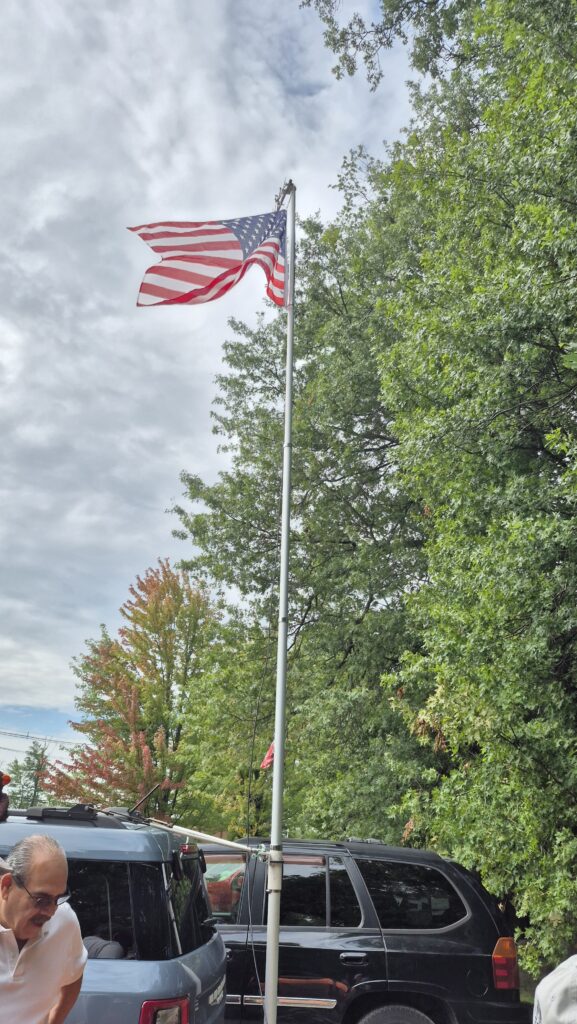
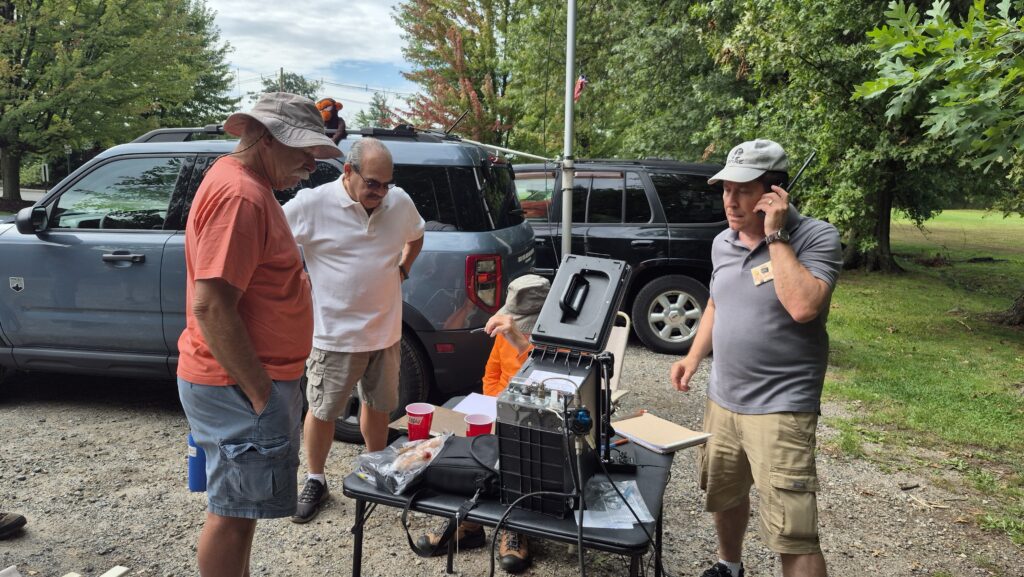
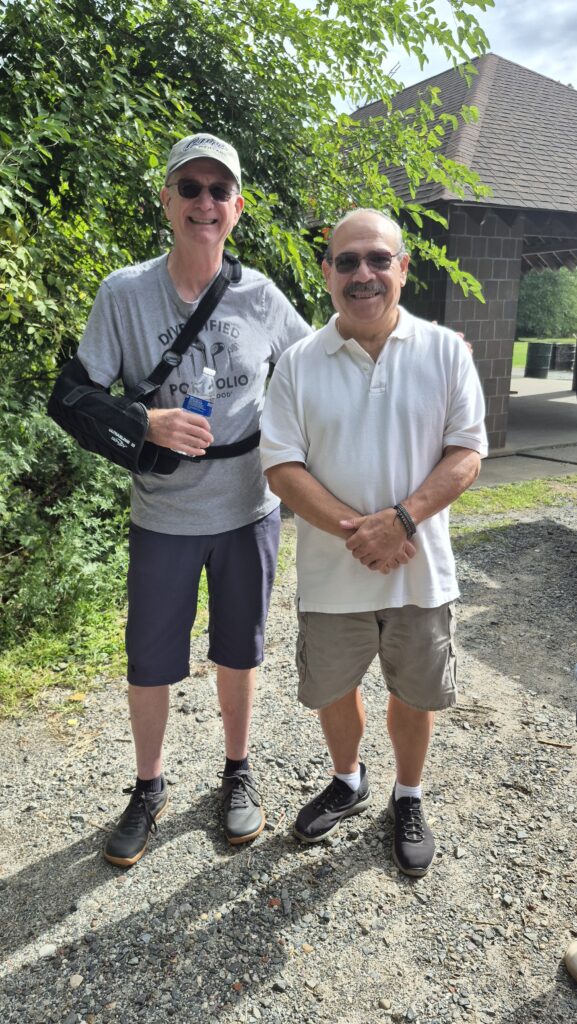
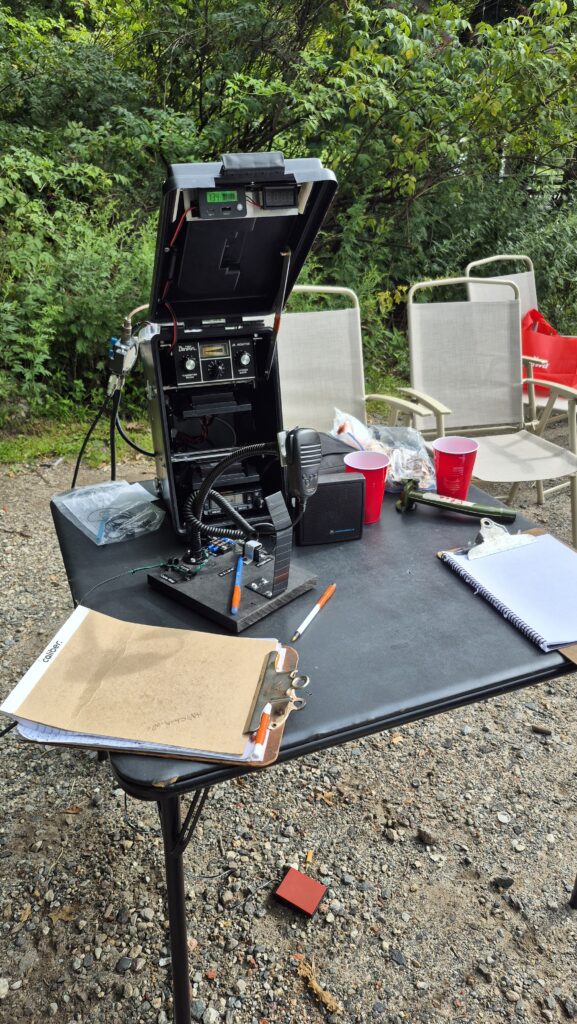
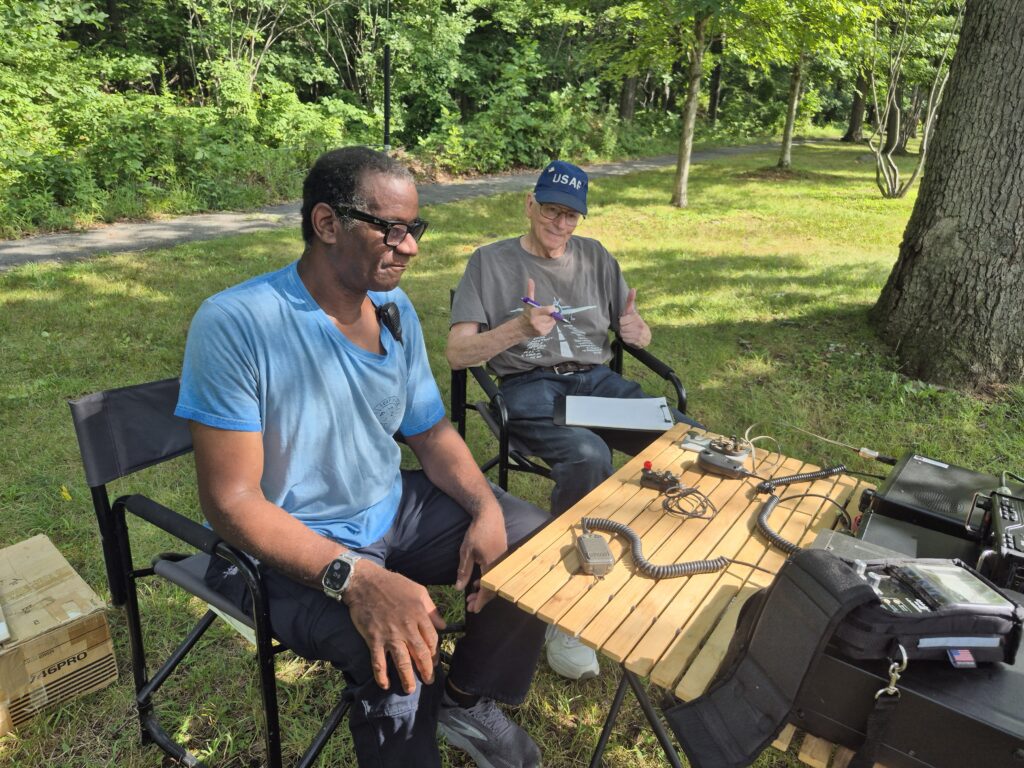
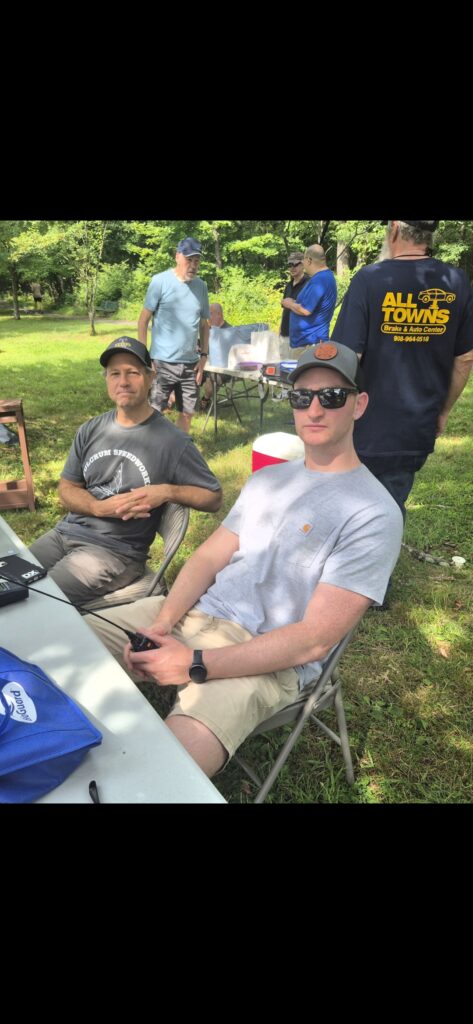
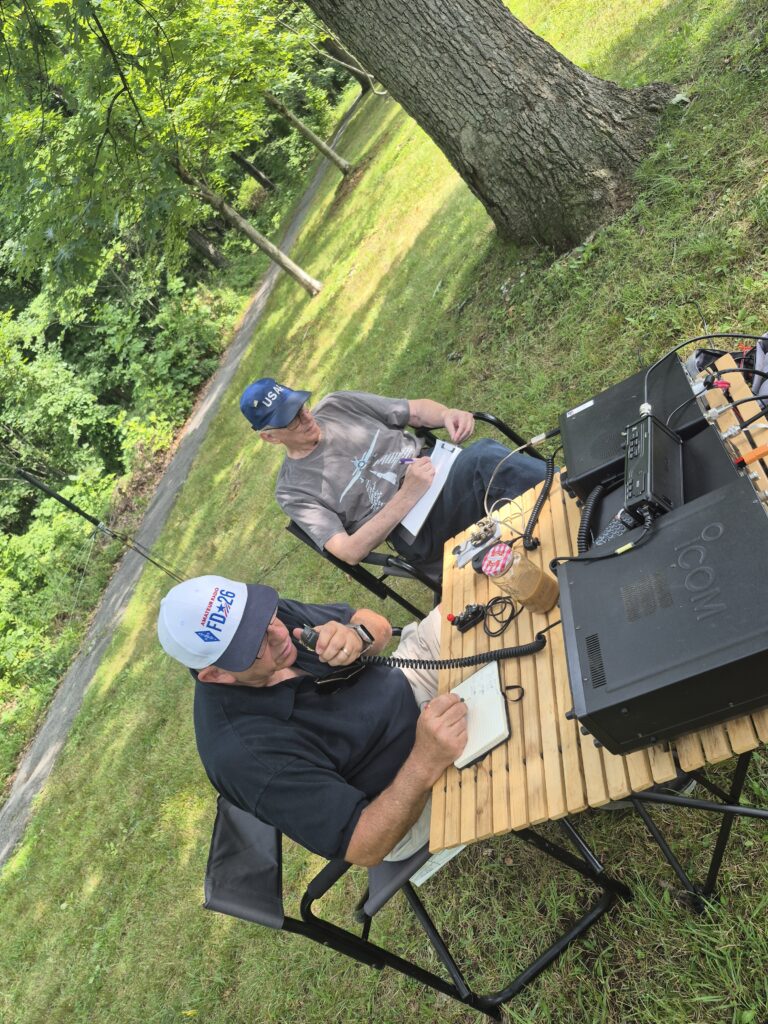
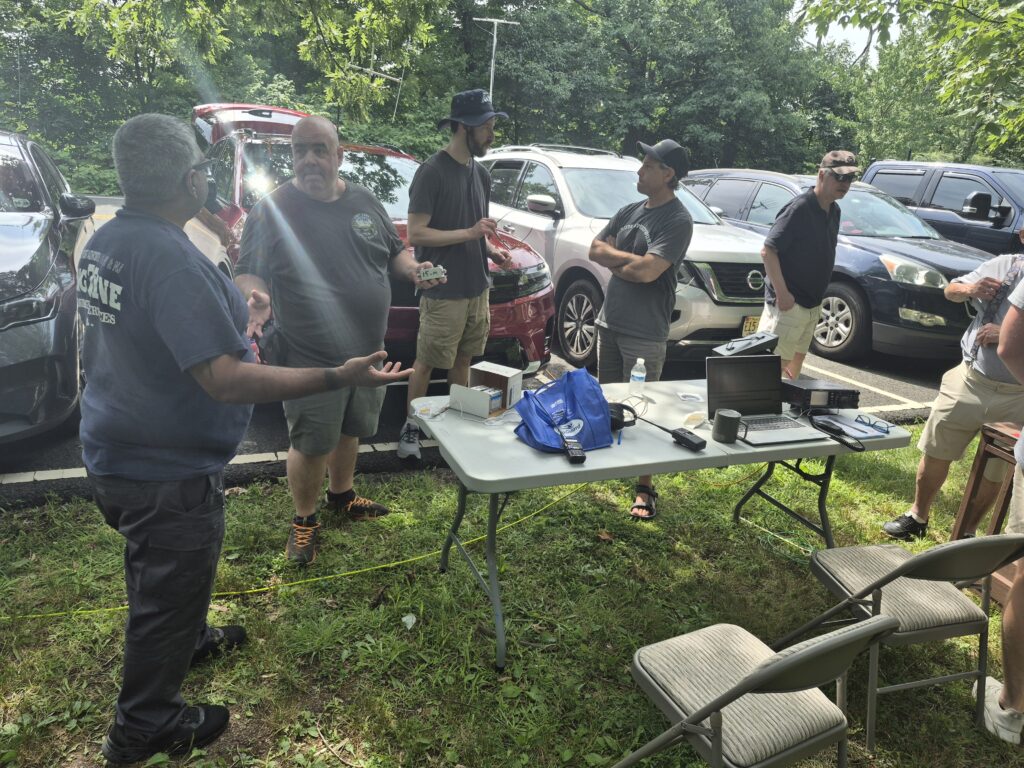
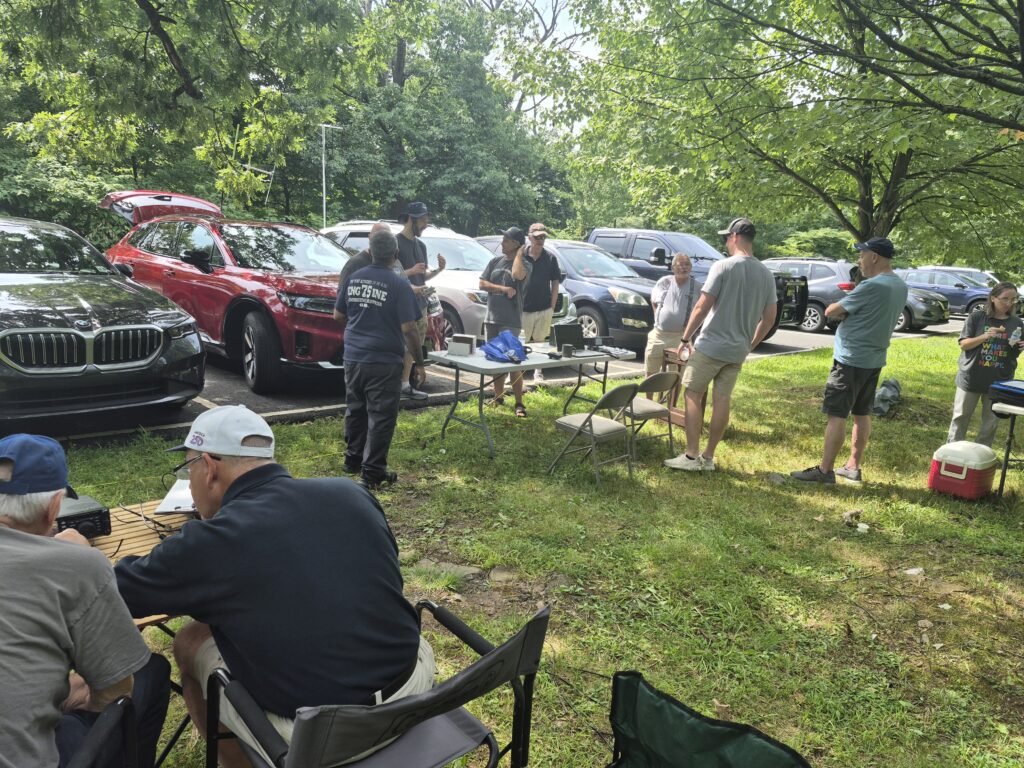
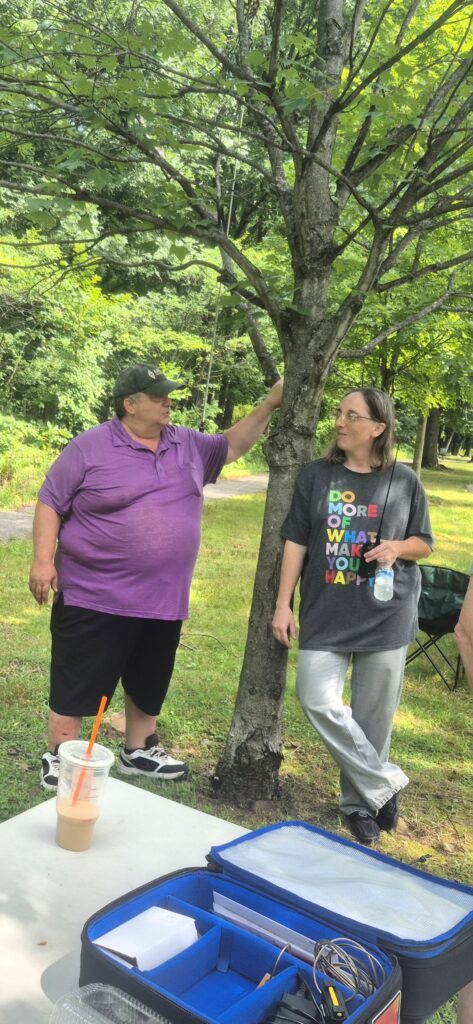
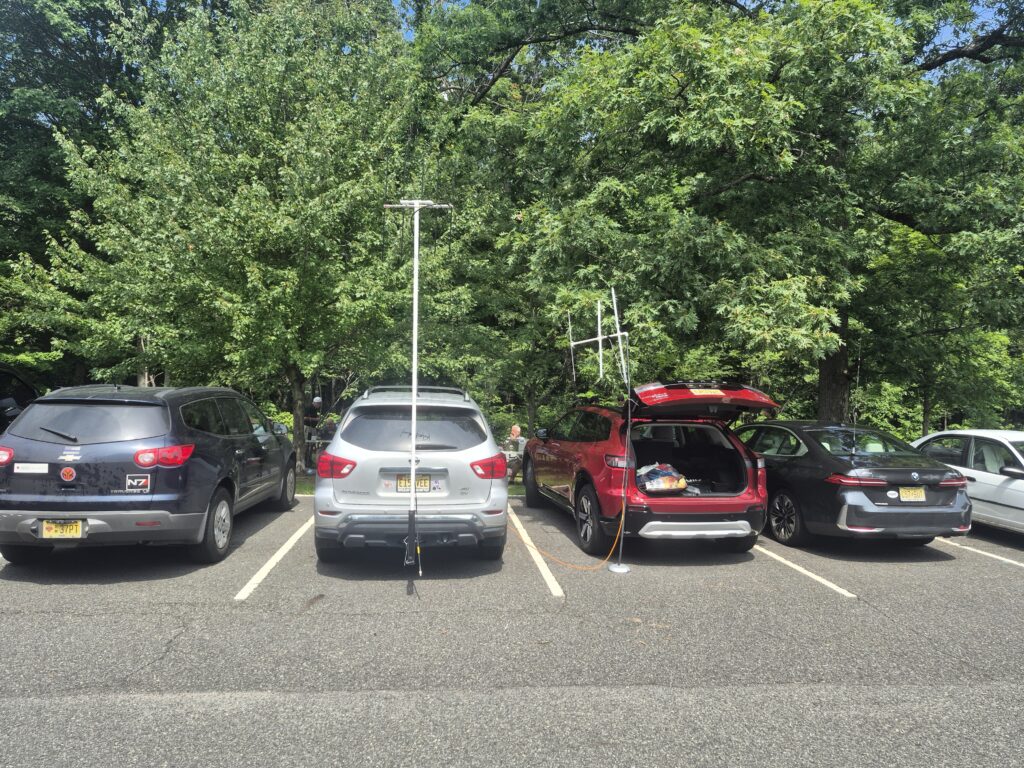
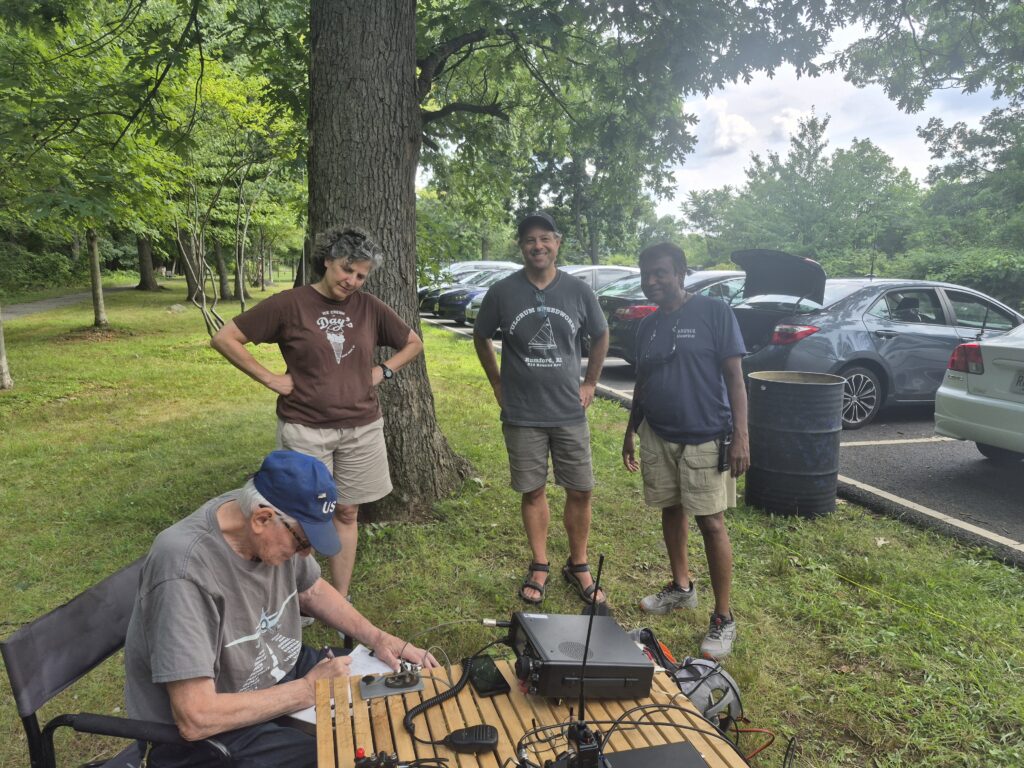
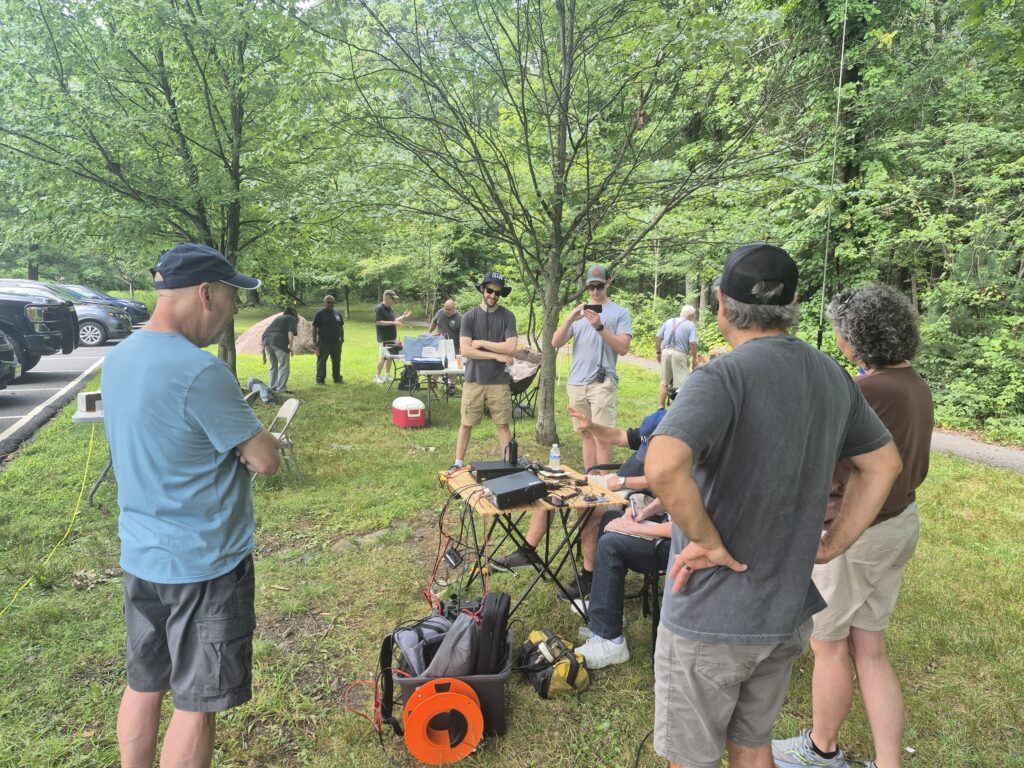
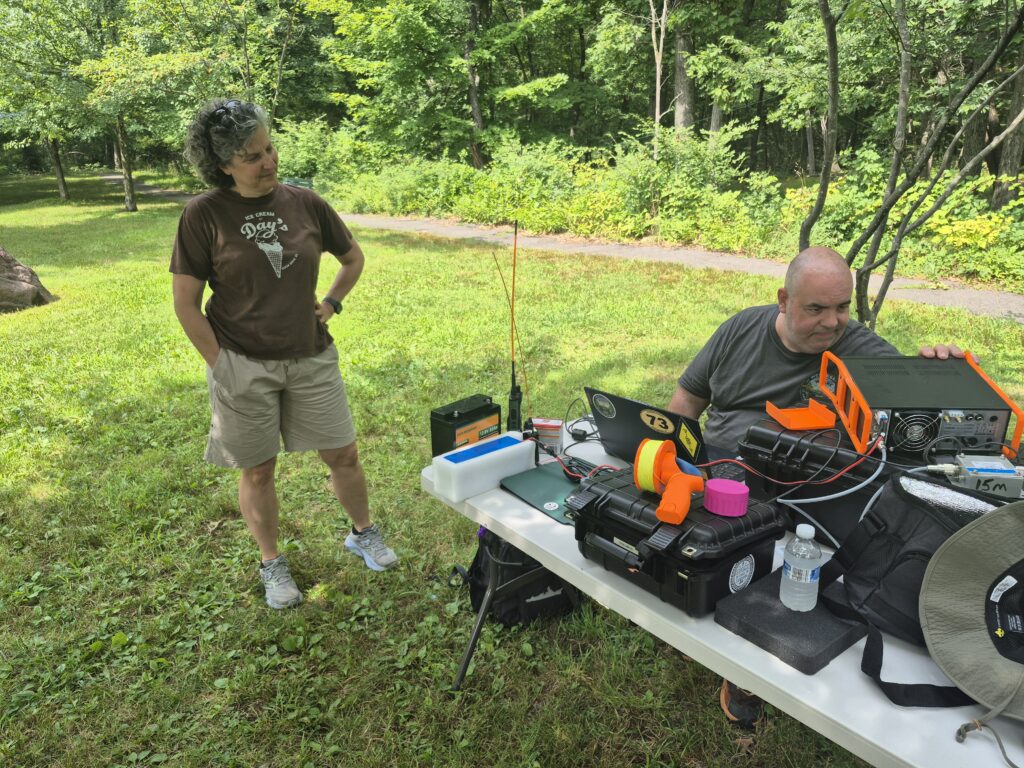
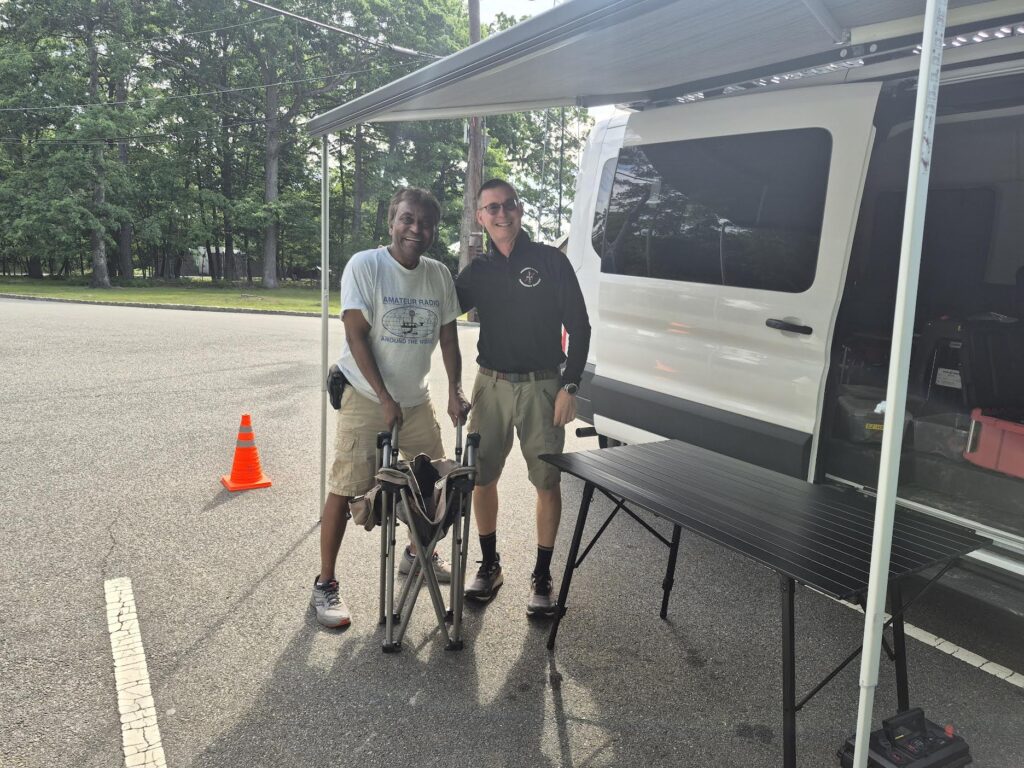
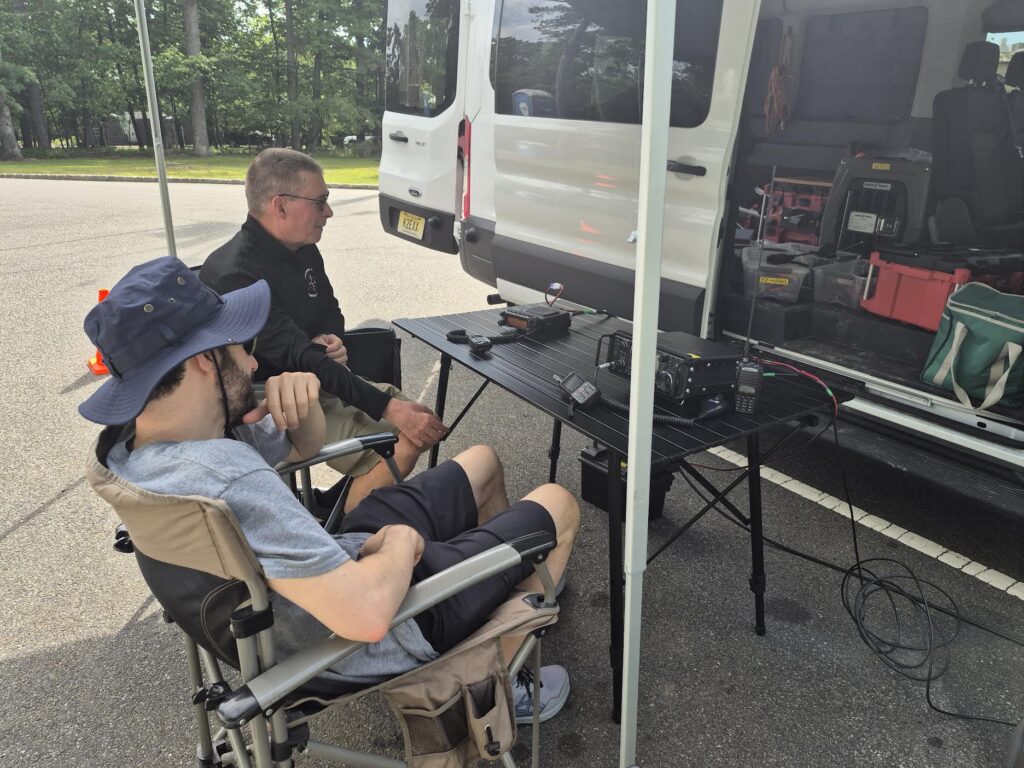
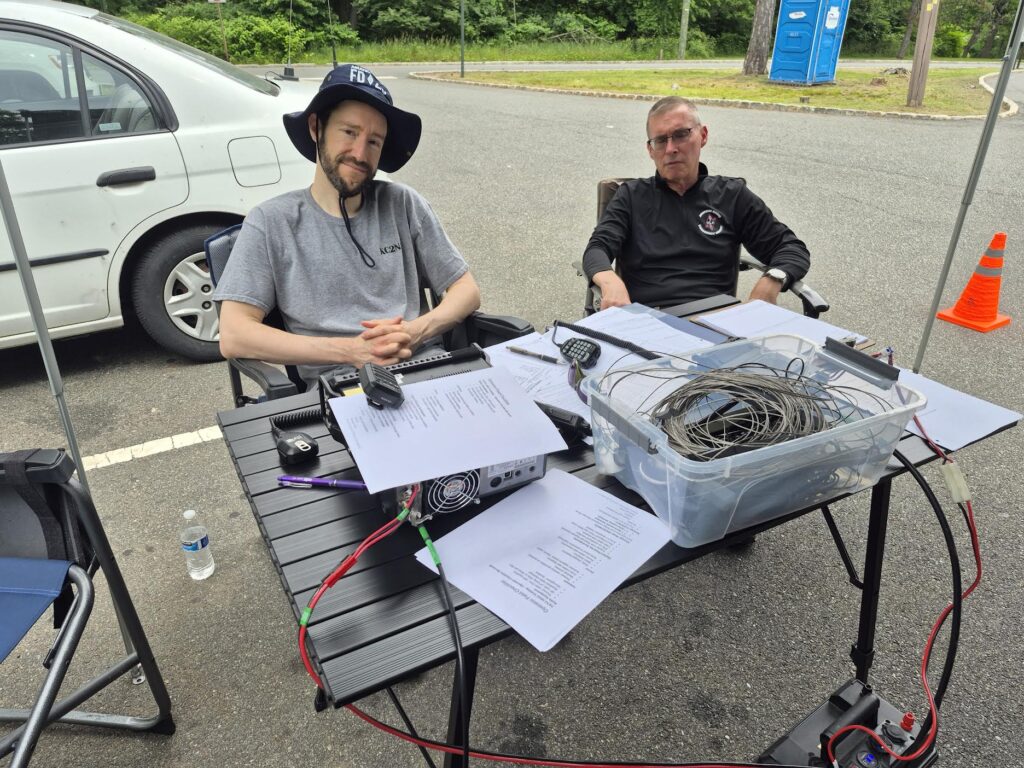
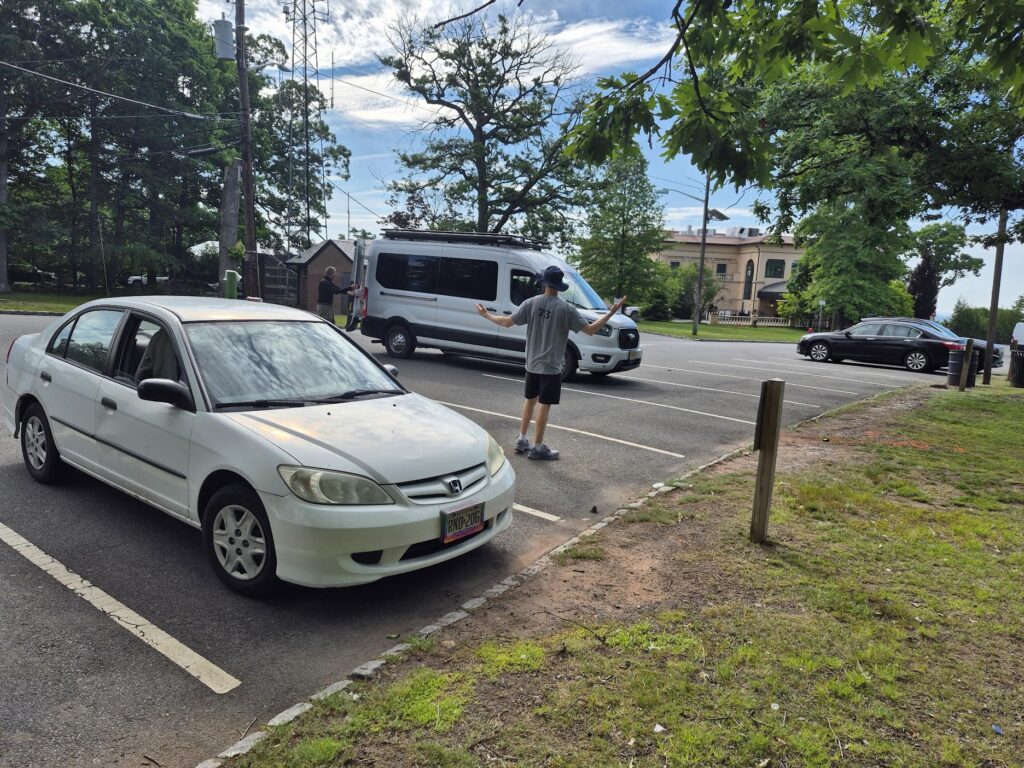
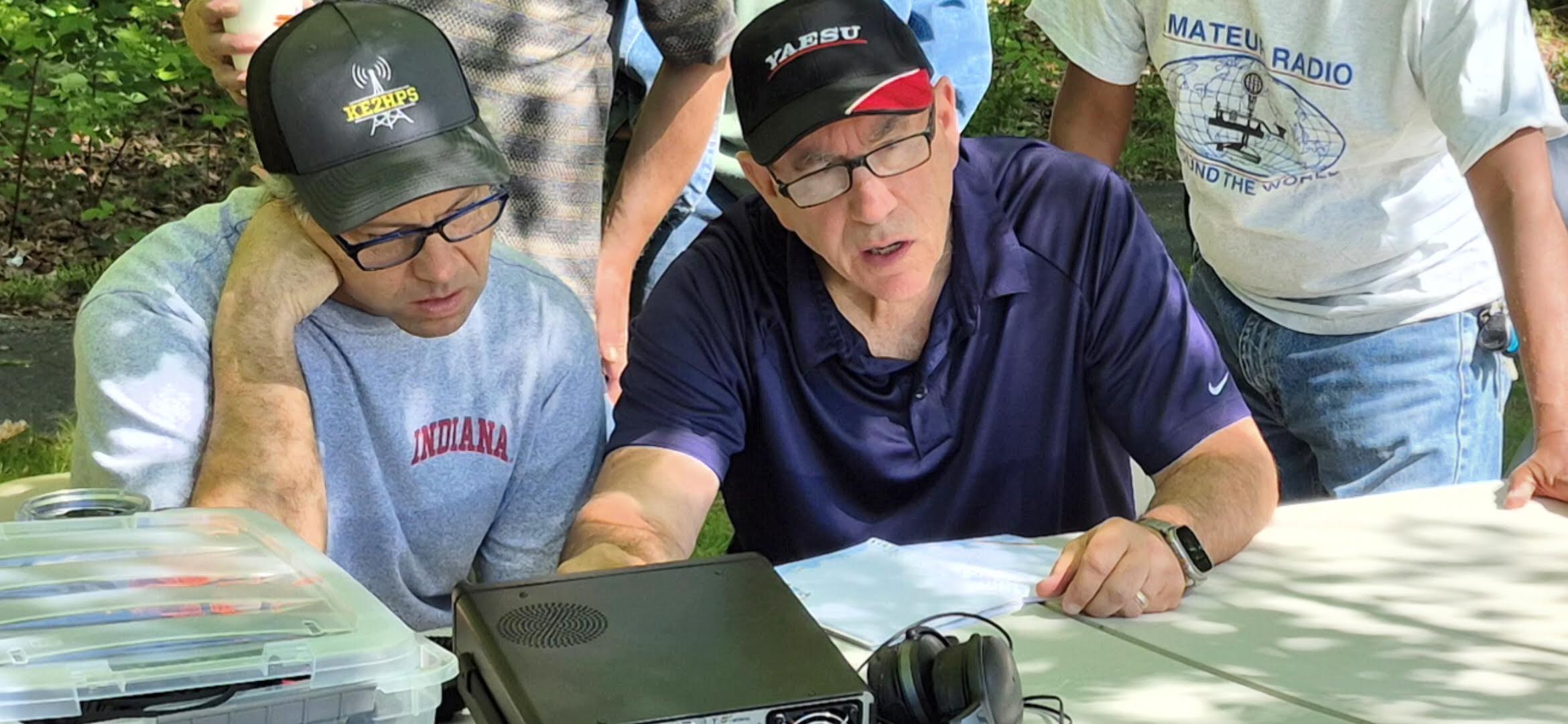
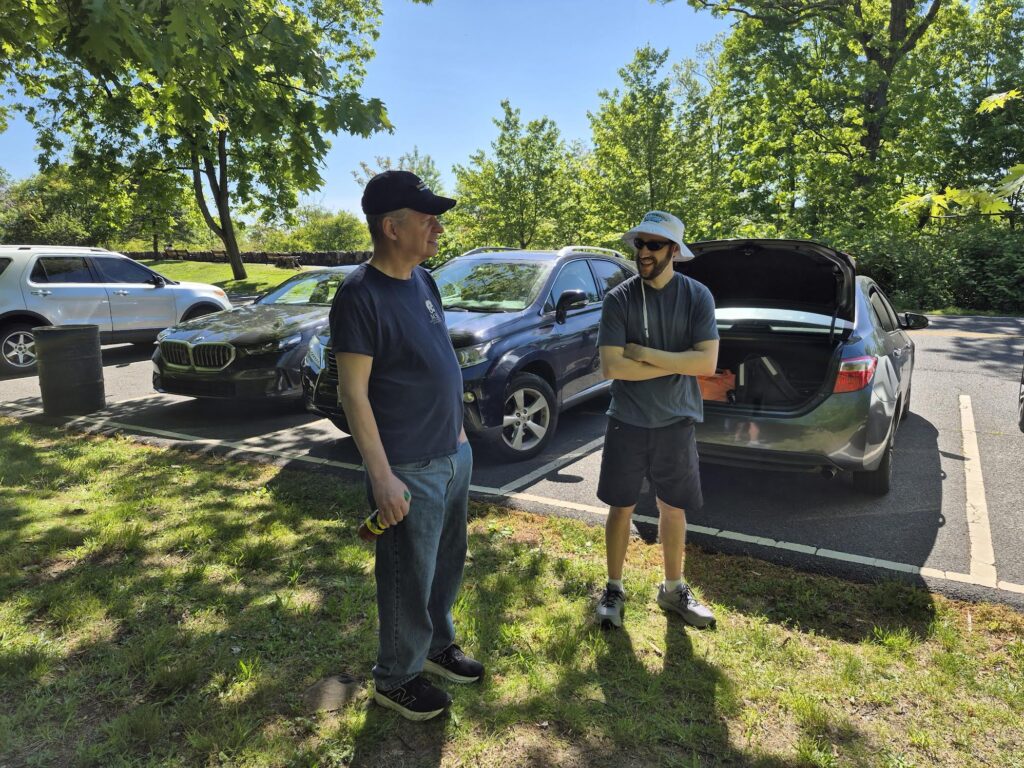
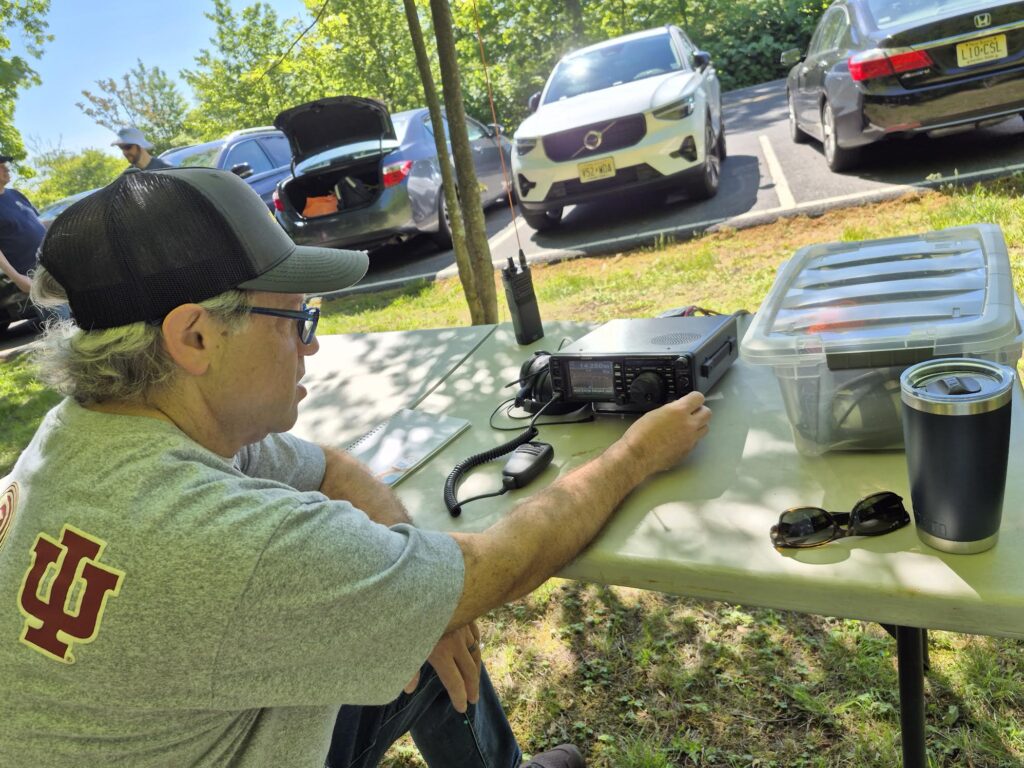
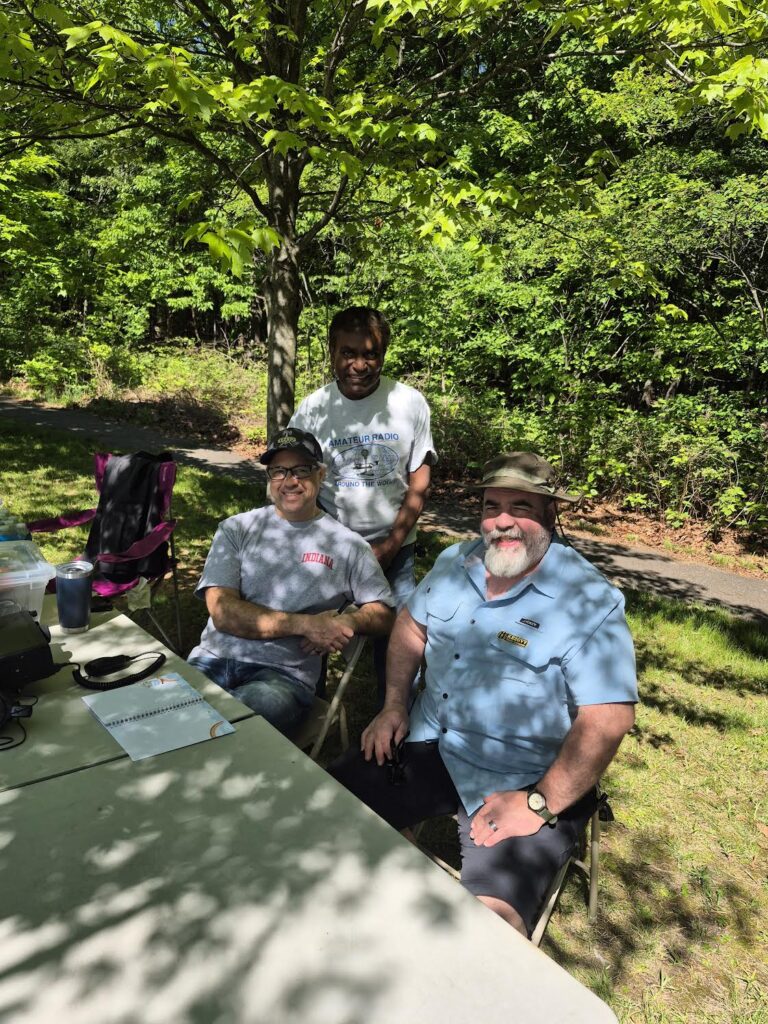
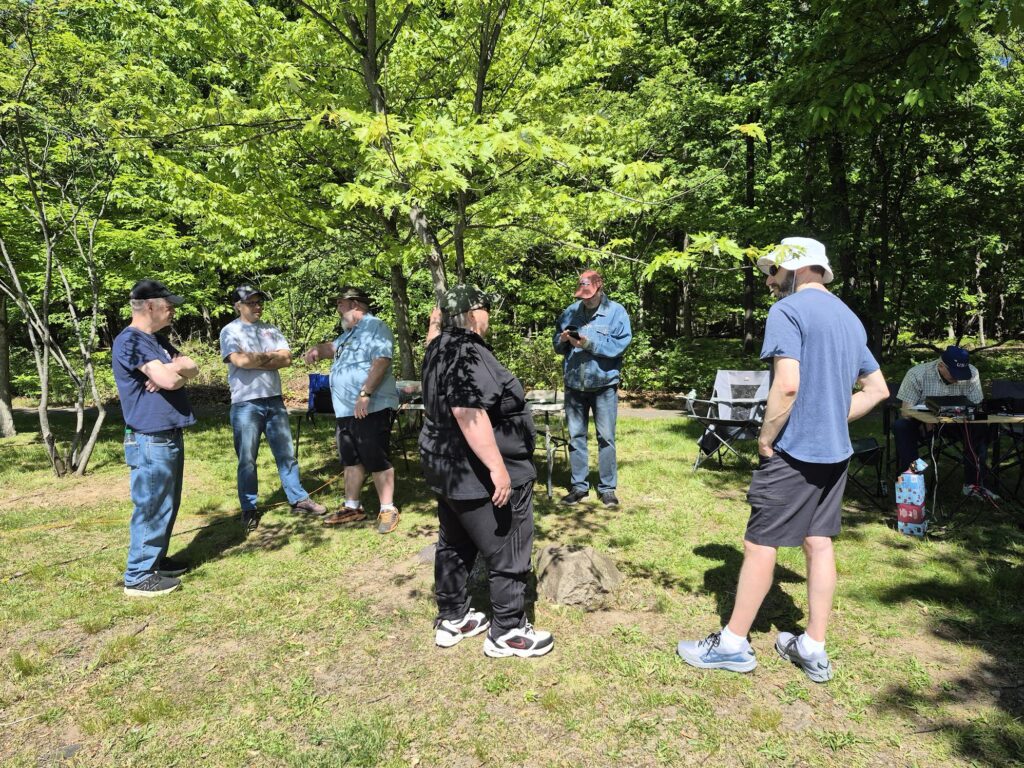
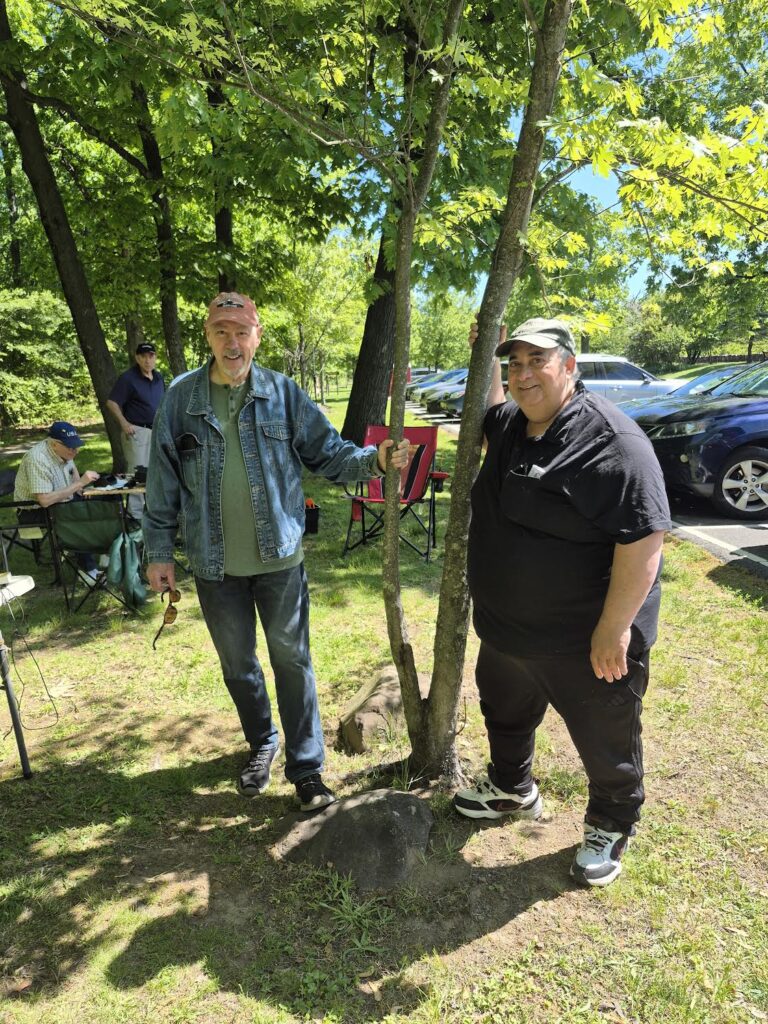
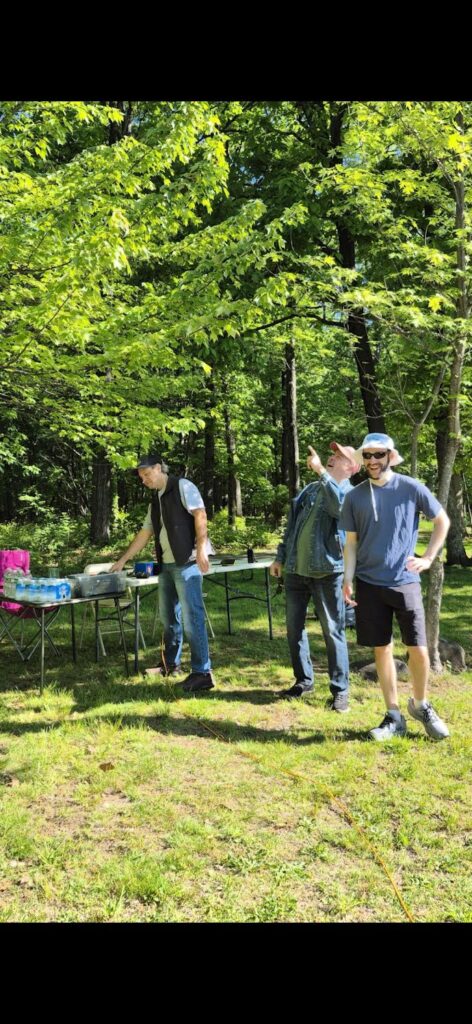
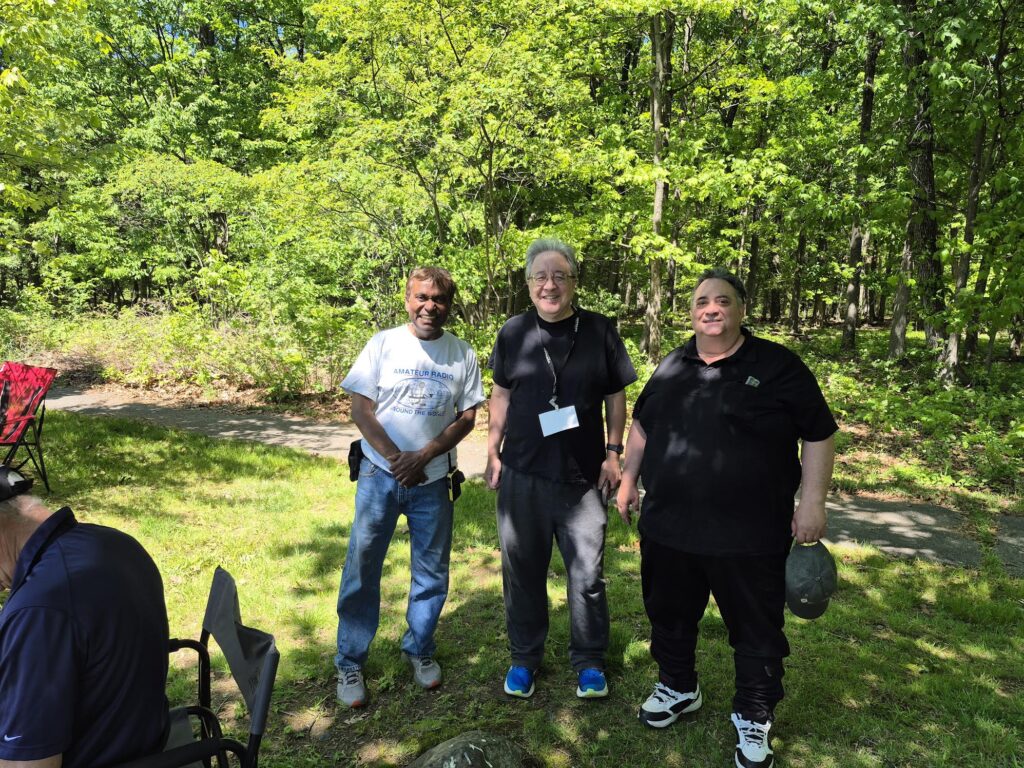
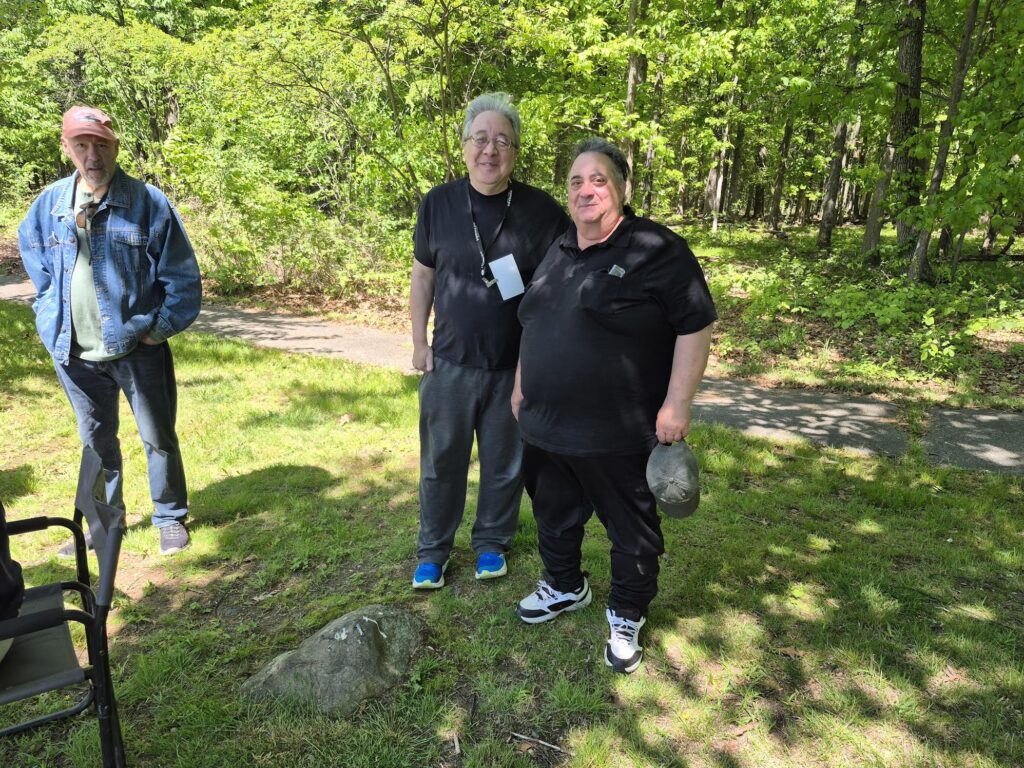
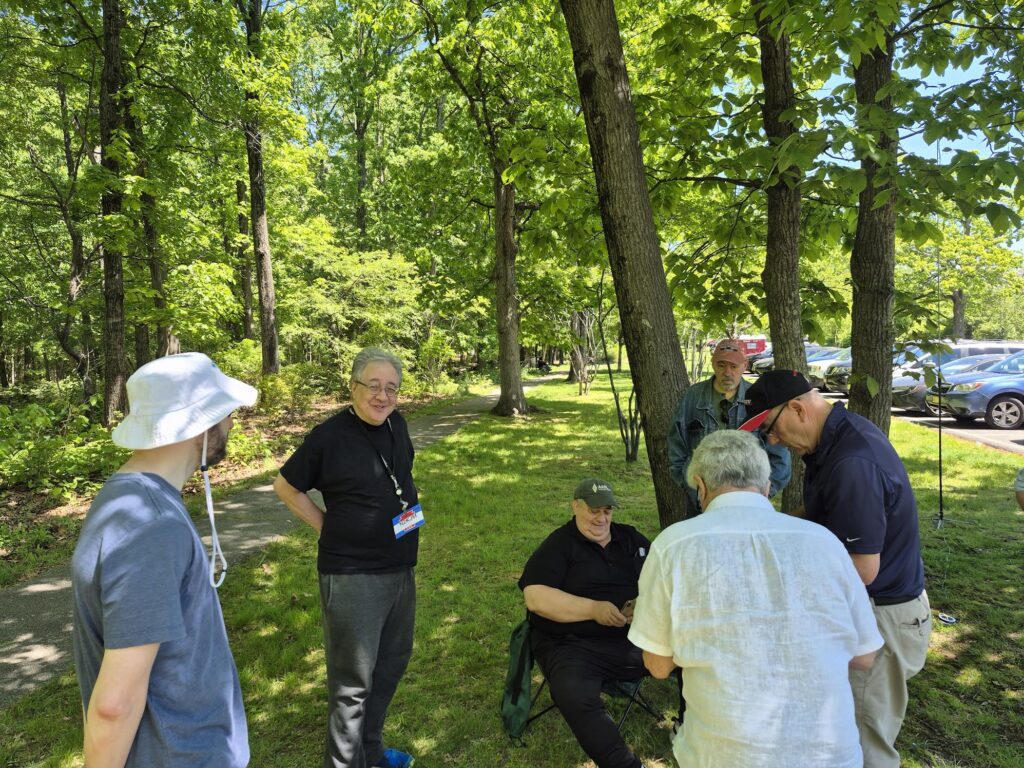
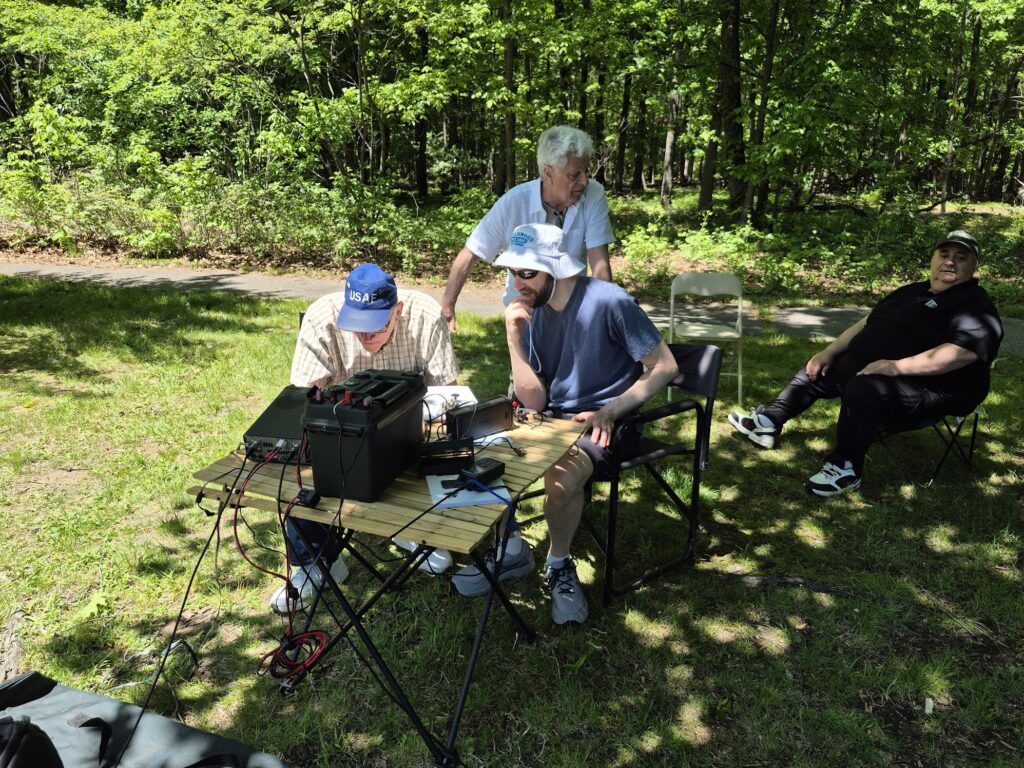
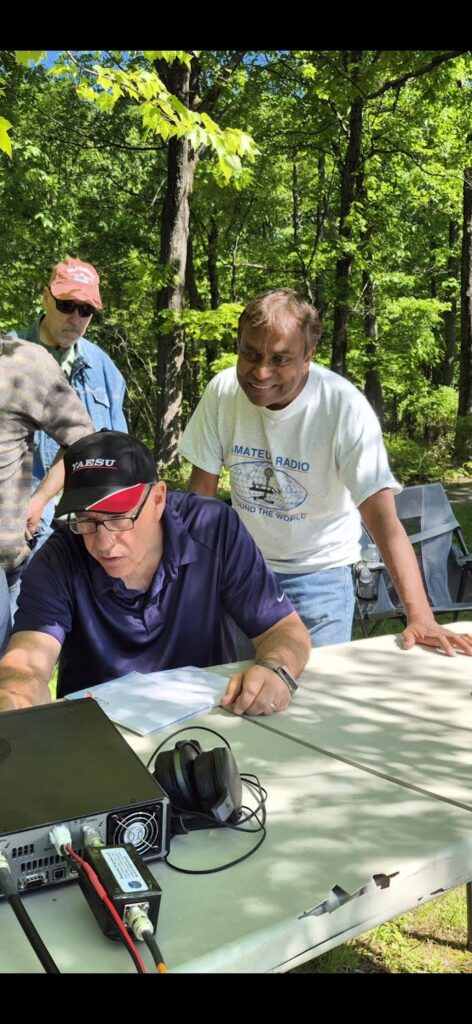
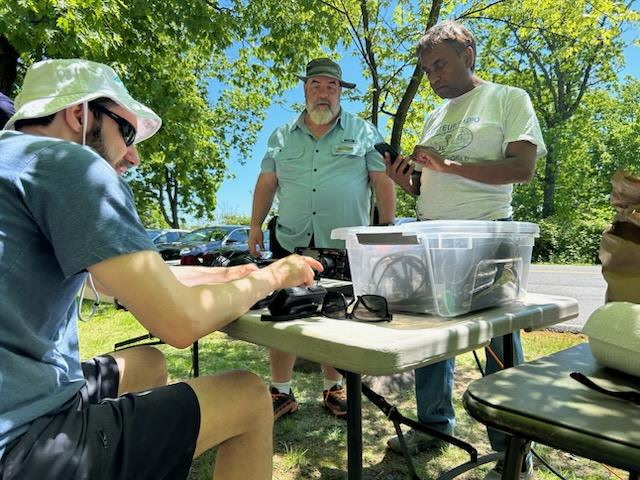
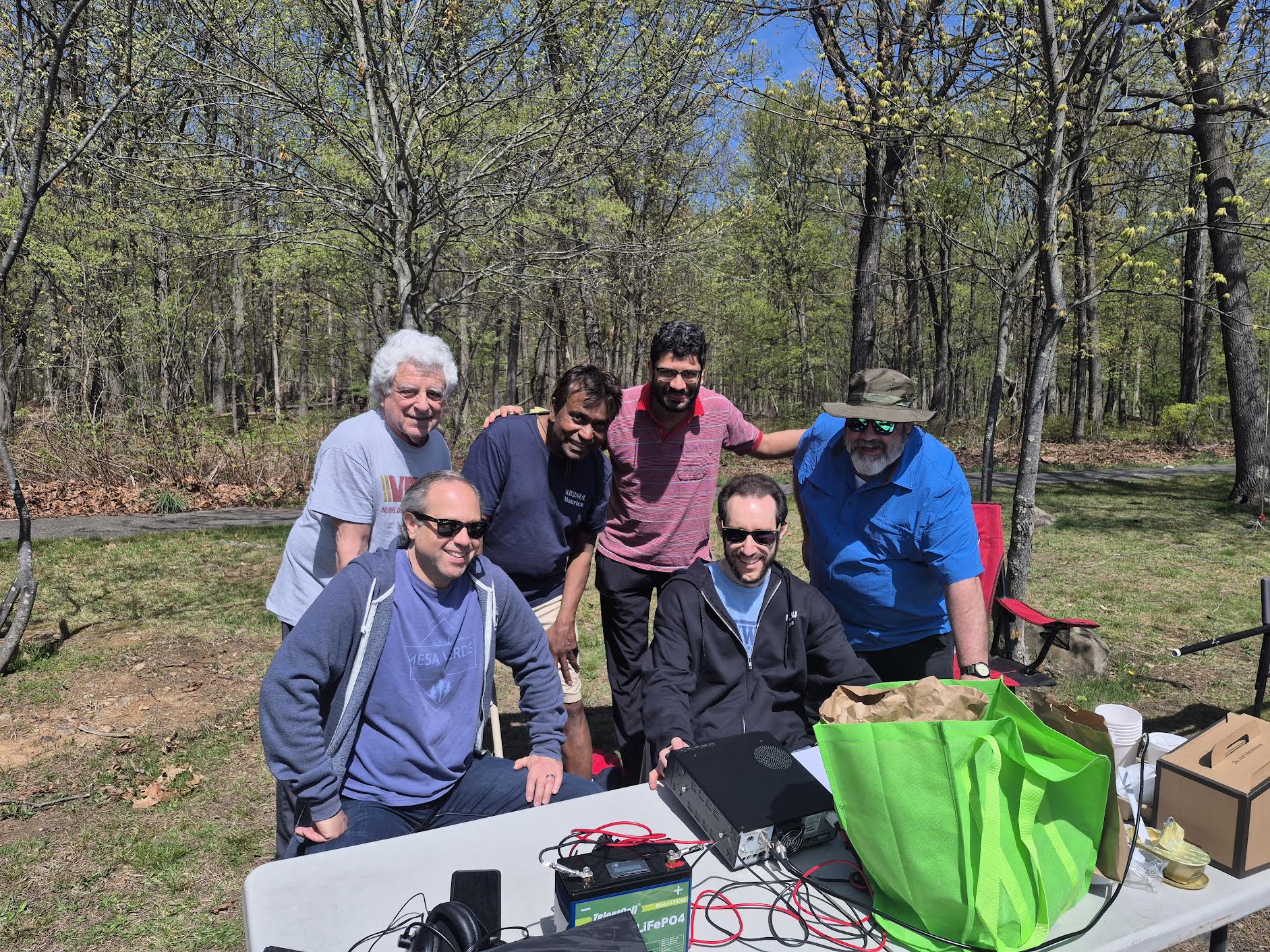
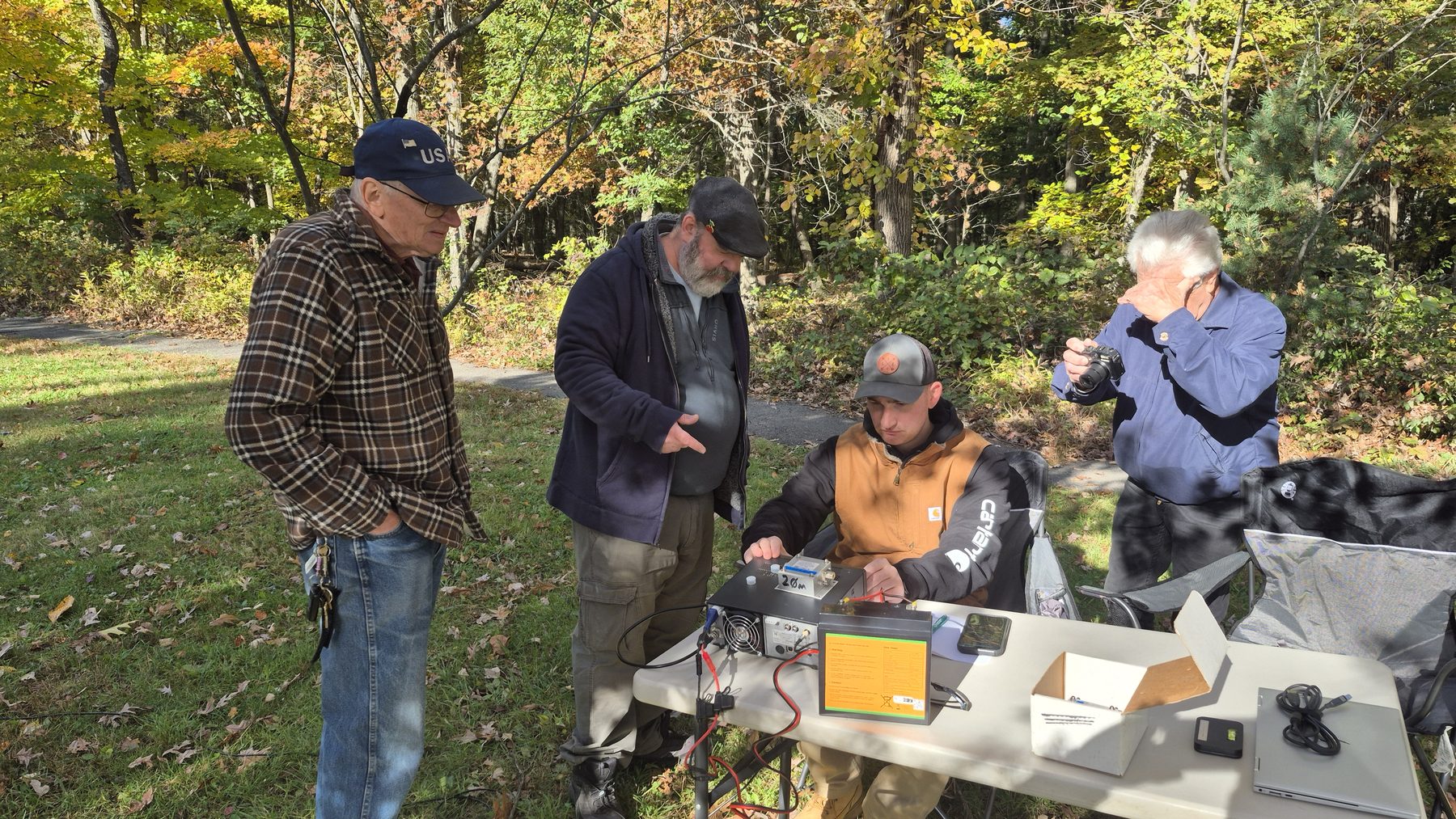
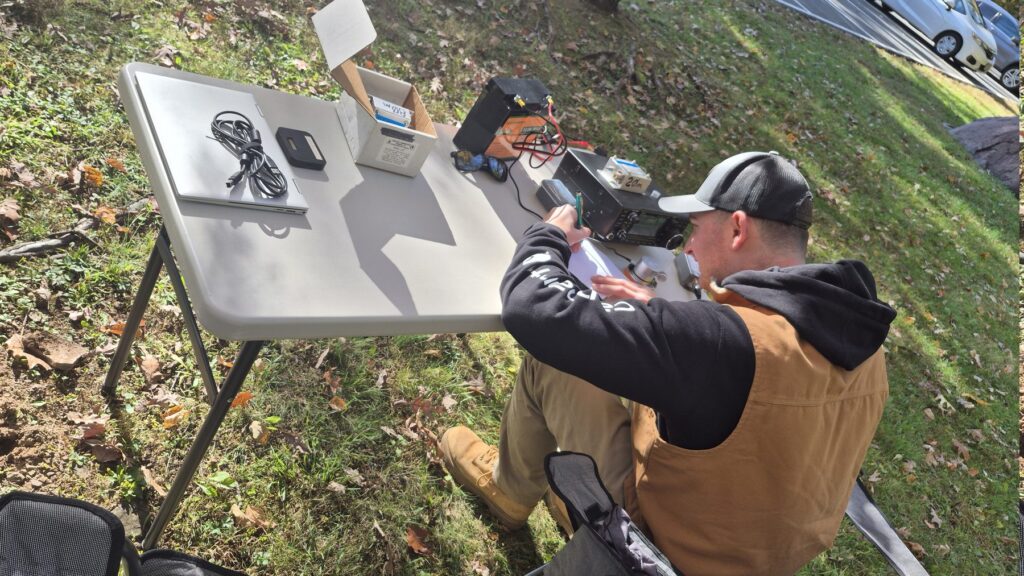
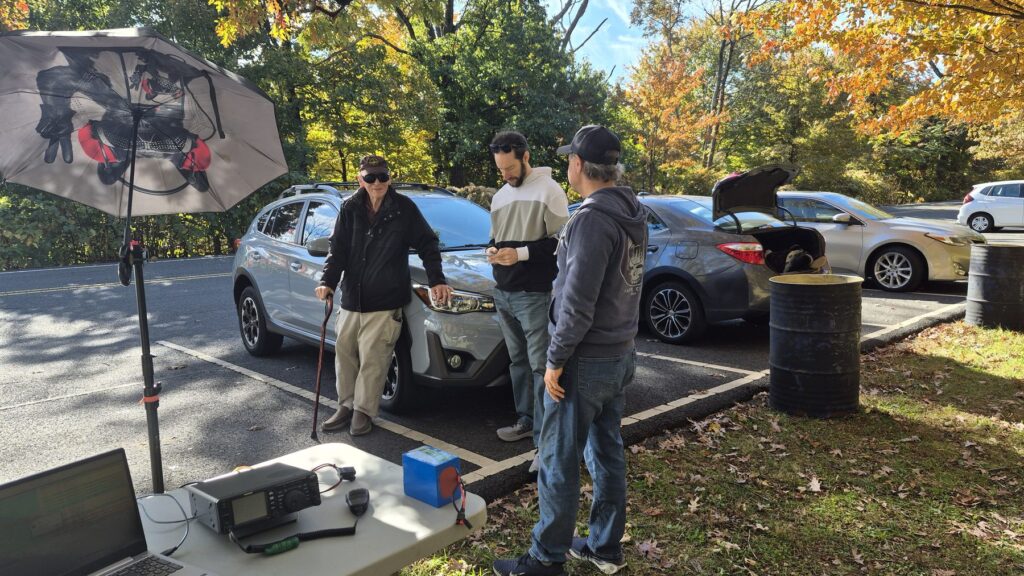
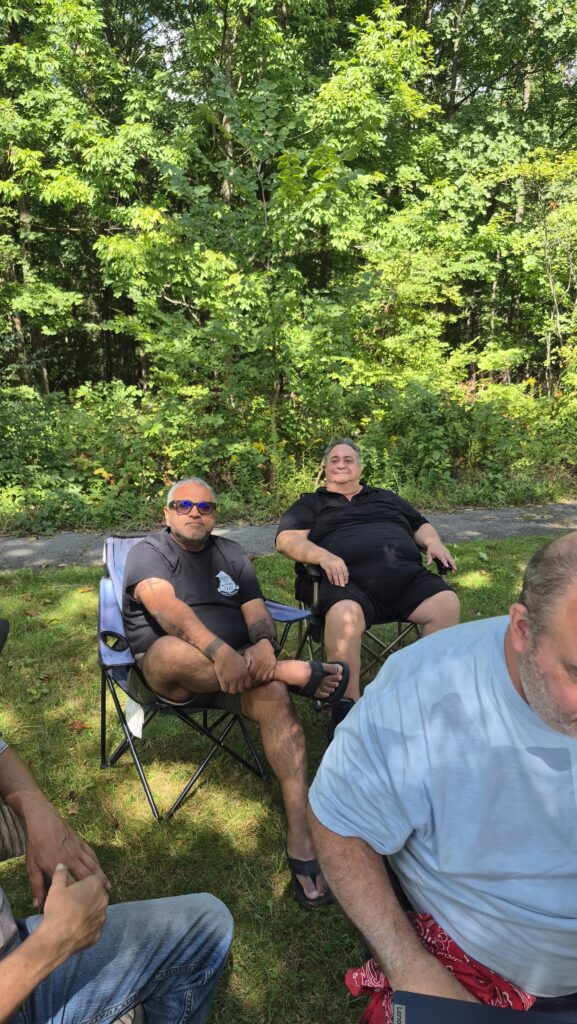
    On Saturday, April 18, 2026, from 9 AM to 1 PM ET, members of WEARC, Roseland ARC, NPARC, and other local operators gathered at Bramhall Terrace in South Mountain Reservation, Maplewood, New Jersey, for a morning of radio, friendship, and portable HF operating.

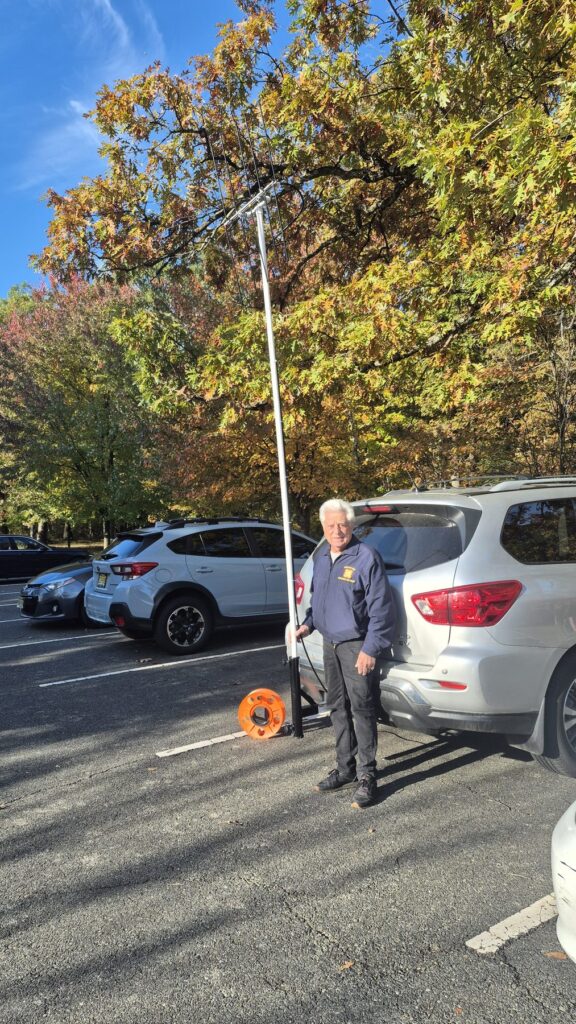
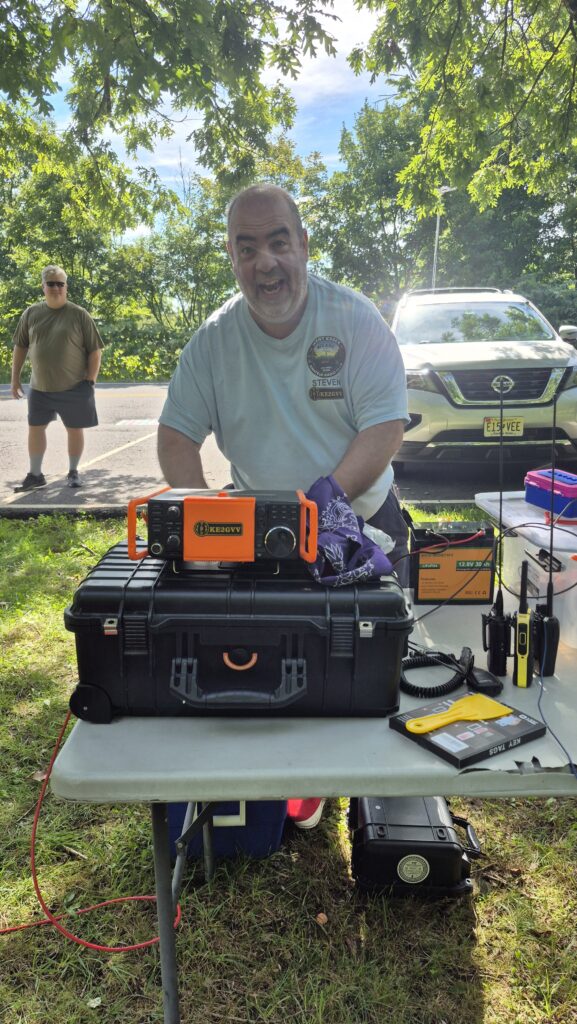
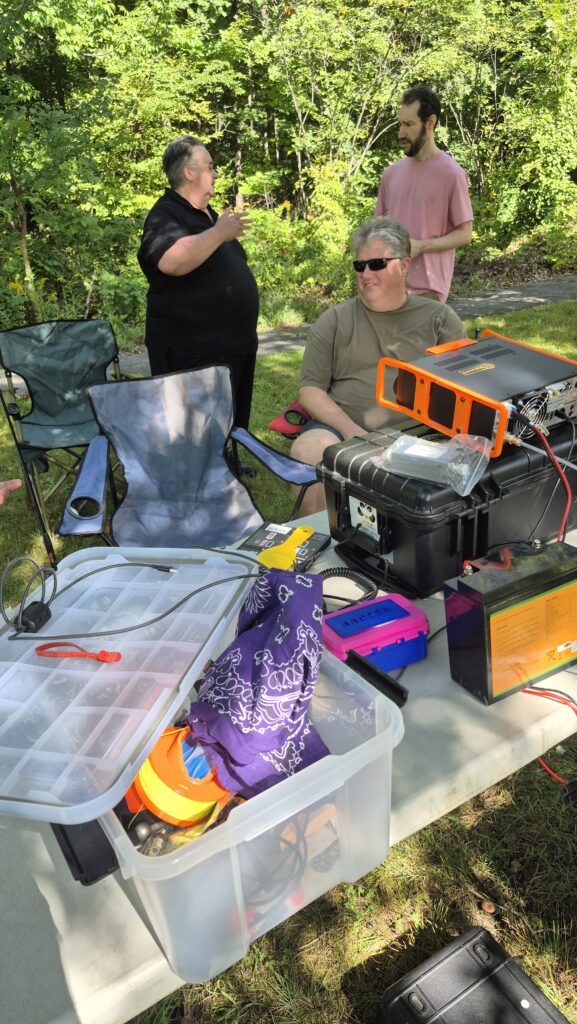
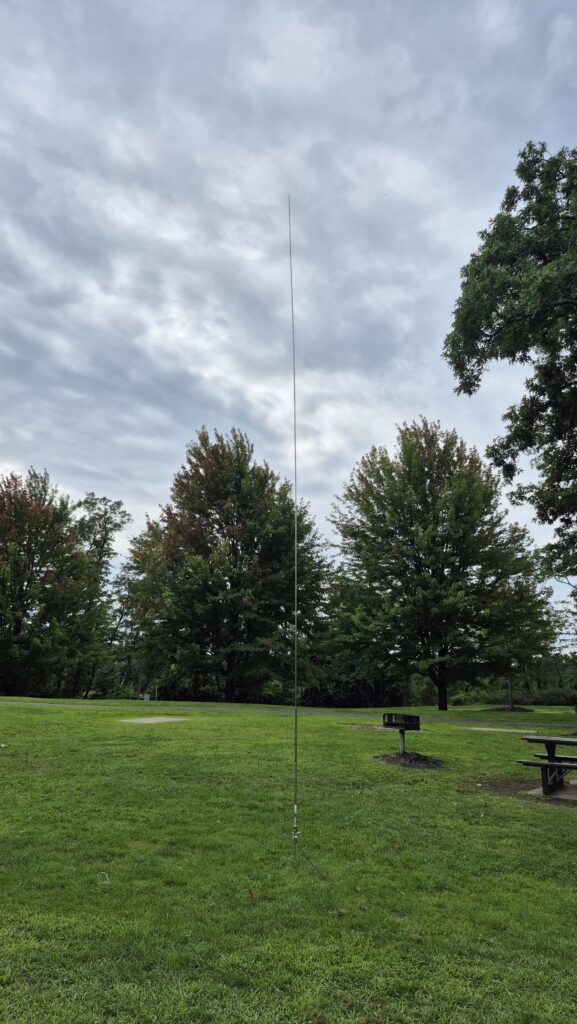
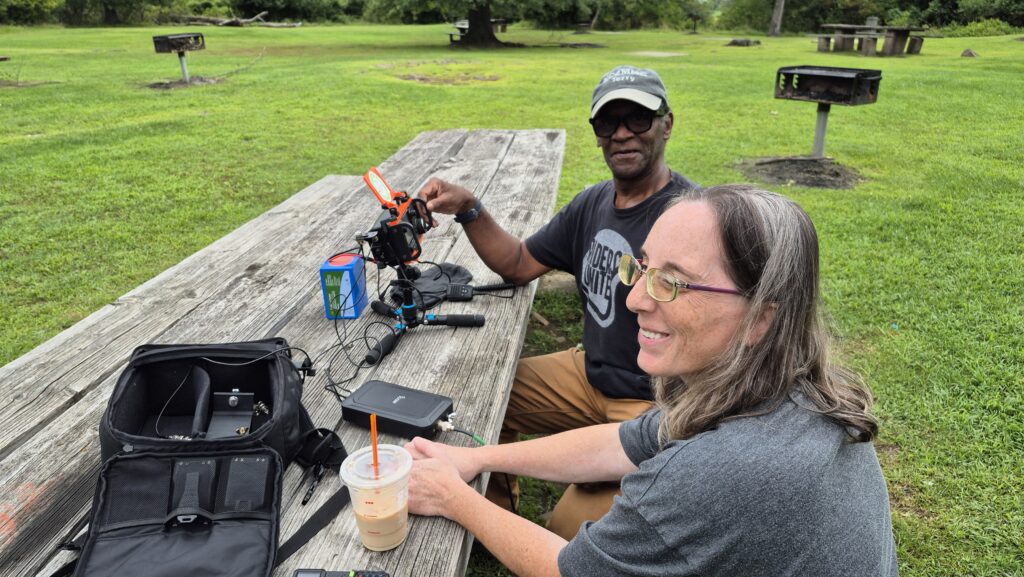
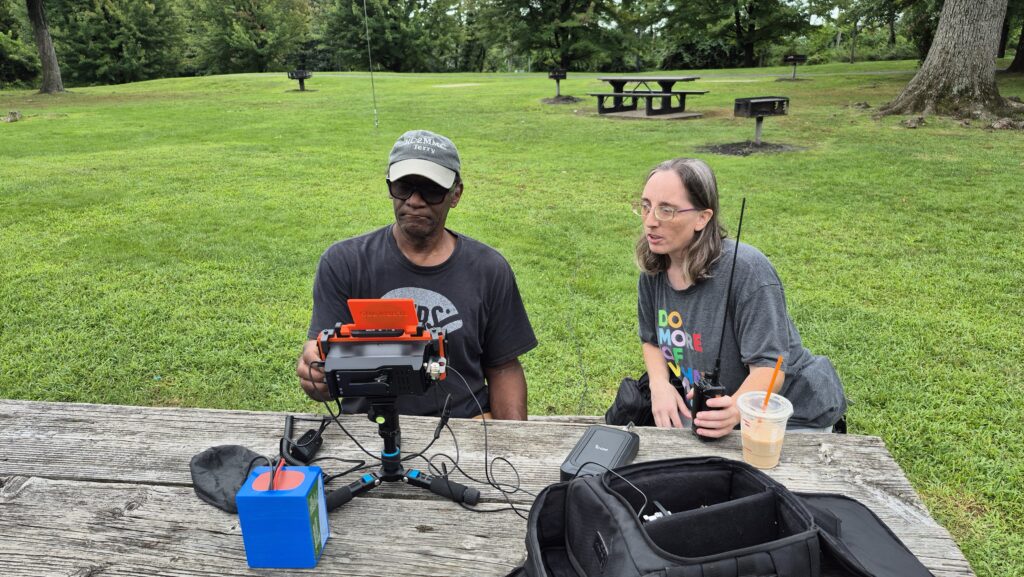
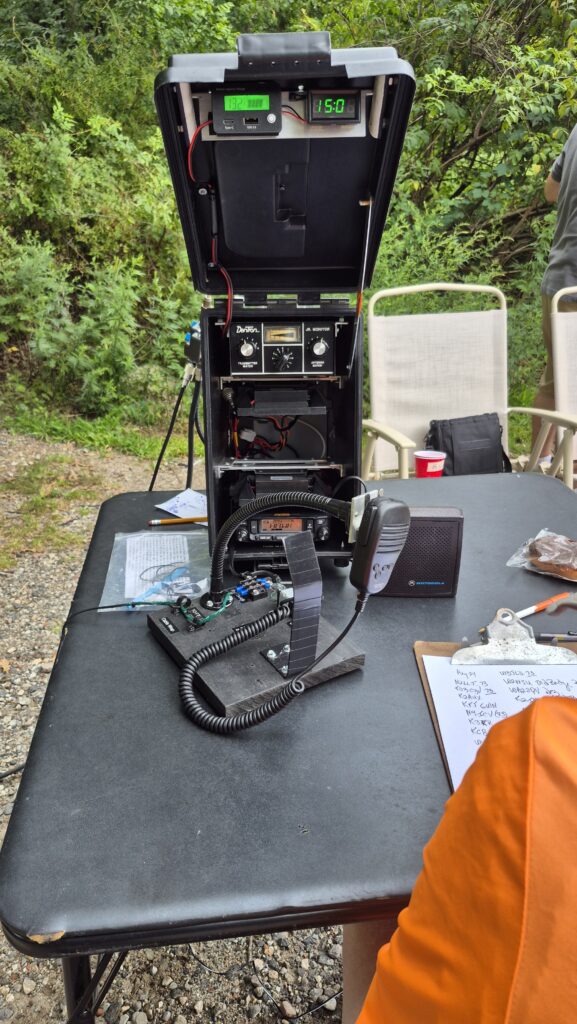
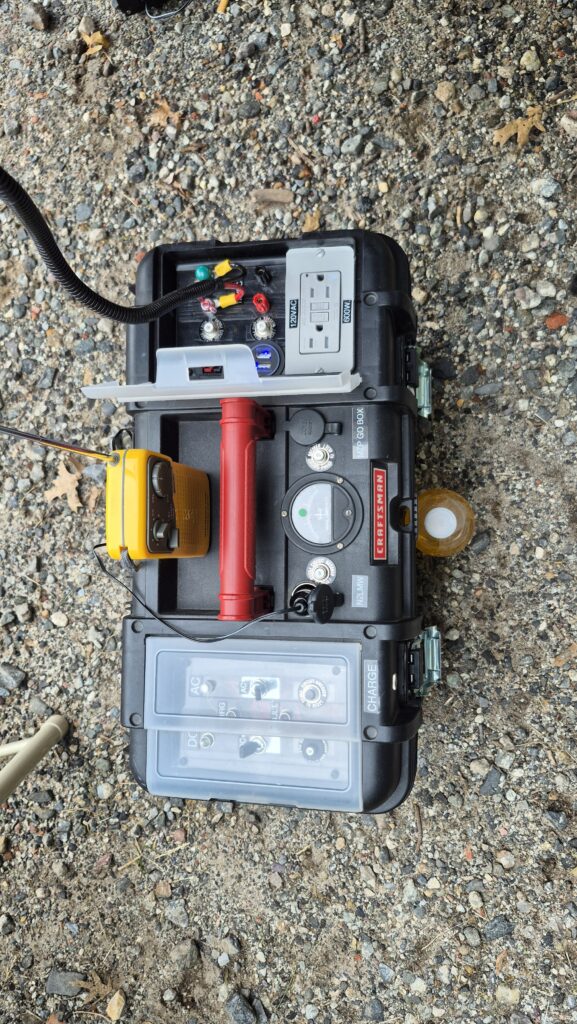
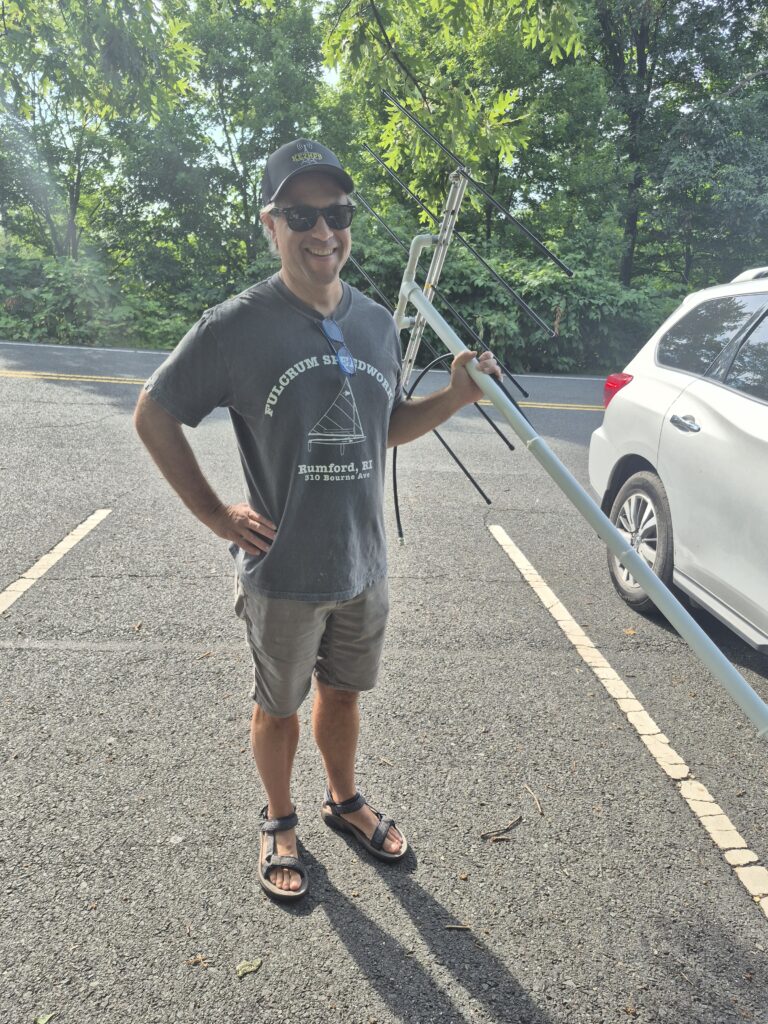
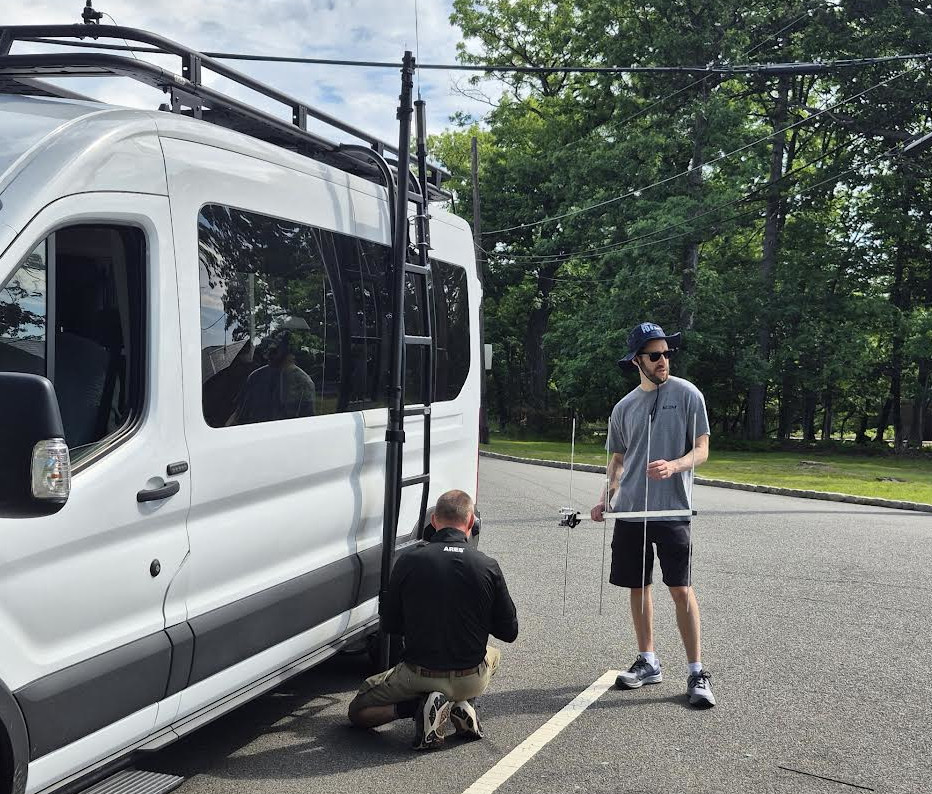
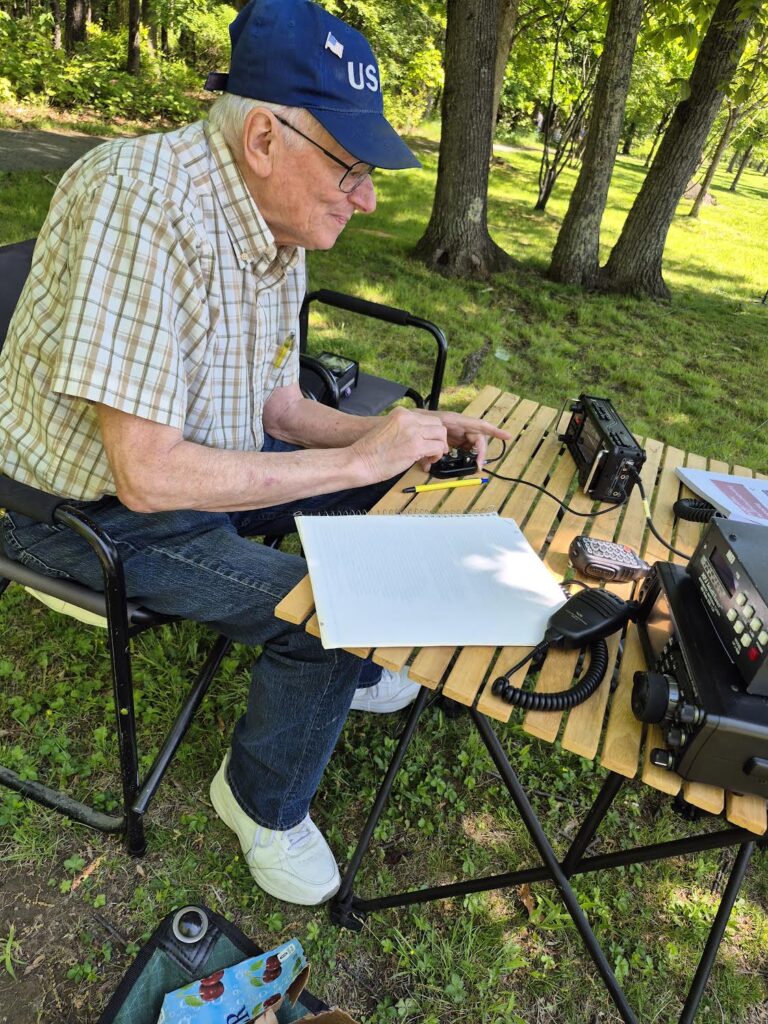
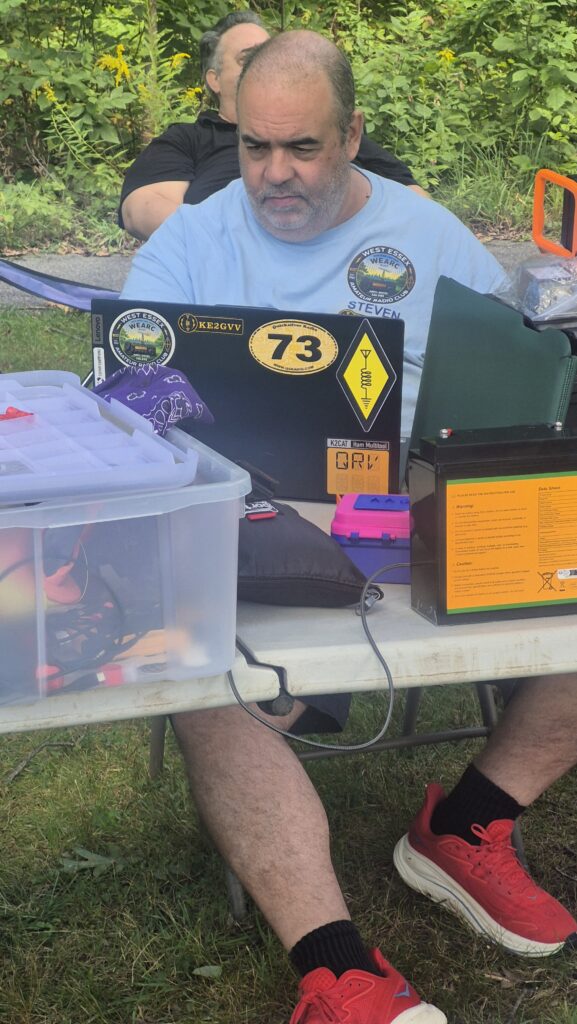
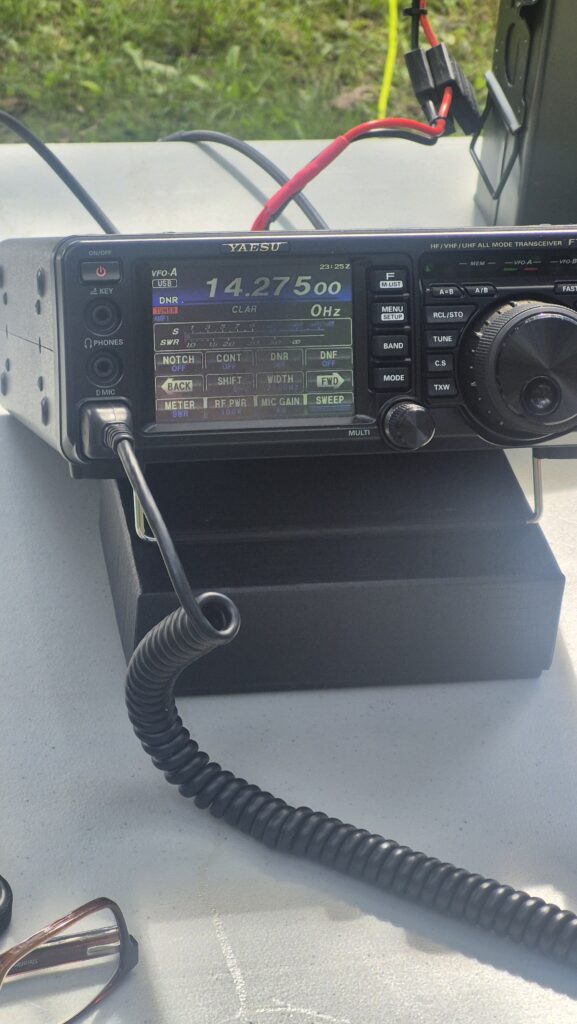
    The goal of the meetup was simple: enjoy time together outdoors while practicing portable field HF operations. Two separate operating positions were set up, each with its own table, using two 100-watt modern HF stations powered by battery. Operators had multiple antenna choices available, including quarter-wave verticals for 20 and 40 meters, along with an end-fed half-wave antenna supported up in the trees.

    Weather conditions could not have been much better. With temperatures in the mid-60s, sunny skies, and a light wind, it was an outstanding day to be outside and on the air. Band conditions were fair, but still good enough to support ionospheric propagation in the 400 to 1,500 mile range on both 20 and 40 meter phone. Contacts were successfully made along the U.S. East Coast and into Canada.

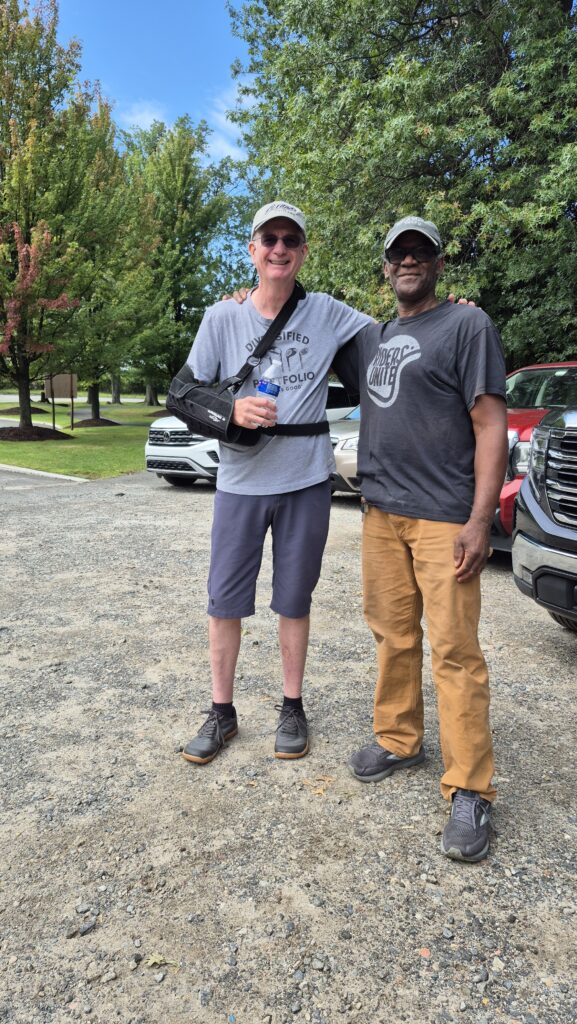
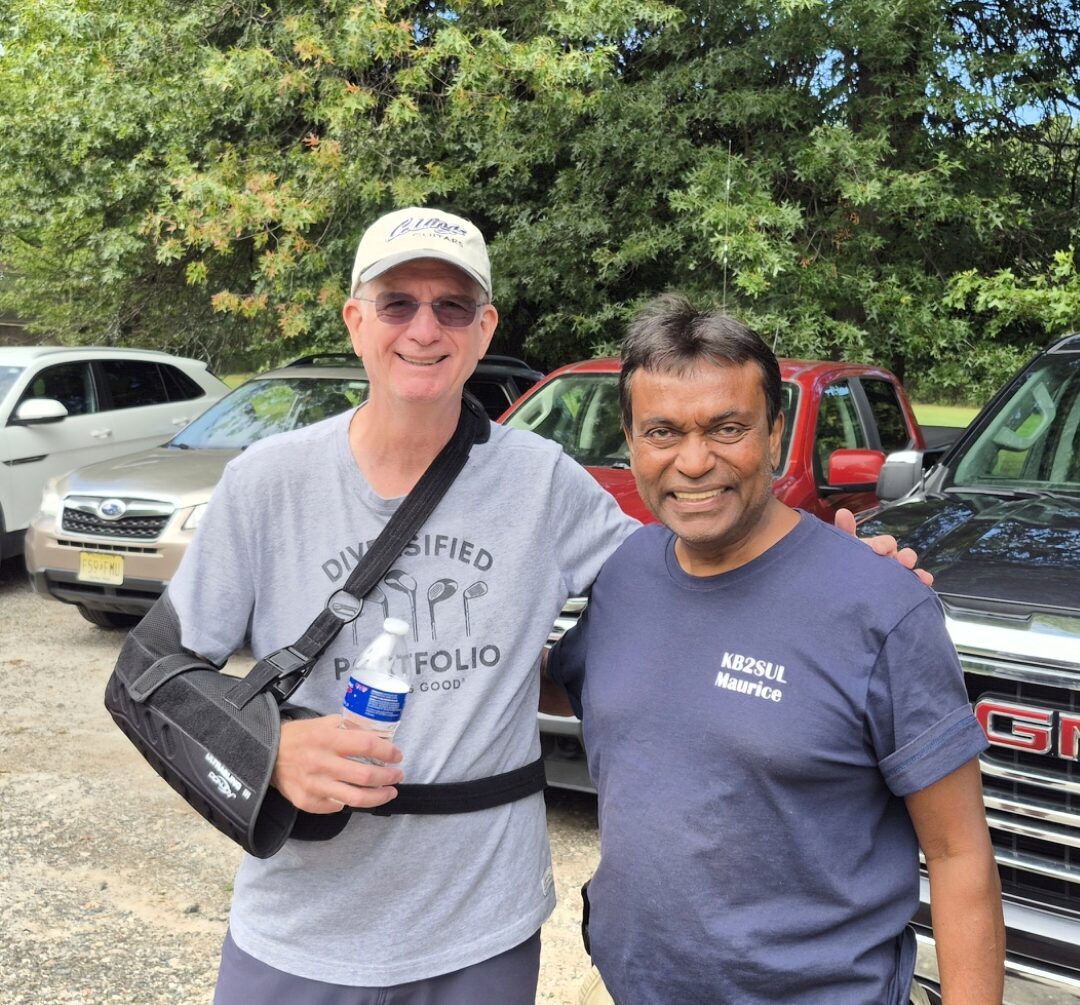
    The event was also made even better by some generous hospitality. Rich provided bagels and coffee, while Maurice supplied bottled water for the group.

    Overall, it was a successful activation and a great opportunity to combine operating, experimentation, and social time with fellow hams. Based on the success of this activity, we are already looking forward to the next gathering, perhaps in about a month, for another enjoyable morning of portable operating and fellowship.

  • Grover Cleveland Birthplace – WEARC Activation

    Grover Cleveland Birthplace – WEARC Activation

    Signal and Presidency: Amateur Radio Marks a Birthday in Caldwell

    Grover Cleveland was born on March 18, 1837, in a small frame house on what is now Bloomfield Avenue in Caldwell, New Jersey. On Saturday, March 21st, a group of amateur radio operators will gather at that same address to mark the occasion — setting up two HF stations and spending the day in contact with stations across the country and beyond. The connection between a nineteenth-century president and a morning of shortwave radio is less obvious than it sounds, but more interesting.

    Cleveland came into the world in a town small enough that a Presbyterian minister’s family was a local institution in itself. His father, the Reverend Richard Cleveland, ran his parish with the kind of sober industriousness that provincial New Jersey rewarded. The family didn’t stay long — they moved north to upstate New York while Grover was still young — but the birthplace stuck, the way birthplaces do, as a fixed point from which a life can be measured. He became, eventually, the first man to serve two non-consecutive terms as president — the 22nd and the 24th, with Benjamin Harrison in between — and was remembered as a man of stubborn honesty in an age when that quality was rarer than it should have been.

    What tends to be forgotten is that Cleveland governed during the years when American communications began to harden from improvisation into infrastructure. The telegraph had already remade the country once. Now the undersea cables were threading the ocean floors, the telephone was finding its way into offices and homes, and the question of who would protect these systems — and how — had become genuinely urgent. Cleveland signed the Submarine Cable Act in 1888, which recognized in law what common sense had already established in practice: that long-haul communications links were not luxuries but lifelines, and that their disruption was a matter of public consequence. A year earlier, he had appointed Adolphus Greely as Chief Signal Officer of the Army, lending institutional weight to the proposition that disciplined, reliable communication was something the country had an obligation to sustain.

    Cleveland was no radio man. He lived just long enough to share an era with the first broadcasts — dying in 1908, about a year and a half after the Christmas Eve 1906 transmission often credited to Reginald Fessenden as an early broadcast of voice and music — but there is no reason to think the new medium registered for him as anything more than a curiosity, if it registered at all. What mattered to him was the infrastructure already in place: the cables, the wires, the institutions built around them. But it does make the choice of his birthplace for a special event station something more than sentiment.

    The house itself has been in careful hands for over a century. The Grover Cleveland Birthplace Memorial Association was founded in 1913 — the same year the building first opened to the public as a museum — and has worked ever since to preserve both the structure and the story it contains. The state of New Jersey took over its administration in 1934, and the site is today managed by the Division of Parks and Forestry, with the Association continuing as an active partner. It is listed on the National Register of Historic Places, holds one of the largest collections of Cleveland papers and artifacts in the country, and remains the only house museum in America dedicated solely to his life.

    The West Essex Amateur Radio Club will operate under the call sign W2EF from half past eight in the morning until five in the afternoon, and the public is invited — licensed or not. What they’ll find, if they stop in, is a pair of HF stations reaching out to other operators around the world, each exchange a brief handshake between licensed operators who share a common discipline. The operators will be logging contacts, working the bands, and answering questions from anyone curious enough to ask. The skill required to put a signal on the air and bring one back belongs to the same family as the discipline the telegraph and cable operators of Cleveland’s era cultivated over years at the key.

    That is the thread connecting a nineteenth-century president to a Saturday afternoon in Caldwell. America has always depended, in the end, on people who understood that communication across distance is not magic — it is engineering, and patience, and the willingness to learn a system thoroughly enough to trust it. Cleveland’s era was absorbing that lesson at the national scale. On the 21st, in the town where he was born, it will be on display again.


    The event is free and open to the public. The Grover Cleveland Birthplace Historic Site is at 207 Bloomfield Avenue, Caldwell, New Jersey. Doors open at 8:30 AM.

  • Join Us for an Online VE Session

    Join Us for an Online VE Session

    Are you ready to take the next step in your amateur radio journey? Whether you’re looking to earn your first license or upgrade to the next level, the West Essex Amateur Radio Club (WEARC) has you covered!

    We’re excited to announce the availability of WEARC online VE sessions. This is a great opportunity to take your Technician, General, or Extra ham radio exam from the comfort of your own home.

    The session is open to everyone, regardless of experience level, and all three classes of exams will be offered. If you’ve been studying and feel ready to take the ham radio test, we encourage you to sign up and join us for a smooth, well-organized online session.

    How to Register

    To sign up, simply follow this registration link to secure your spot. Registration is easy, and you’ll receive all the details you need for the session after signing up.

    Why Choose an Online VE Session?

    Our online sessions provide flexibility, allowing you to focus on your test without the need to travel. With experienced volunteer examiners from WEARC guiding you through the process, you can expect a supportive and professional environment.

    Whether you’re a beginner or a seasoned ham looking to advance your knowledge, this is your chance to take your skills to the next level.

    Don’t miss out—register today and get ready to unlock new radio privileges! If you have any questions, feel free to reach out to us. See you at our next session!

  • Visit & Operate our FT8 Station at Field Day 2025

    Visit & Operate our FT8 Station at Field Day 2025

    Exploring FT8: A Modern Digital Mode for Field Day

    As Field Day approaches, the West Essex Amateur Radio Club (WEARC) is getting ready for one of amateur radio’s most exciting weekends. If you’re curious about the hobby—or already active and looking to try something new—this is a great time to explore one of the fastest-growing modes in use today: FT8.

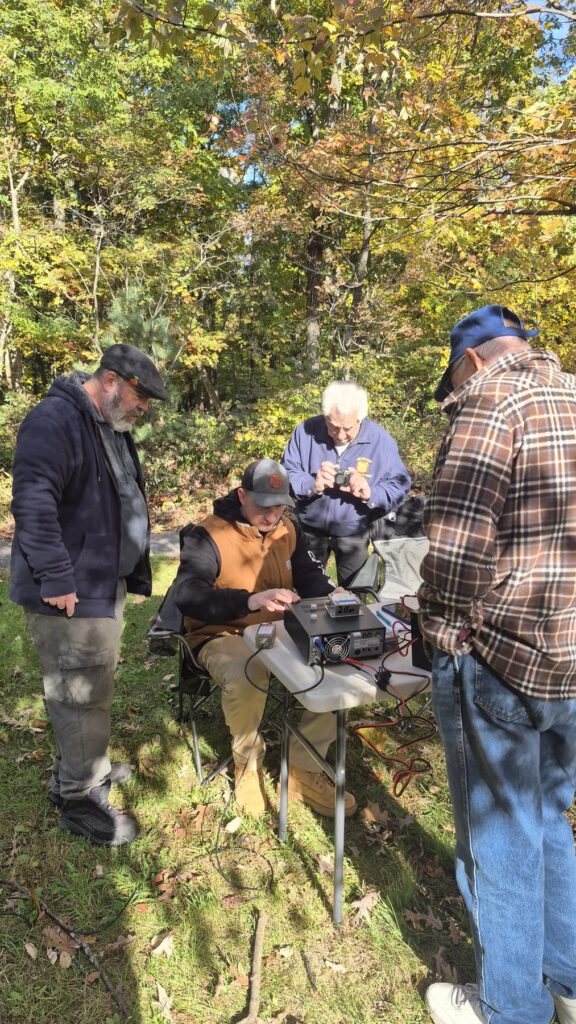
    This year, on June 28th and 29th, WEARC will have an FT8 station live and operating as part of our Field Day setup at the Fairfield, NJ American Red Cross facility. We invite anyone with an interest in radio—whether licensed or just curious—to stop by. You’ll have the opportunity to watch FT8 in action, get hands-on experience with the software and equipment, and learn from operators who are happy to walk you through the basics. If you’ve never worked digital before, this is your chance to see what it’s all about and even make your first FT8 contact.

    Field Day, held each year on the fourth full weekend of June, is a coordinated operating event where thousands of amateur radio operators across the United States and Canada set up portable stations, often in parks, fields, or other public spaces. It’s part emergency preparedness drill, part public outreach, and part contest. Stations work as many other stations as possible during a 24-hour period, logging contacts across different bands and modes. Voice and Morse code are longtime staples, but digital modes like FT8 have surged in popularity over the last several years.

    FT8, short for “Franke-Taylor design, 8-FSK modulation,” was introduced in 2017 by Joe Taylor (K1JT) and Steve Franke (K9AN). It uses an extremely narrow bandwidth—just 50 Hz—and a series of timed 15-second transmissions to make rapid, reliable contacts, even when signals are weak or noisy. The mode is built for efficiency, not conversation; each exchange includes only the essential data: callsigns, grid locator, and signal report. Yet this simplicity is what makes it such a powerful tool, particularly under poor propagation conditions.

    You don’t need the latest equipment to get on the air with FT8. Any HF transceiver capable of SSB will work, including older models. Most modern radios, like the ICOM IC-7300 or Yaesu FT-991A, have built-in USB audio interfaces that make setup straightforward. For radios without that feature, an external interface—such as the Tigertronics SignalLink or Digirig Mobile—will connect your rig to your computer. You’ll also need free software like WSJT-X, and your computer clock must be precisely synchronized to within a second—something easily handled using network time protocol (NTP) or GPS-based tools. Once configured, you can start making digital contacts with stations around the world.

    Since its debut, FT8 has seen explosive growth in the amateur radio community. In 2017, it made up a tiny slice of digital QSOs. But by 2020, FT8 had become the most-used mode in the world, accounting for over half of all logged amateur contacts. That growth has only continued, with 35 to 40 million FT8 QSOs per year according to Club Log estimates. It’s not just popular—it’s dominant, particularly among operators in compromised environments with limited antennas or power.
    FT8 also provides a scoring advantage on Field Day. Voice contacts (e.g., SSB) are worth one point each, while digital contacts—including FT8—earn two points apiece. That’s a compelling reason for clubs and individual operators alike to consider adding digital capability to their Field Day operations.

    Visit https://www.wearc.org/news-blog for additional Field Day details. We look forward to seeing you there! 

  • WEARC Members Complete HF Antenna Testing at Fairfield Red Cross

    WEARC Members Complete HF Antenna Testing at Fairfield Red Cross

    Amid Chilly Skies, WEARC Brings Club Station Back to Life

    Fairfield, NJ — On a crisp, sunny morning in late November, four members of the West Essex Amateur Radio Club (WEARC) gathered at the American Red Cross building in Fairfield, New Jersey, with one mission: to restore their club station, W2EF, to full operational status. Armed with tools, determination, and decades of combined experience, the team tackled a series of challenges that culminated in a triumphant return to the airwaves.

    Bill, Jerry, Mike, and Hector convened at 10 a.m. under cold but clear skies, prepared for a day of repairs and testing. The first hurdle involved a malfunctioning antenna that required precision soldering—a task made more difficult by the biting chill. The team procured a new 260-watt soldering gun, which proved to be a crucial investment. Despite the challenging conditions, the tool performed exceptionally well, enabling the team to carry out the repair with ease.

    Attention then turned to the coaxial feedline, the vital conduit that transmits signals between the radio and the antenna. Hector and Mike worked methodically, troubleshooting the lines and ultimately replacing the problematic Coax #7 with Coax #9. Using their individual NanoVNAs—compact and powerful vector network analyzers—they conducted detailed plots of the antenna, with Hector stationed on the roof and Mike in the radio room. The two coordinated their efforts via simplex communication, demonstrating the synergy that has become a hallmark of the club’s projects.

    With the feedline issue resolved, the team connected the antenna to their flagship transceiver, the Icom IC-756PROII. The results were immediate and gratifying: clear, robust signals on the 10-meter band. Operating in SSB (single sideband) and FT8 (a digital communication mode), they logged several successful contacts, marking W2EF’s official return to the airwaves.

    A notable observation came from Jerry, who pointed out that the antenna, a T2FD (tilted terminated folded dipole), displayed SWR and impedance characteristics that suggest it could connect directly to the Icom transceiver without the need for an external tuner. While the team opted to use a tuner for the day’s tests, this insight opens the door for further experimentation during their next visit.

    By the end of the day, the team had not only restored the station but also laid the groundwork for future improvements. The revived W2EF station is now ready to serve as a hub for club activities, emergency communications, and ongoing exploration of the amateur radio spectrum.

    “Our goal is always to learn, adapt, and grow,” said Mike, summarizing the day’s achievements. “Today wasn’t just about fixing equipment—it was about teamwork, innovation, and the spirit of amateur radio.”

    As the clock neared 1 p.m., the team wrapped up their work, packed up their gear, and reflected on the morning’s accomplishments. The antenna repair and coaxial replacement marked a significant step forward, while the successful on-air operation confirmed the station’s readiness for future activities. With W2EF back on the air and a clear plan for follow-up testing, the members departed confident that their efforts had ensured the club station remains a reliable asset for amateur radio enthusiasts and community communication needs.


    Jerry WB2GZL, Mike KC2NJ

    Jerry & Mike review the performance of the new T2FD antenna with the Icom IC-756PROII


    Vector Network Analyzer

    NanoVNA plot of 3 – 28 MHz taken by Hector after repair of the antenna and feedline.  Plot shows a 1.8:1 SWR on 28 MHz.


    W2EF on the air!

    W2EF propagation report from PSKReporter website.  10 meter reception reports look good after a 5 minute test run by Hector, KD2WWU.

  • WEARC Members Install HF Antenna at Fairfield Red Cross

    WEARC Members Install HF Antenna at Fairfield Red Cross

    FAIRFIELD, N.J. — November 16, 2024

    Beneath a brilliant November sun at the American Red Cross facility in Fairfield, New Jersey, members of the West Essex Amateur Radio Club (WEARC) gathered in the early afternoon to install a new high-frequency (HF) antenna—a critical tool that promises to enhance communication capabilities at the facility, particularly during emergencies.

    The installation team consisted of a small but enthusiastic group of WEARC volunteers, who worked with precision and camaraderie against the backdrop of an unseasonably warm day. “It’s not often we get this kind of weather in November,” one member remarked. “It’s a perfect day to be up on a roof with an antenna project.”

    The Antenna: A Versatile Wire-Based Solution

    The chosen antenna, constructed by Jerry WB2GZL, is based on a design published in 73 Magazine from May 1984 called the Tilted Terminated Folded Dipole (T2FD).  It is similar in design to a terminated wide-band folded dipole and is renowned for its versatility and wide frequency coverage. Unlike traditional resonant antennas, the T2FD is a non-resonant antenna, which means it requires the use of an antenna tuner to match impedance and achieve efficient operation. This design allows for multiband operation without significant changes to the antenna itself, making it an appropriate choice for emergency communications where flexibility is paramount

    The T2FD’s design employs a folded dipole configuration, consisting of two parallel conductors joined at each end to create a continuous loop. A distinctive feature of the T2FD is the inclusion of a non-inductive terminating resistor, typically in the 500 Ohm range when the antenna is fed with 450 Ohm ladder line, which absorbs non-radiated energy and prevents signal reflections. This resistor, combined with the broad impedance bandwidth of the folded structure, ensures the antenna can perform sufficiently over a wide range of frequencies.

    Constructed with weather-resistant materials, the T2FD installed at Fairfield spans a significant length, maximizing coverage and signal strength. The antenna’s use of a 450-ohm ladder line feed, paired with a roof-mounted balun and 50-ohm coaxial cable run into the radio shack, provides a low-loss, efficient transition from antenna to radio equipment.

    The evolution of the T2FD antenna, a fascinating innovation in the world of radio communications, has been meticulously chronicled in amateur radio literature over the decades. Its early conceptualization was explored in a June 1949 issue of QST, where its unique attributes and potential applications were first presented to the amateur radio community. This initial discussion prompted subsequent analyses, with follow-up articles appearing in the November 1951 and February 1953 issues of CQ Magazine. Decades later, the enduring relevance of the T2FD was reaffirmed in the pages of 73 Magazine in May 1984, offering a contemporary perspective on its utility and design. These writings collectively highlight the enduring curiosity and ingenuity that have long defined the amateur radio tradition.
    Comparing the T2FD and the Traditional Folded Dipole

    While the T2FD shares structural similarities with the traditional folded dipole, their operational principles and use cases differ significantly.

    Resonance vs. Non-Resonance
    – The traditional folded dipole is a resonant antenna, designed to operate efficiently on specific frequencies without the need for an external tuner. Resonance is achieved by carefully matching the antenna’s physical length to the wavelength of the target frequency, typically resulting in low standing wave ratio (SWR) at the resonant point.
    – The T2FD in contrast, is non-resonant. Its design, featuring a terminating resistor, broadens the operating frequency range but sacrifices resonance. An antenna tuner is required to match the antenna’s impedance to the transceiver’s output, enabling efficient energy transfer.

    Bandwidth
    – The traditional folded dipole provides excellent performance on its resonant frequency and, to a lesser extent, harmonics. However, its usable bandwidth is narrow, often limiting its versatility.
    – The T2FD offers significantly broader bandwidth, supporting efficient operation across multiple HF bands. This makes it highly advantageous for applications where rapid frequency changes are necessary.
    Efficiency
    – The folded dipole is highly efficient within its design frequency range, as nearly all the transmitted energy is radiated.
    – The T2FD sacrifices some efficiency due to the energy absorbed by the terminating resistor. This trade-off is offset by its flexibility in multiband operation, particularly in emergency or general-purpose communication setups.

    Complexity
    – The traditional folded dipole is simpler to install and does not require additional components like a tuner or terminating resistor.
    – The T2FD, while more complex, is a robust solution for scenarios requiring adaptability, as seen in the Fairfield installation.

    Installation Details: From Roof to Shack

    The T2FD antenna is fed with 450-ohm ladder line, known for its minimal signal loss during transmission and reception. The ladder line terminates at a balun (balanced-to-unbalanced transformer) mounted on the roof, matching the impedance to a 50-ohm coaxial cable, which then runs down to the radio room on the first floor. This configuration ensures compatibility with the Red Cross’s vertical coaxial riser while maintaining efficiency.
    Next Steps: Testing and Integration

    The antenna, though installed, has not yet been tested. Testing is scheduled for a future weekend, when WEARC members will evaluate its performance across multiple HF bands. These tests will involve verifying the antenna’s impedance matching, confirming signal radiation patterns, and ensuring compatibility with the Red Cross’s communication protocols. The use of an external antenna tuner will also be validated during these trials.
    Once testing is complete, the antenna will be fully integrated into the Red Cross’s emergency communication system, standing ready to support disaster relief efforts with reliable, global communication. As the new antenna broadcasts its signals across the airwaves, it will carry a message of collaboration, adaptability, and community resilience.

  • Field Day – NE2S remote input

    Field Day – NE2S remote input

    While on-site at WEARC Field Day 2024, please take advantage of the temporary remote input for the NE2S repeater in Livingston, NJ which will be available throughout Field Day weekend.  Using the remote input frequency will allow your signal to be full quieting into the repeater while using a HT on low power from our Field Day site.  We will use this repeater to create awareness of our Field Day location and offer talk-in directions and site availability details (hours of operation) upon request.

    Note: there is a small timing delay as a result of VoIP buffers for EchoLink and the end-to-end IP network path; pausing 1/2 second to begin your transmission after hearing the repeater courtesy tone is sufficient to compensate for this delay.

    Standard Repeater Output: 146.595; Standard Repeater Input: 147.595 (+1.00 MHz), 127.3 Hz PL

    Remote Input: 147.445 (+0.85 MHz), 127.3 Hz PL.  Please set your HT to its lowest TX power setting.

  • Repeater Operational Tips

    Repeater Operational Tips

    The question of how a repeater controller works has come up several times in the past few months. Below are some relevant facts about the operation of a familiar repeater controller. The post that follows will focus on high impact items for repeater users, including specific PL and timing details about our local VHF FM repeater, NE2S, on 146.595 MHz.

    PL (Private Line) / CTCSS
    Continuous sub-audible tone signaling, required to access the repeater. Input PLs help keep unwanted noise and unexpected users from activating the repeater. While an input PL may be passed through the repeater, there is no PL tone generated on the output of NE2S by the repeater, so please keep your receive squelch set to carrier (do not filter on PL/CTCSS) for this repeater system. Setting your radio for carrier squelch will ensure you will be able to hear the Courtesy Tone and repeater ID.

    Courtesy Tone
    Following each user’s transmission, the repeater transmitter remains on for a programmable period with a Courtesy Tone provided to indicate that the other use may transmit. On NE2S, the value of this timer is set to 1.5 seconds. The delay to the tone allows other stations to break into the conversation. The period of 1.5 seconds starts when the user unkeys their microphone, and ends once the repeater Courtesy Tone sounds.

    Hang Time
    This is the period where the repeater transmitter remains on the air, after the user input signal goes away and the courtesy tone has sounded. Sometimes Hang Time is referred to as a repeater’s tail. NE2S is configured for 3 seconds of Hang Time after the Courtesy Tone.

    Timeout Timer
    The repeater’s timeout timer is set at 3 minutes on NE2S and its function is to limit transmission duration in case of a continuous carrier at the repeater’s receiver. The timer resets automatically when the input signal at the receiver has ceased for 1.5 seconds. Normally, a Courtesy Tone is generated at that time, however if pending repeater ID is waiting, the repeater ID message will be generated in place of the Courtesy Tone and will be followed by the tone. In either case, the Timeout Timer resets at the beginning of the courtesy tone or pending repeater ID. You do not need to wait for the repeater tail (Hang Time) to drop (end). In order to reset the Timeout Timer, simply wait to hear the Courtesy Tone and begin the next transmission.

    If users do not wait for the Courtesy Tone and the total transmission time between timer resets exceeds the NE2S timeout timer value of 3 minutes, the controller will announce “Repeater Time Out”, and the transmitter will be shut off. When the signal at the input stops for at least 1.5 seconds, the transmitter will be re-enabled and will announce “Repeater Ready” and normal operation will resume.

    Function Value
    Input PL 100.0 Hz
    Output PL None
    Courtesy Tone 1.5 seconds
    Hang Time 3 seconds
    Timeout Timer 3 Minutes
    Output Frequency 146.595 MHz
    Input Frequency 147.595 MHz

    73 & hope to hear you on the repeater soon!