Category: WEARC Blog

  • Repairing our Alpha Delta Parallel Dipole Antenna

    Repairing our Alpha Delta Parallel Dipole Antenna

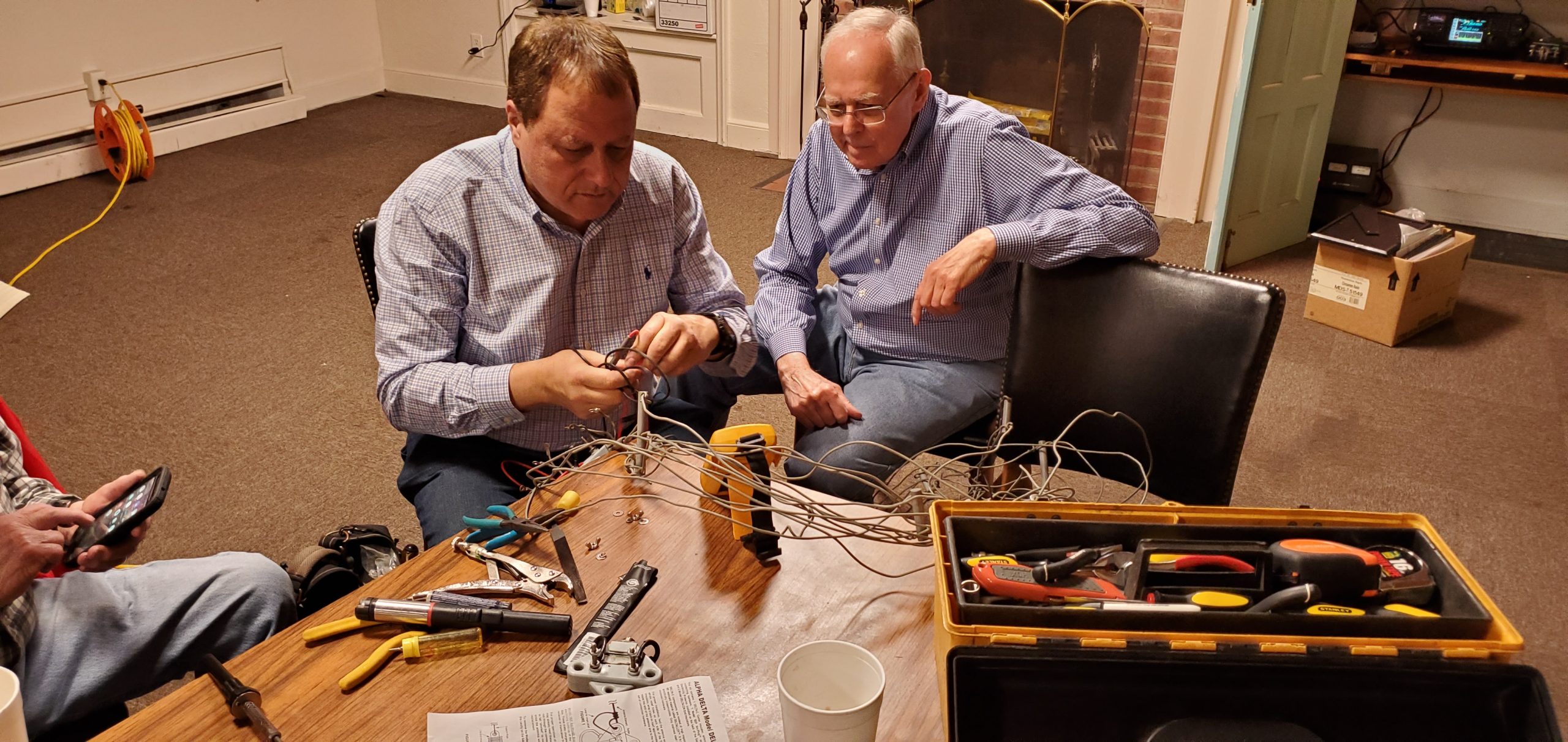
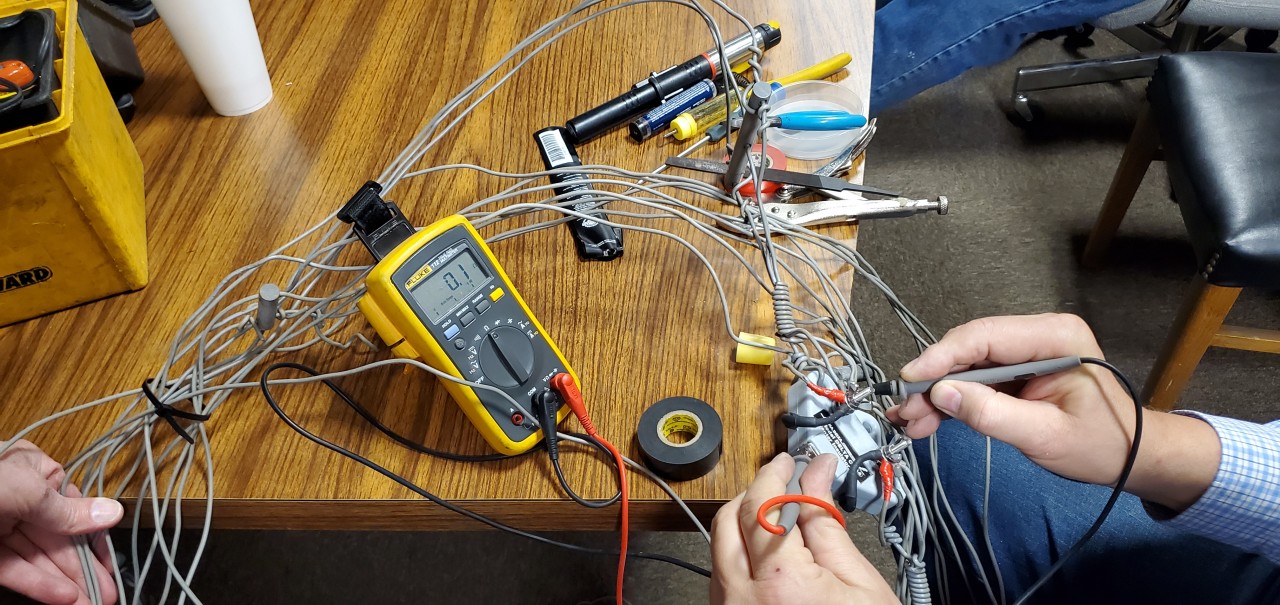
    Our May 15th club meeting was used to repair our “new” Alpha Delta Parallel Dipole Antenna. This antenna is a Parallel Dipole Antennas which consist of the Alpha Delta DELTA-C center insulator and end insulators, ISO-RES coils connected to the 80/40/15 meter wires, and separate wires for 20 and 10 meters. You can find details of the antenna here.  

    This particular antenna was donated by Steve AC2EI but needed some repair to the wires on the center connector. We hope to install this at our station.

    Enter your text here …

  • My new Kenwood TS890

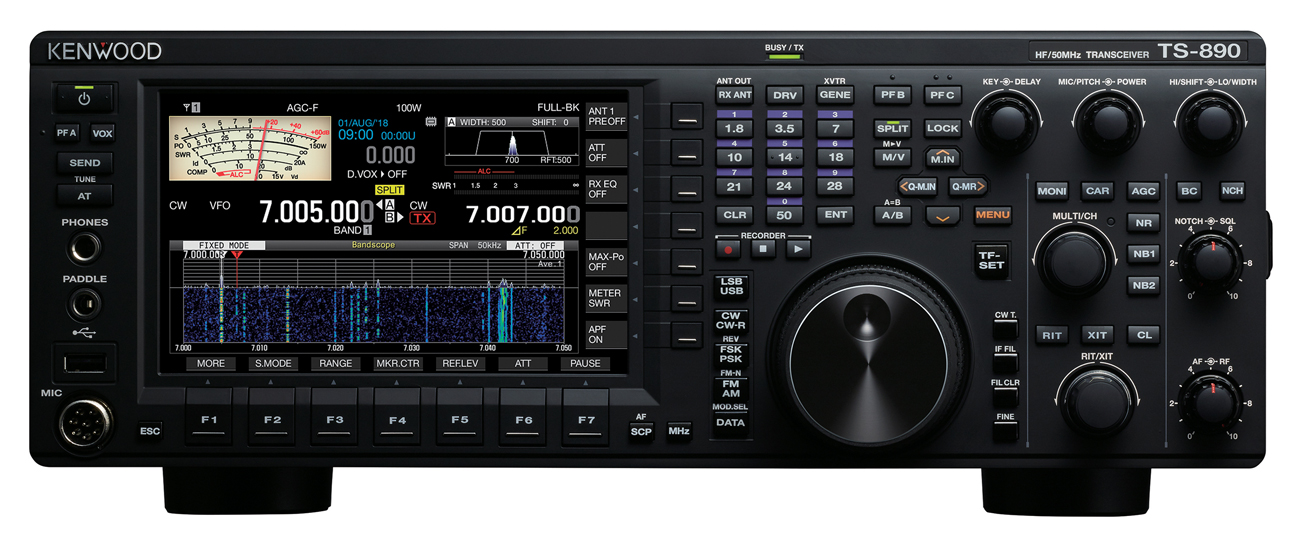
    My new Kenwood TS890

     This is an amazing radio. The receive clarity is outstanding. I am a SSB rag chewer so I really enjoy clean clear audio. My previous rig was the Kenwood TS590S. I enjoyed using that radio. It has excellent clarity but the TS890 take the receive to a new level. The quality of the signals I receive are so clear and crisp. It makes listening much easier. After all my years of playing rock in a band, I really appreciate the quality. It has a 2 position noise reduction button which does a great job. When I used that feature on my 590, it would almost block as much audio as noise. The TS890 does a far superior job. It really helps get rid of the noise while keeping the audio. Big improvement. Having the waterfall is another added benefit. Just touch the screen and the radio jumps to the active frequency. 

    As I use the radio a bit more, I will update the post. My next test is to check some microphones. I have 5 mics and my plan is to do a comparison without making any changes to the EQ. I will leave it flat and see what sounds better. The 5 mics are:

    1. Kenwood MC60A
    2. Heil  HM10 XD
    3. Sure SM58
    4. Electro Voice RE20
    5. AKG D8000M
    Look for my next update. 73 till then.
  • Ted – W2PNE Looks Back

    Ted – W2PNE Looks Back

    My interest in ham radio began when I was a sophomore in high school, age 14, and KN2VVN demonstrated his ARC-5 World War II receiver and transmitter. Having told me about all the countries he previously contacted I was somewhat surprised when all I heard were these strange sounds of dots and dashes, and yet, there was something about putting on the headphones and hearing the code for the first time that fascinated me. It was like joining a secret society and thus my beginnings in ham radio.

    My first rig was the crystal controlled Heathkit DX 35 and National 300 receiver. I remember the excitement of attaching a dummy load (lightbulb) to the RF output connector fiddling with the driver and antenna controls and watching the bulb light up, Eureka. The dummy load was replaced with a 40 meter halfway dipole fed with twin lead into a balun. A few years later, I graduated to the Heathkit DX 100 and Mosley TA-33 triband antenna mounted on top of a 40-foot telephone pole.

    During my college years, ham radio took a backseat aside from my Heathkit 20 meter mobile sideband transceiver mounted in a Volkswagen with a six-volt electrical system. I think my girlfriend at the time was upset when we drove up to Garret Mountain. I wanted to work DX she had something else in mind.

    In my late 20’s I got back into the hobby with the Kenwood 820, received my advanced and amateur extra tickets and became addicted to CW. I was so proud to hang up the ARRL 30 words certificate in the bedroom radio ham shack even though no one knew what that meant. It was a time of active repeaters, phone patches, and excellent band conditions.

    Ham radio took the second backseat in my 30’s when I became enthralled with computers. Being financially strapped, I sold the Kenwood 820 and purchased the RadioShack TRS 80, 4K, microcomputer complete with cassette storage.My involvement with Basic, Fortran, and assembly languages will discuss at a later time.

    Jumping ahead to my seventy plus years, I returned to active ham radio with an Icom 7600, PW-1 amp and two Icom VHF Dstar transceivers. My dream of finally running the full legal limit did not last long. The need to move closer to help rear the grandkids resulted in a move to a condominium where amplifiers and noticeable antennas are a no no.

    Thus, the never-ending story continues. I been the treasurer of the Chestnut Ridge Radio Club for the past 7 years and coming late to WEARC meeting, unqualified Vice President for one year.

  • my blog

    vbnmhgjik kwefhlgklwe k;hjwenfm  c ,wen,jf;kwrnv;nv w

  • The New Beginning – From Our President Donald Saltzman, K2DEG

    The New Beginning – From Our President Donald Saltzman, K2DEG

    The WEARC started in 1994 with the main goal to come together in an atmosphere where like-minded amateur radio operators could both discuss and engage in contesting, DX’ing and all modes of ham radio communication. As expected, the annual Field Day is the most-anticipated club event for WEARC, as it is for most amateur radio clubs. Our club will often host or participate in local community events. The club also provides fostering and promoting individuals in all aspects of amateur radio and a commitment to assist those with an interest in entering this exciting hobby an assist in attaining this achievement.

    As an organization, WEARC firmly believes in the spirit of community service and outreach

    Over the years, as with most organizations, the club fell into a rut and was not growing in attracting new members nor having a lot of new activities.

    Upon the recent passing of our long incumbent President, a meeting of members was held, a new direction for the club was established with a commitment of more active participation by all the members, and I was elected to be the new President. For the last few months the change has been astonishing with many more activities scheduled and more participation by the members.

    This web page, for which we owe Steve, KD2QIP all of the credit for designing, building out and implementing, has helped galvanize the membership and get them involved

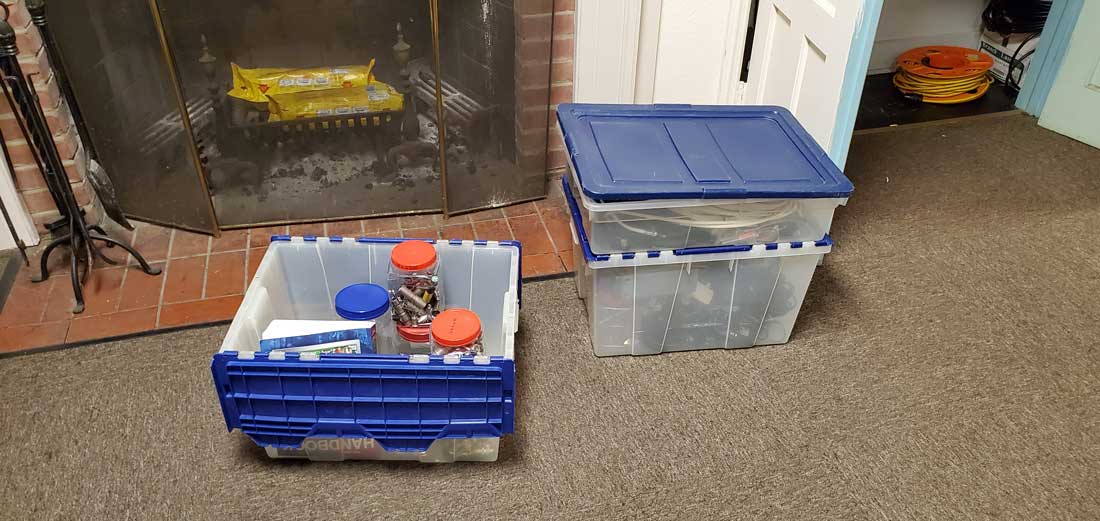
    The clubs first step towards a rebirth was the massive cleanup of the club facilities. A group of members, spending a good part of a day, went through all of the years of accumulated equipment, papers and “junque” and managed to fill a dumpster.A lot of “stuff” has been set aside to be taken to a ham flee market. The final act of the day was to set up a permanent operating station so that members and non-members who wish to operate on the first and third Wednesday evening of the month can do so with the mere flip of a switch. This will provide a service for those hams who do not have a station at home and want to get on the air.

    Donald Saltzman, K2DEG

  • Sad passing of our President

    Sad passing of our President

    I am very sad to announce that John Weinfeld N2NO has gone silent key. He was our club president and will be missed by all who knew him. Rest in peace our friend. 73

    N2NO remembered by Mike Hartmann, NI2S

    I first met John on the front steps of the Grover Cleveland Junior High School in Caldwell, waiting for the doors to open on the first day of school.I was apprehensive of my first day at this new school, and John’s cheerful welcoming demeanor and dry humor helped put me at ease.By stroke of luck, we wound up in many classes together.Shortly thereafter along came Alan Machbitz, K2AJV, and in the ensuing months and years the three of us became a unit.After we all transitioned to high school, the three of us got caught up in the CB Radio craze, and we all acquired CB gear and met regularly on the air, forming our own chat net of sorts.Around this time I introduced both John and Alan to Ham Radio.My father, an electrical engineer, was a ham since his own high school days, so, while I was not licensed yet, I was very familiar with the world of Ham Radio.John was very good in math, and he enrolled in an introductory Physics class in High School, and there discovered that the Physics teacher, Bill Grahn, was a licensed ham, and that the High School actually had a dormant radio club which included an equipped radio room and a beam antenna on the roof of the High School.Mr. Grahn happily reconstituted the JCHS Radio Club for us, and immediately encouraged us to get our Novice license, hosting sessions to help us with the Novice theory, and also to practice Morse Code (in those days you had to copy Morse Code at 5 wpm to get your license).As a trio, we all started attending the Livingston Amateur Radio Club(W2MO “mighty MO”) meetings, where my father was President of the club.

    When we were all ready, we ventured into Manhattan to take the license exam at the FCC field office there.We were with a couple other kids from the club and also the High School, and one of their parents escorted us into the City.It was a grand adventure which included nearly getting separated from our chaperone on the famed NYC Subway system.We arrived at the famed FCC building on Varick street, and we all took and passed our Novice tests.Of the three of us, John advanced to higher classes of license fairly quickly, though Alan and I lagged behind.Meanwhile, after we got our tickets, we all began participating in Field Day through the LARC club, of which I had already been attending LARC field days, always located at the Hilltop picnic area of Overlook Sanatorium on the Verona/Cedar Grove border. We all caught the Field Day illness, and we stuck with Field Day even after LARC withered and died, managing to get permission from Essex County to use the increasingly neglected Hilltop site until one year Essex County finally said ‘No’, and we had to find another location, which we did.

    After we graduated high school, John elected to attend the University of Delaware at Newark to pursue a degree in Electronics Engineering.Ham Radio played a key role in shaping John’s technology interests into adulthood, and also there was some mentoring help from my father in introducing John to the world of electronics.Once John graduated, he applied for a civilian job with the Department of Defense and was accepted for a position working out of Fort Monmouth, developing into a life-long career of public service supporting our nation’s military. Much of his work at DOD was classified, but it did have something to do with communications, and he also developed expertise in what was then secret emerging technology that we all take for granted today:the Global Positioning System or GPS.John retired from the DOD several years ago, and took up tutoring children as an alternate career – a job he thoroughly enjoyed.

    Throughout these years, John, Alan, and I kept in close contact – we continued to be a unit of sorts, and for many years we would hold weekly ‘court’ at Franco’s Pizzeria in West Caldwell, where the waitresses, and owners all knew us by name, and they would order for us without us ever having to look at a menu.And of course, there was always Field Day.John liked to experiment with exotic wire antenna designs during field day, and frankly this would drive me a bit nuts because his antenna’s rarely actually worked, to his own amusement.In the end I sometimes think John did this just to needle me, because we seemed to always be competing for last place in our operating category, and I, as a reasonably competitive guy, I didn’t enjoy coming in last place.John didn’t really care all that much about placement, but he did really enjoy trying out all those failed antenna designs.As he said himself once, at least we knew what didn’t work!Indeed.

    For some time John had been attending the Irvington-Roseland Amateur Radio Club, K2GQ.John invited me to give it a try, and I attended a few meetings but felt the club dynamics were not for me. Apparently, a number of IRAQ members felt similarly, and eventually decided to split off and start their own club – the West Essex Amateur Radio Club – WEARC.Interestingly, while John gave me a heads up that a new club was forming, John himself did not immediately join WEARC, so I wound up being one of the “founding members” where John was not, but he did join soon after the club was incorporated, and eventually stopped participating in IRAC and devoted his energies to WEARC instead.Alan also joined for a time, but eventually moved farther away making attendance difficult.

    Over the years WEARC was a consistent part of our lives, and John was eventually elected President of the club, a capacity he served in for many years, and I believe I am not mistaken that he became the longest serving President of the club, either coordinating or officiating over club activities, particularly the annual Grover Cleveland Special Event, Field Day (of course), and V/E Sessions, providing many aspiring hams with a conduit to obtain their license.

    It is here that the story comes to a rather shocking close.John developed a serious rare illness, though his Doctors were optimistic, John suffered a series of cascading health set-backs in rapid succession, and after a short, tough fight, succumbed to the illness.N2NO is now a Silent Key, having now joined the other WEARC luminary President Emeritus – Joe Valley, Bob Lange, Brian Keegan, Bob Marsh and Tom Simko (Tom also passed away too soon, and tragically).

    I have known John Weinfeldt for more than 40 years, and our lives were very much intertwined.To understate it, he will be missed.

    73 Old Man, until the propagation allows for us to meet again,

    Mike Hartmann, NI2S