Category: WEARC Blog

  • WEARC Parks on the Air Activation of Wawayanda State Park – 10/16/2021

    WEARC Parks on the Air Activation of Wawayanda State Park – 10/16/2021

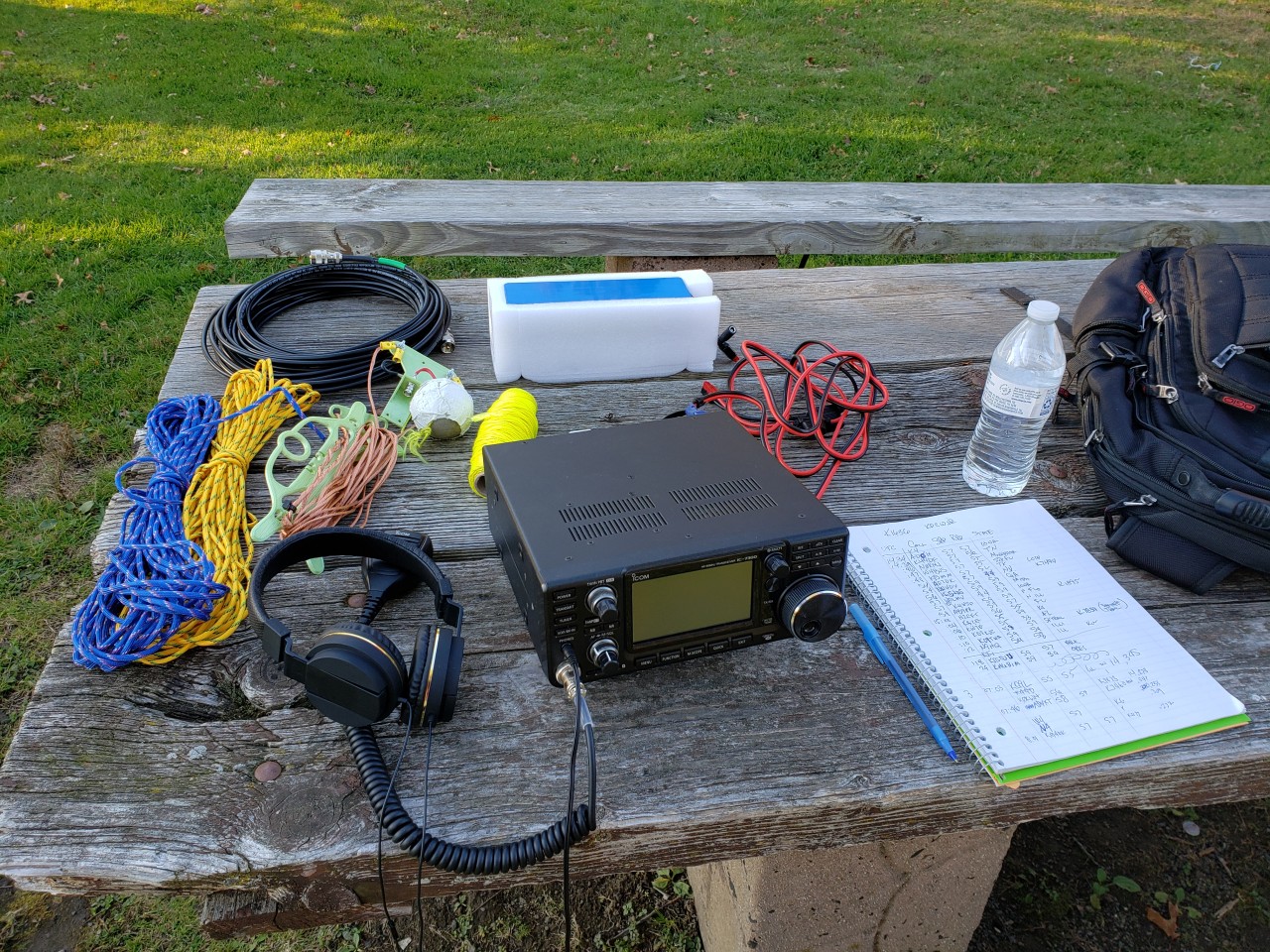
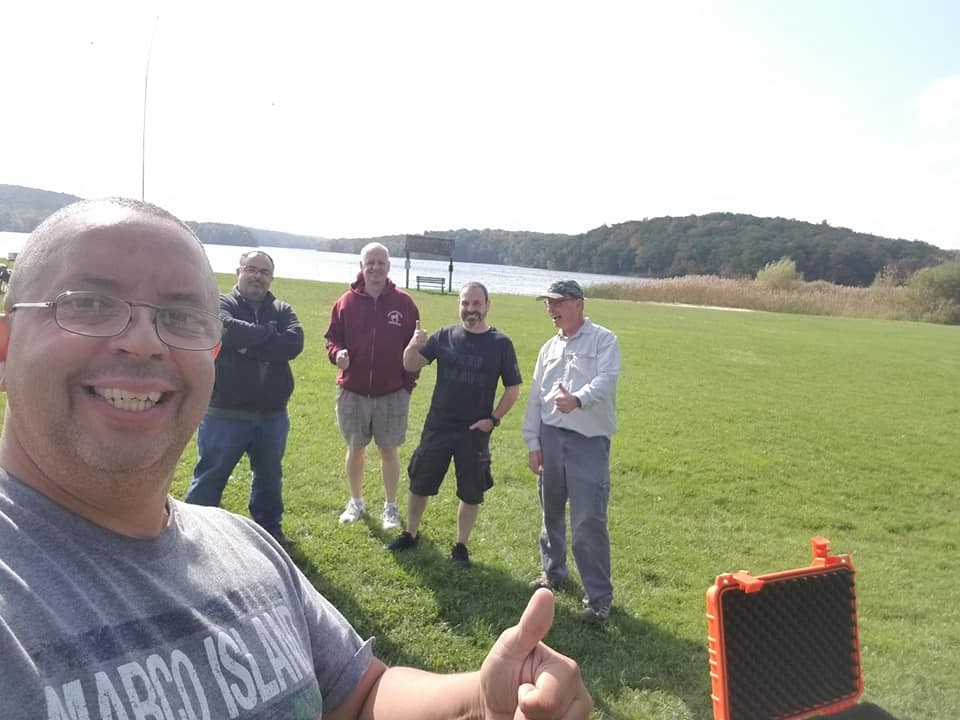
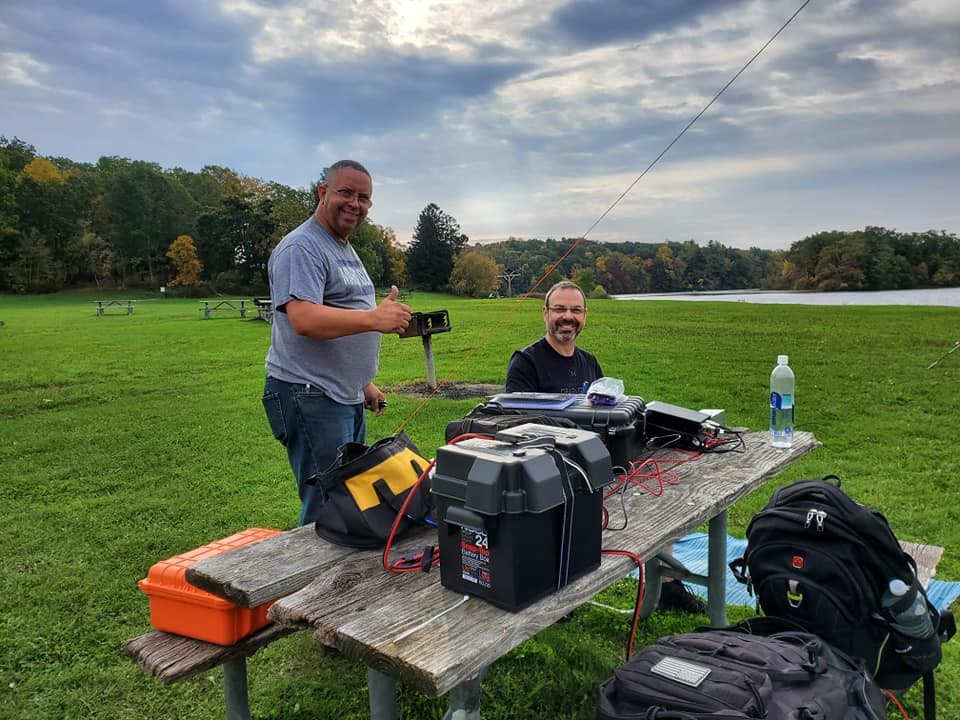
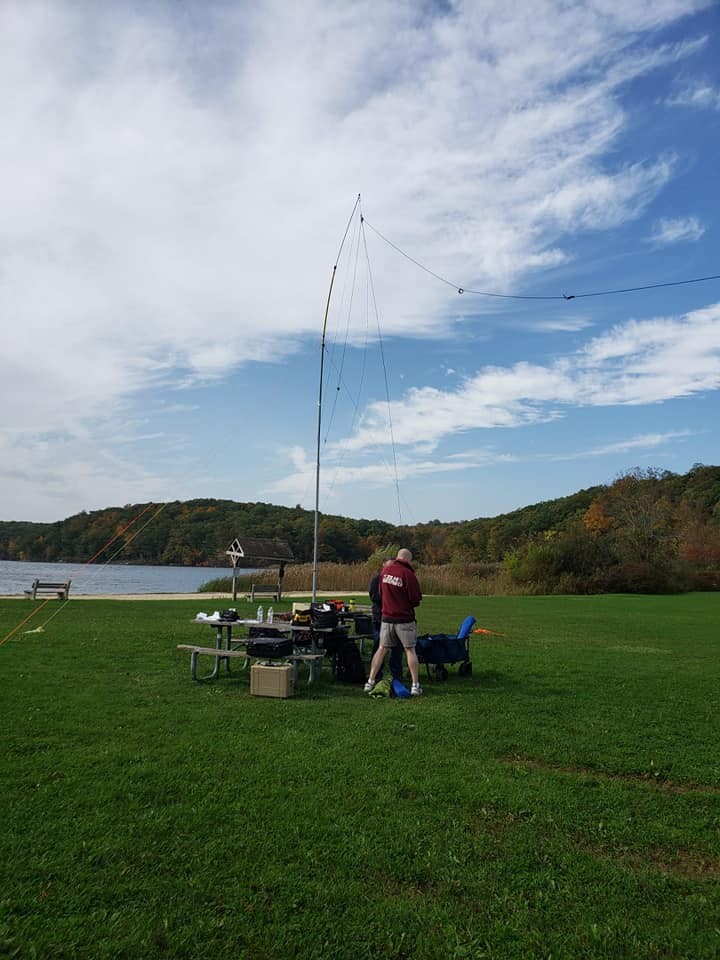
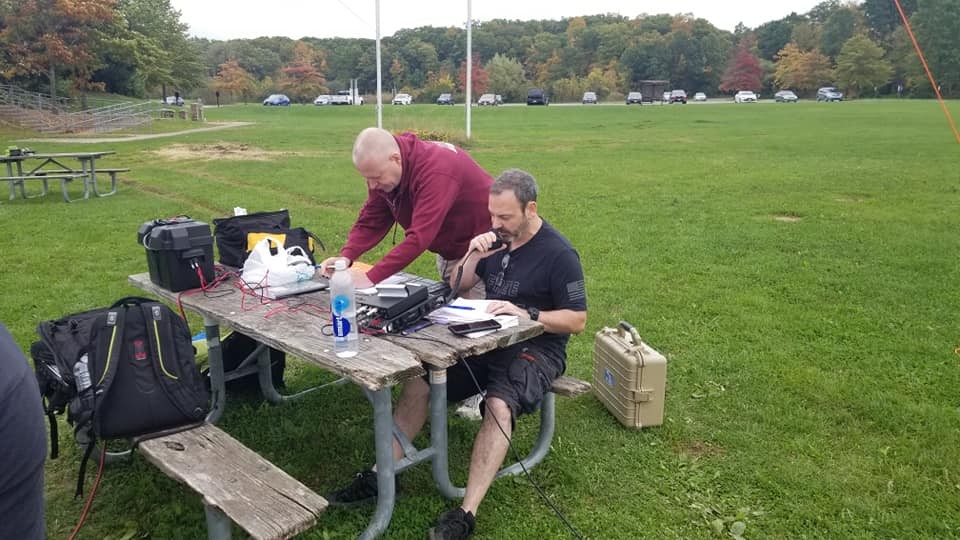
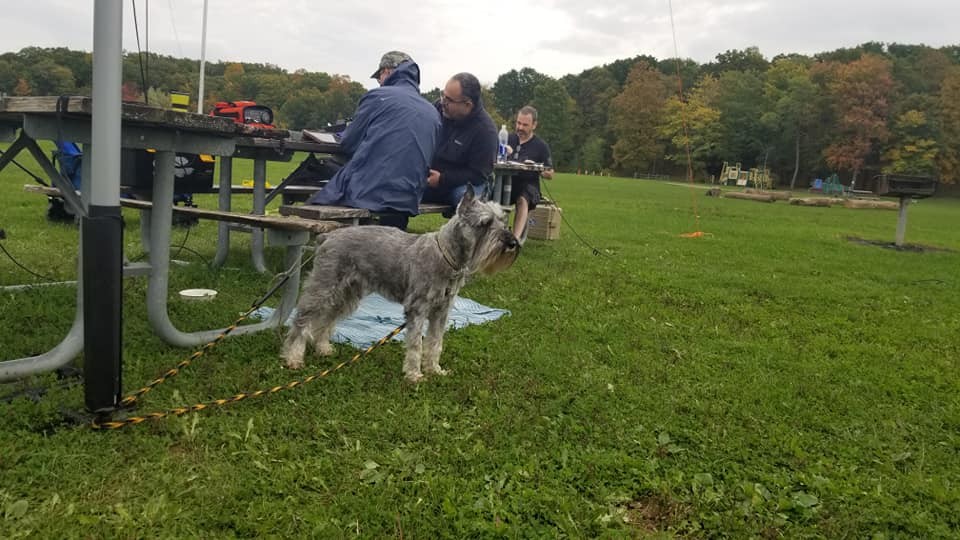
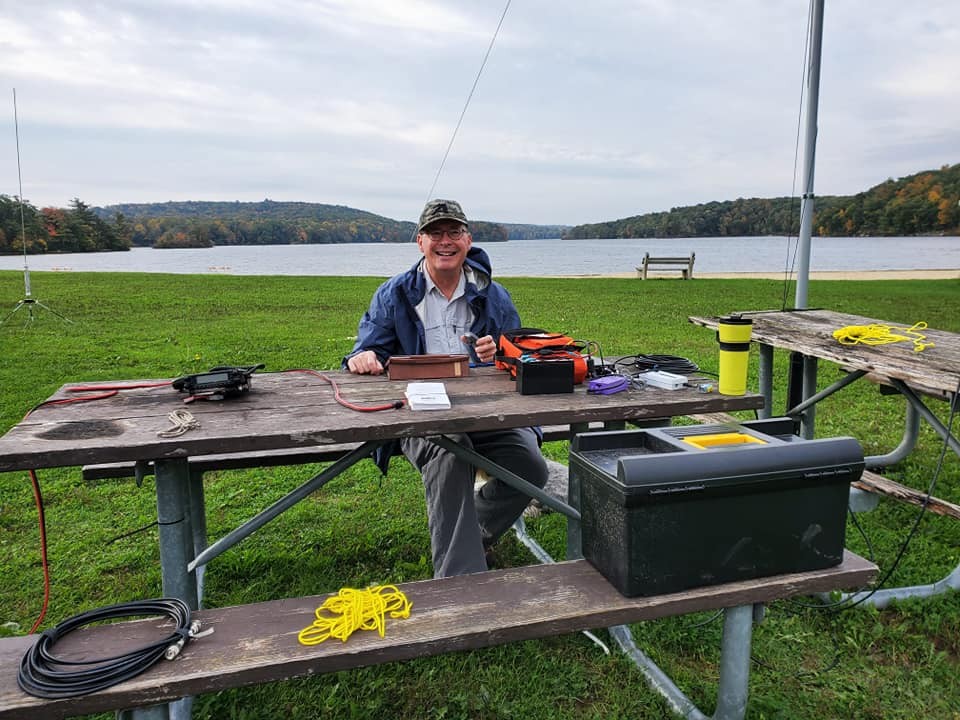
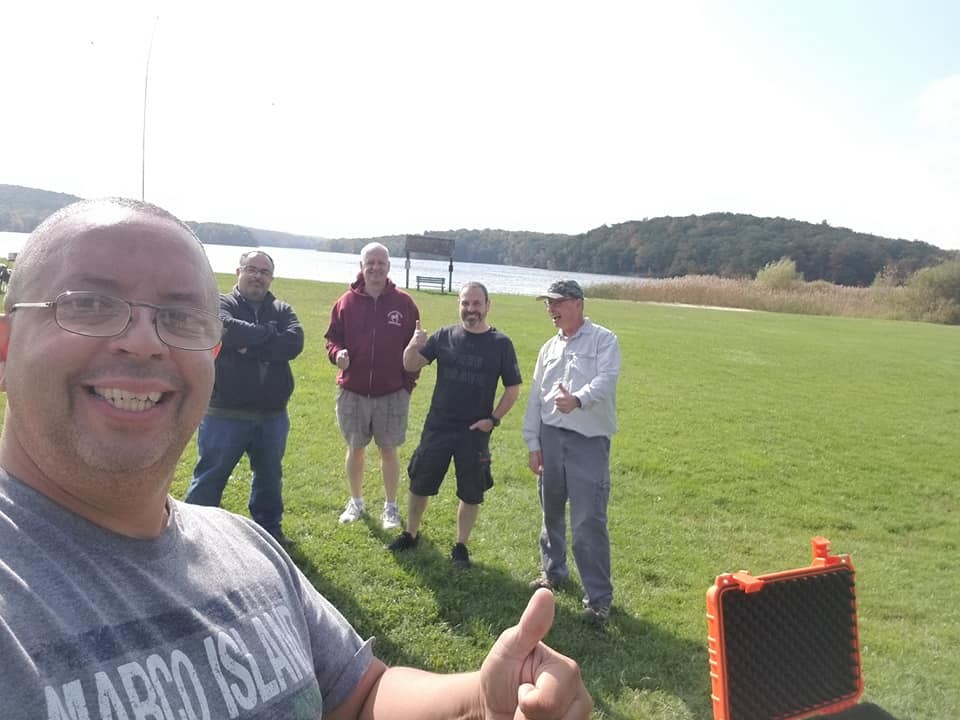
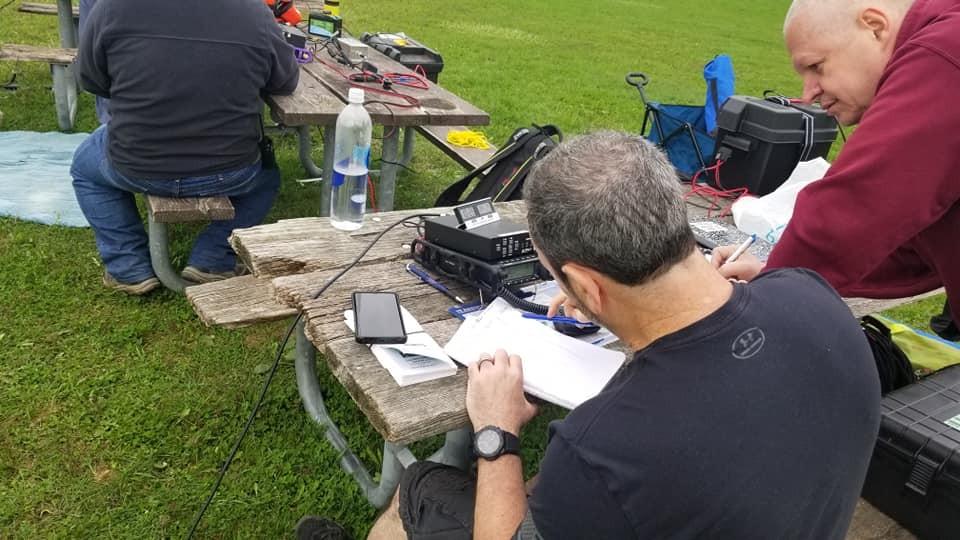
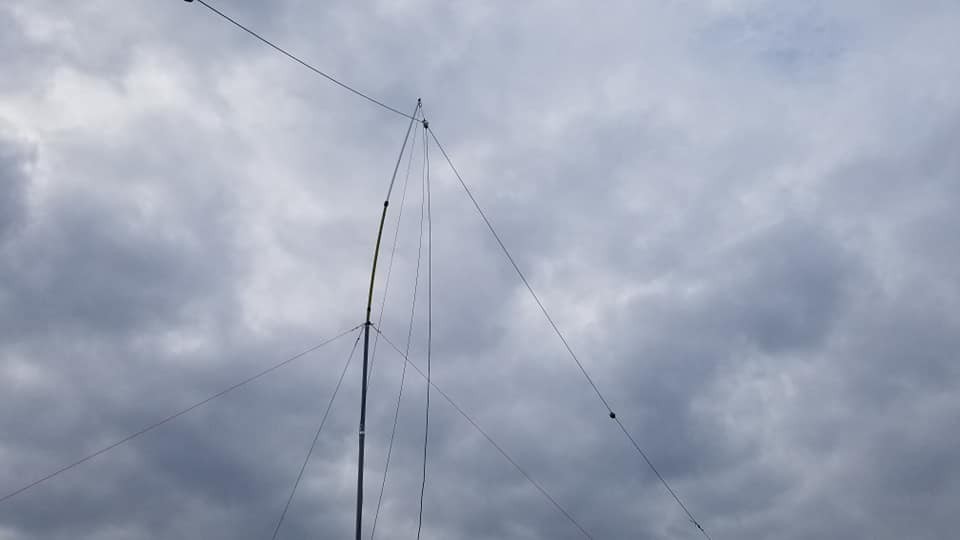
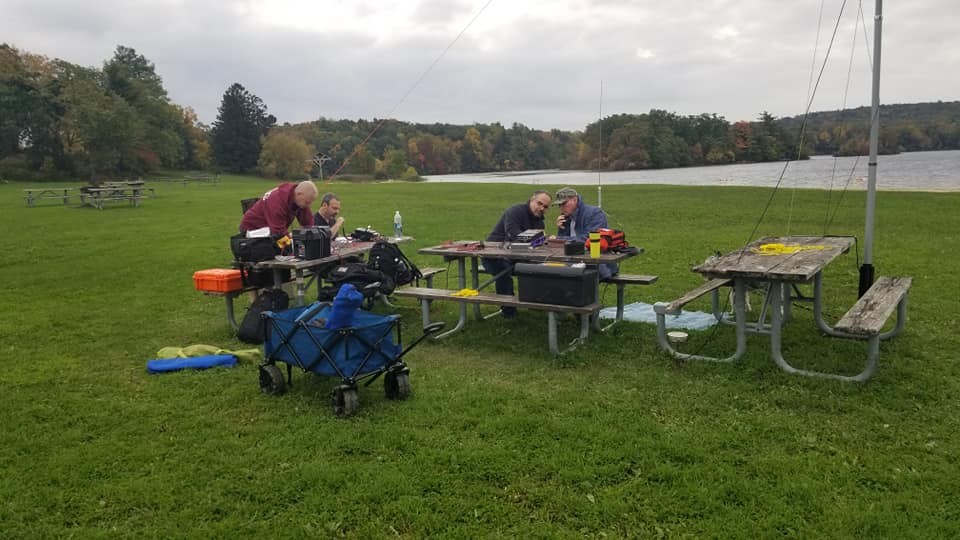
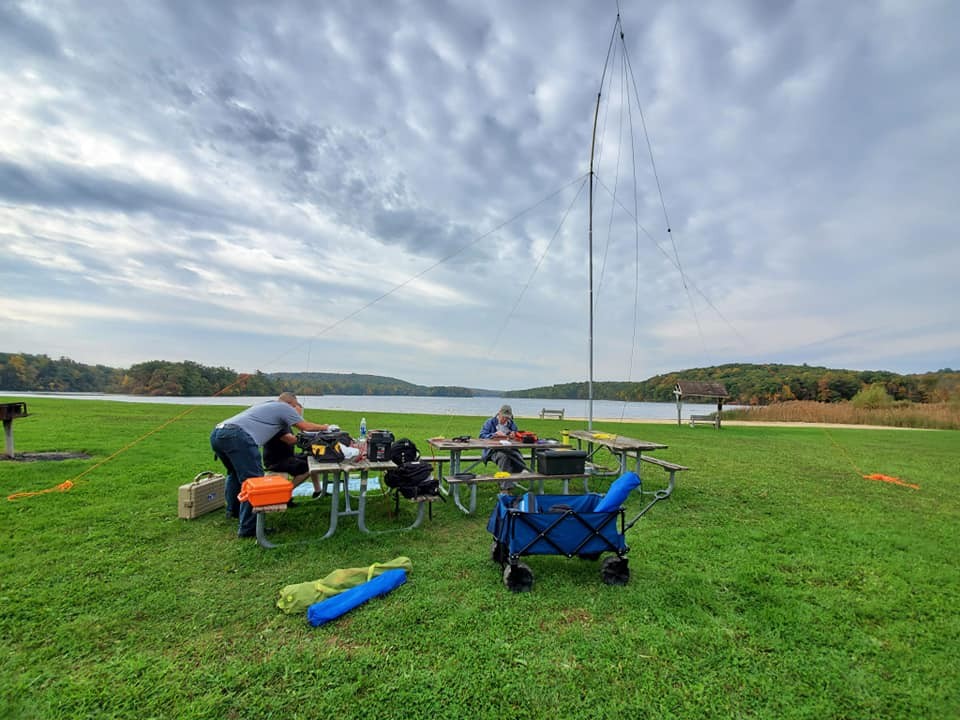
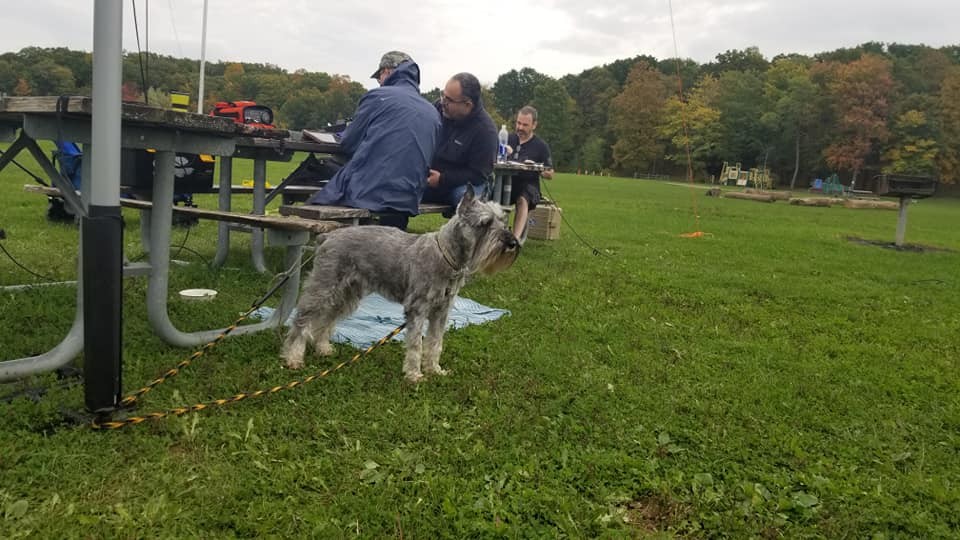
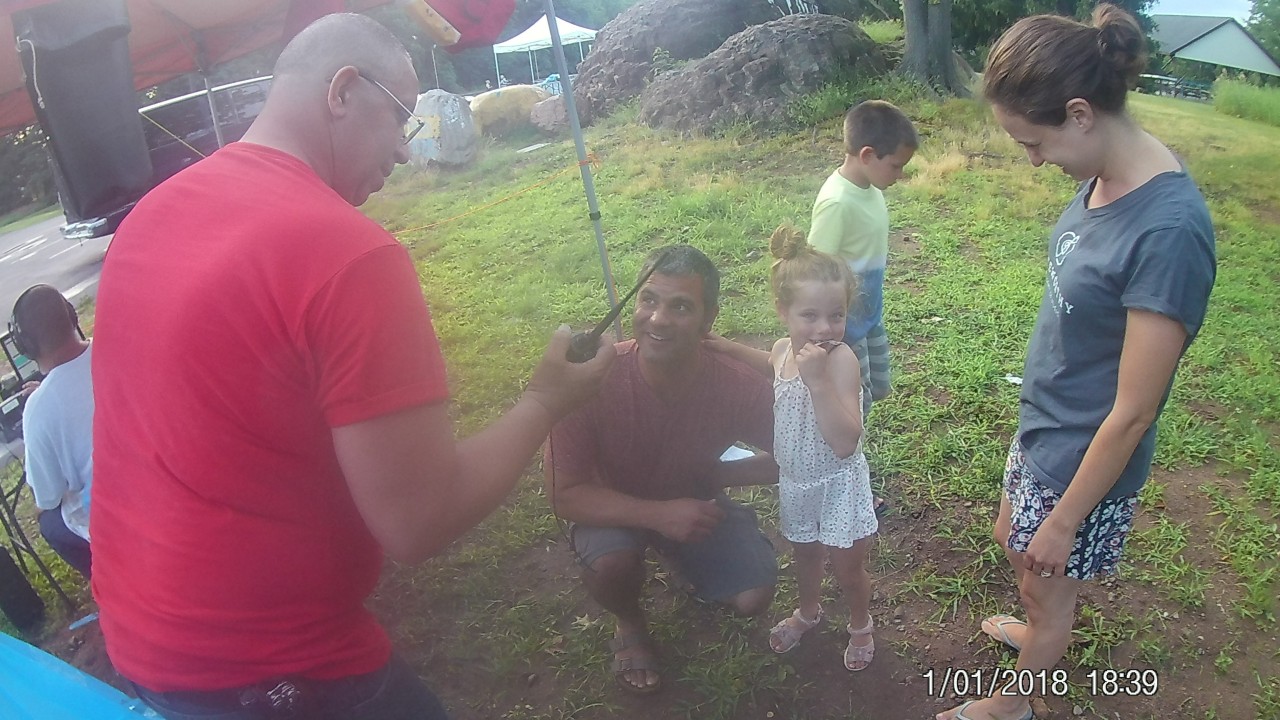
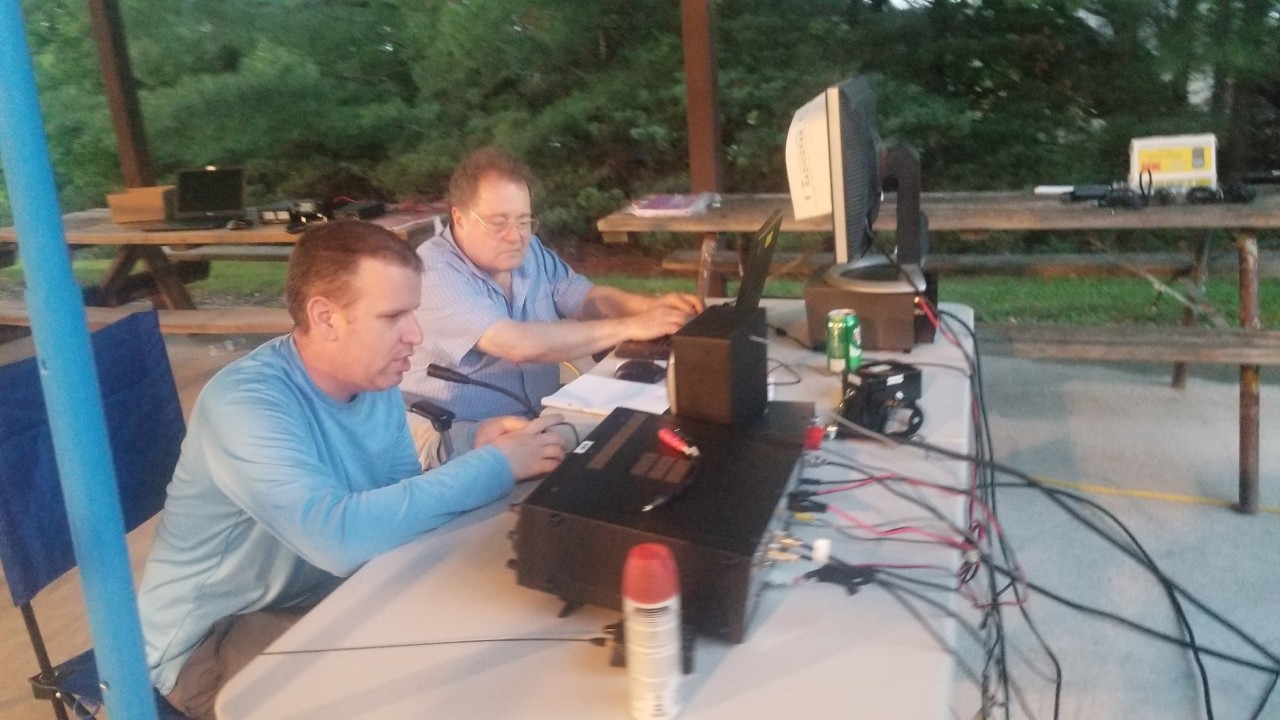
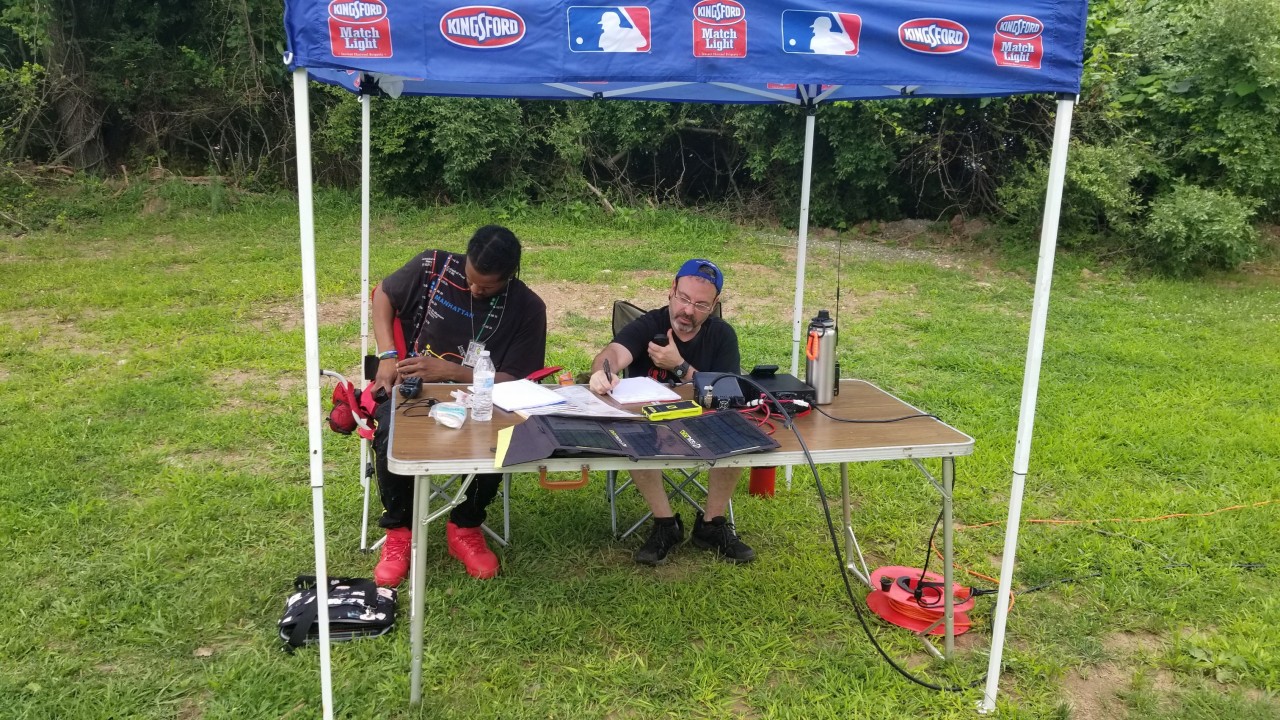
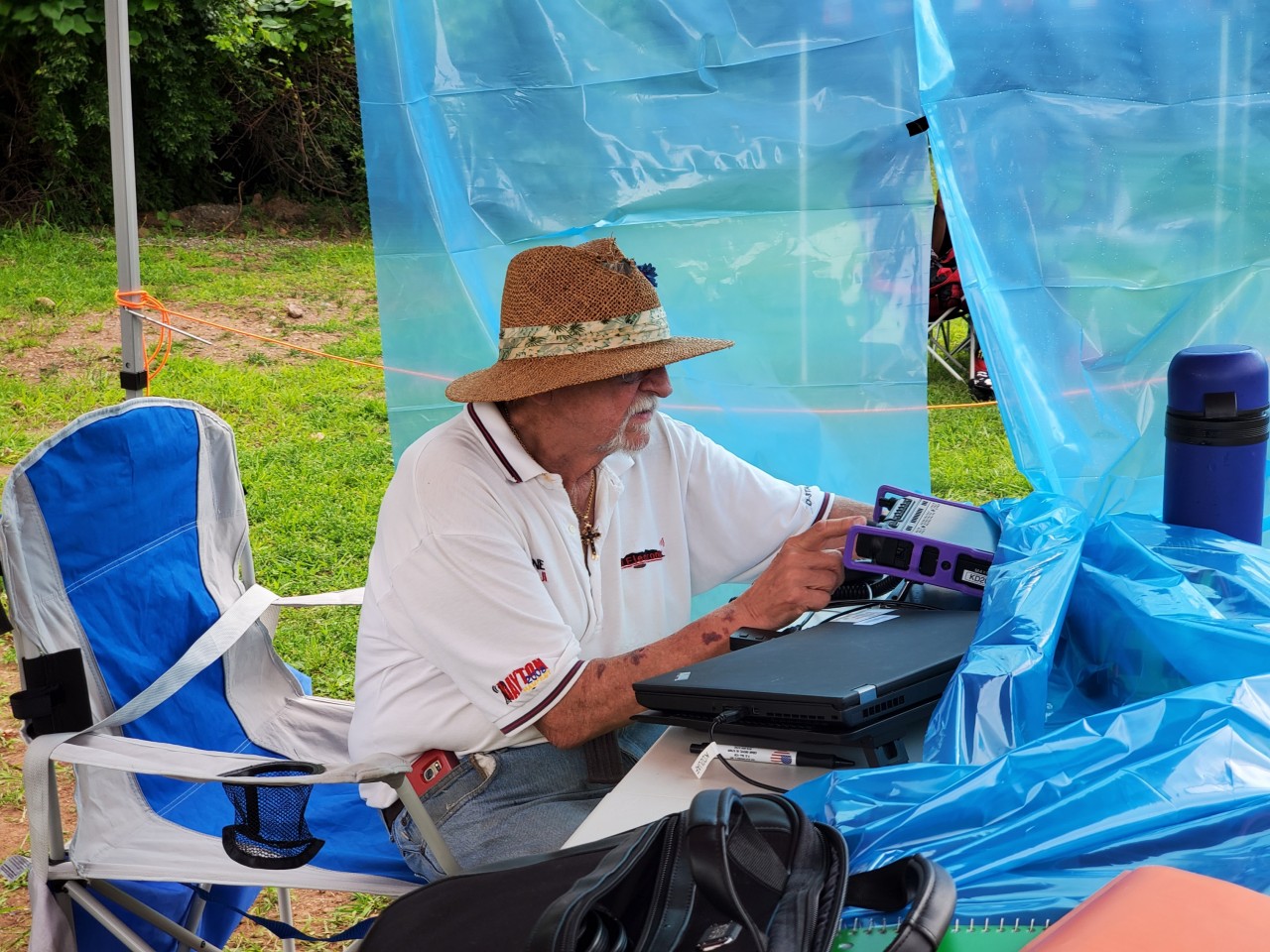
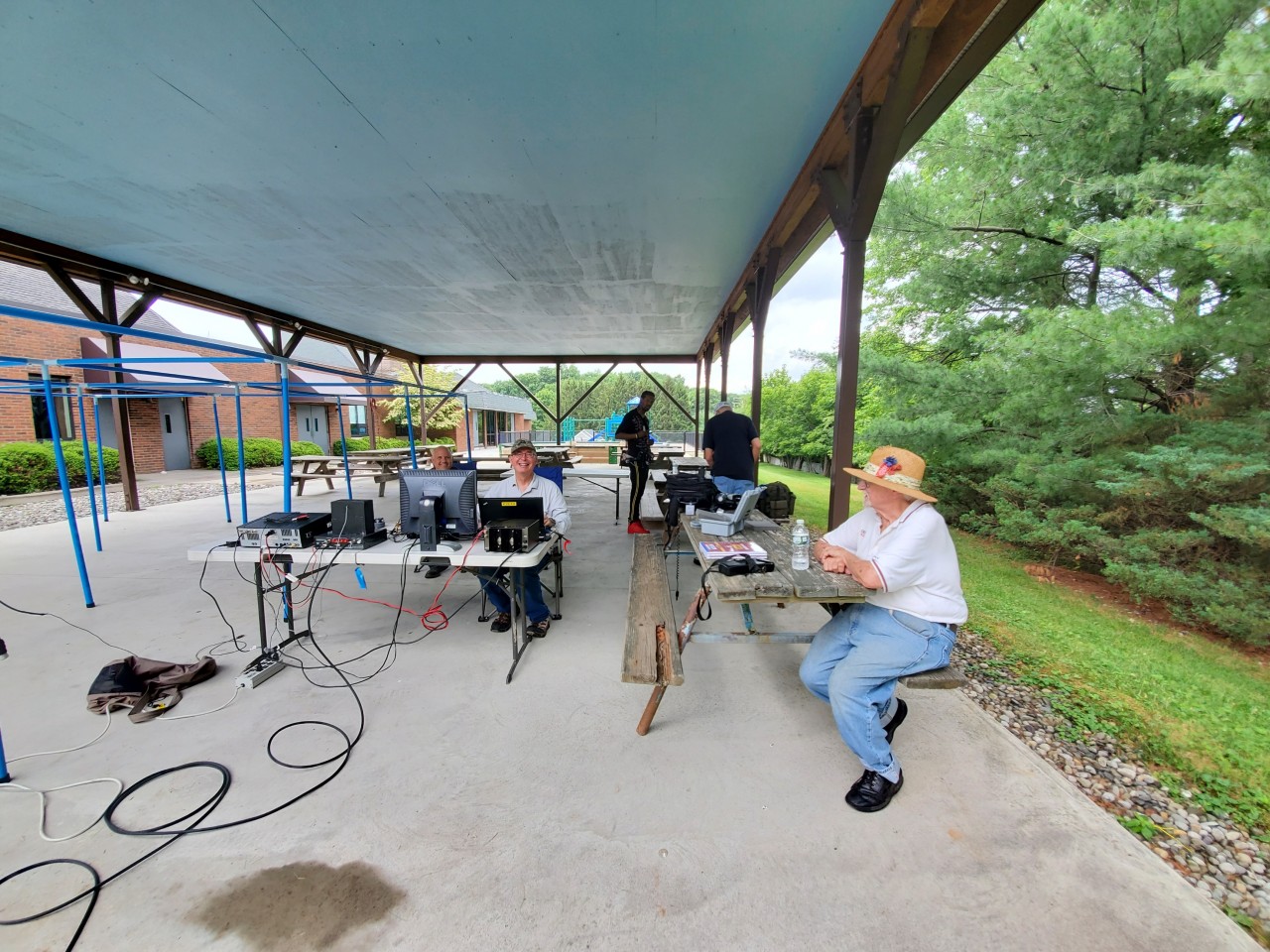
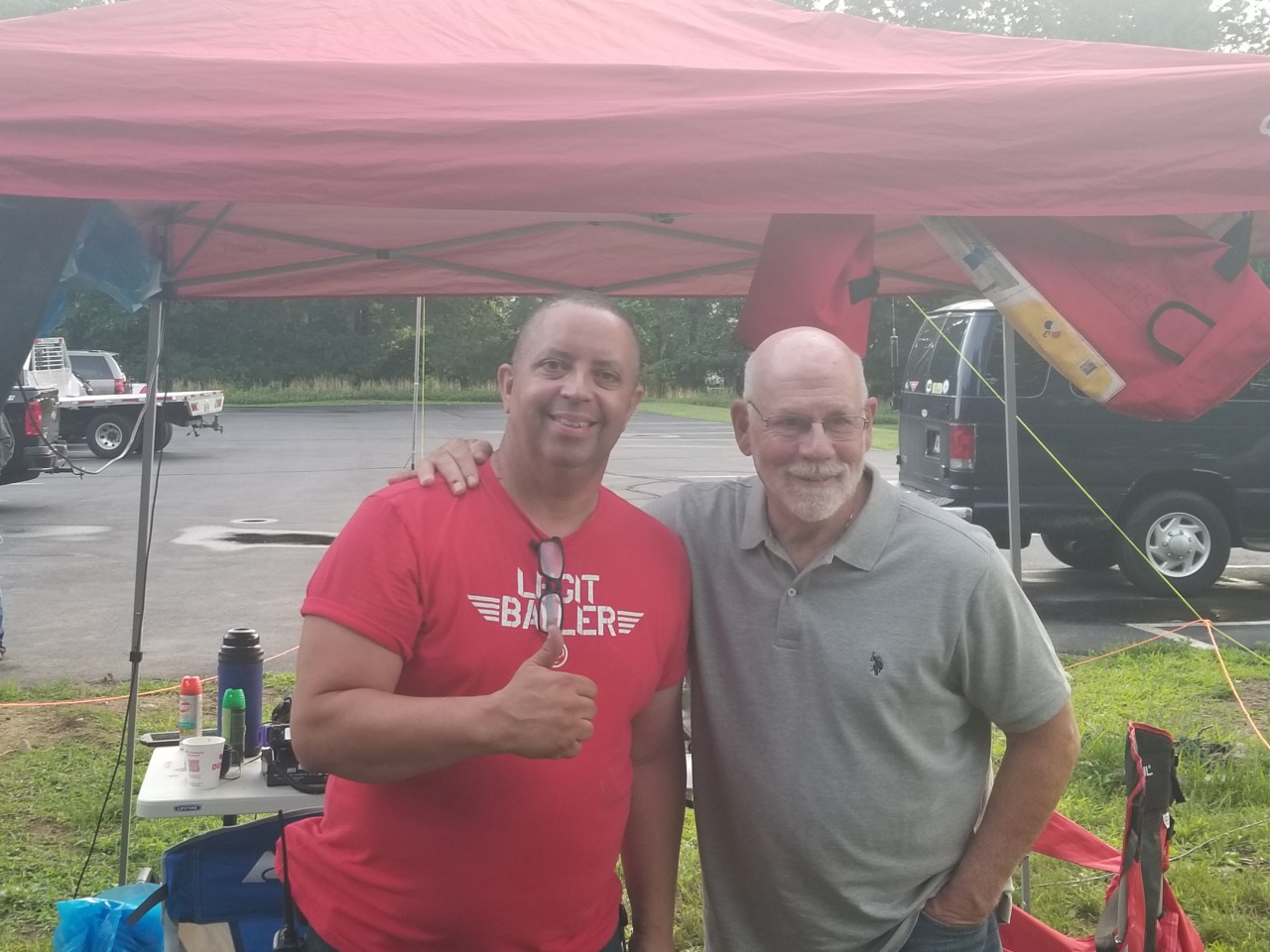
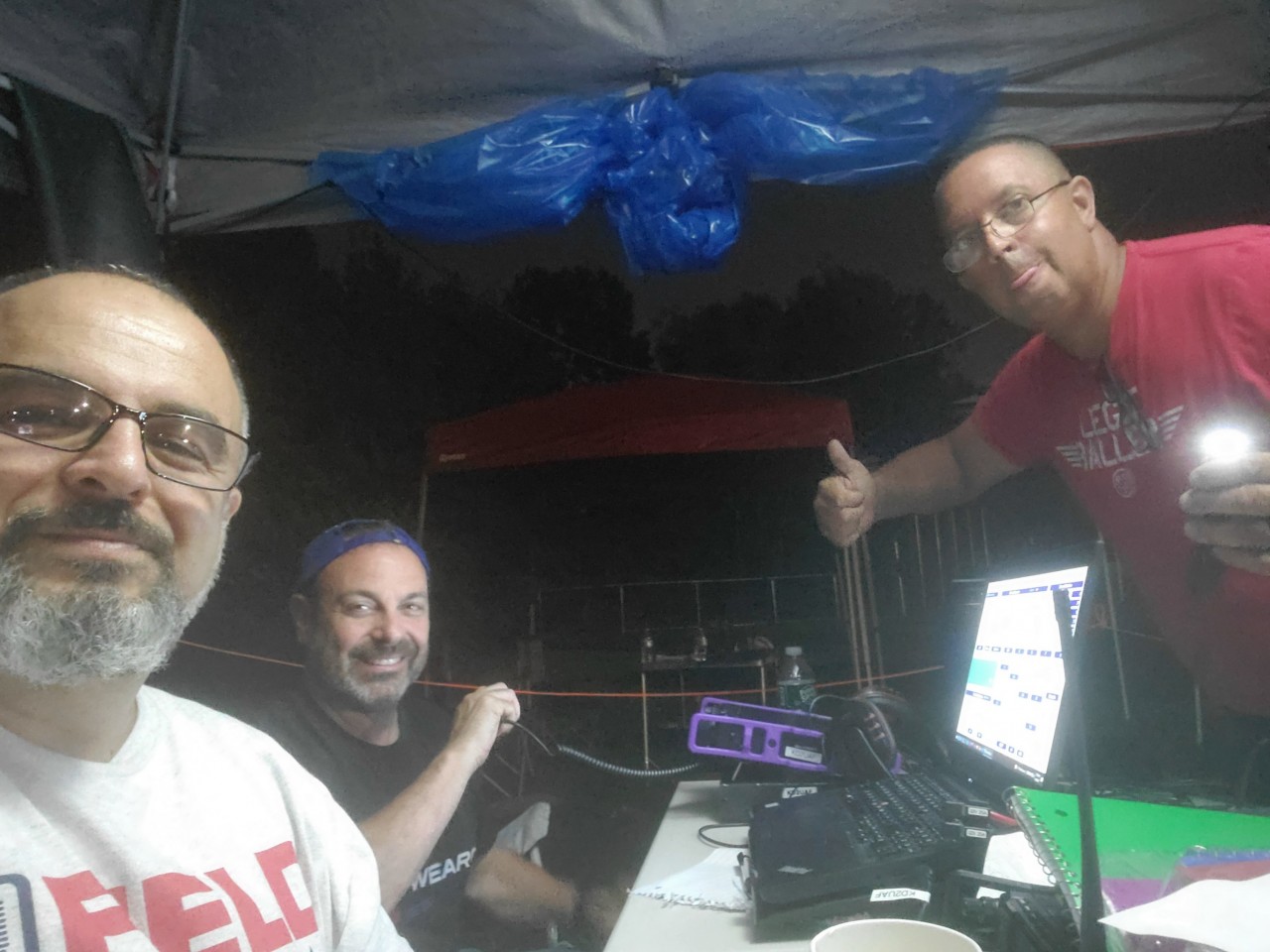
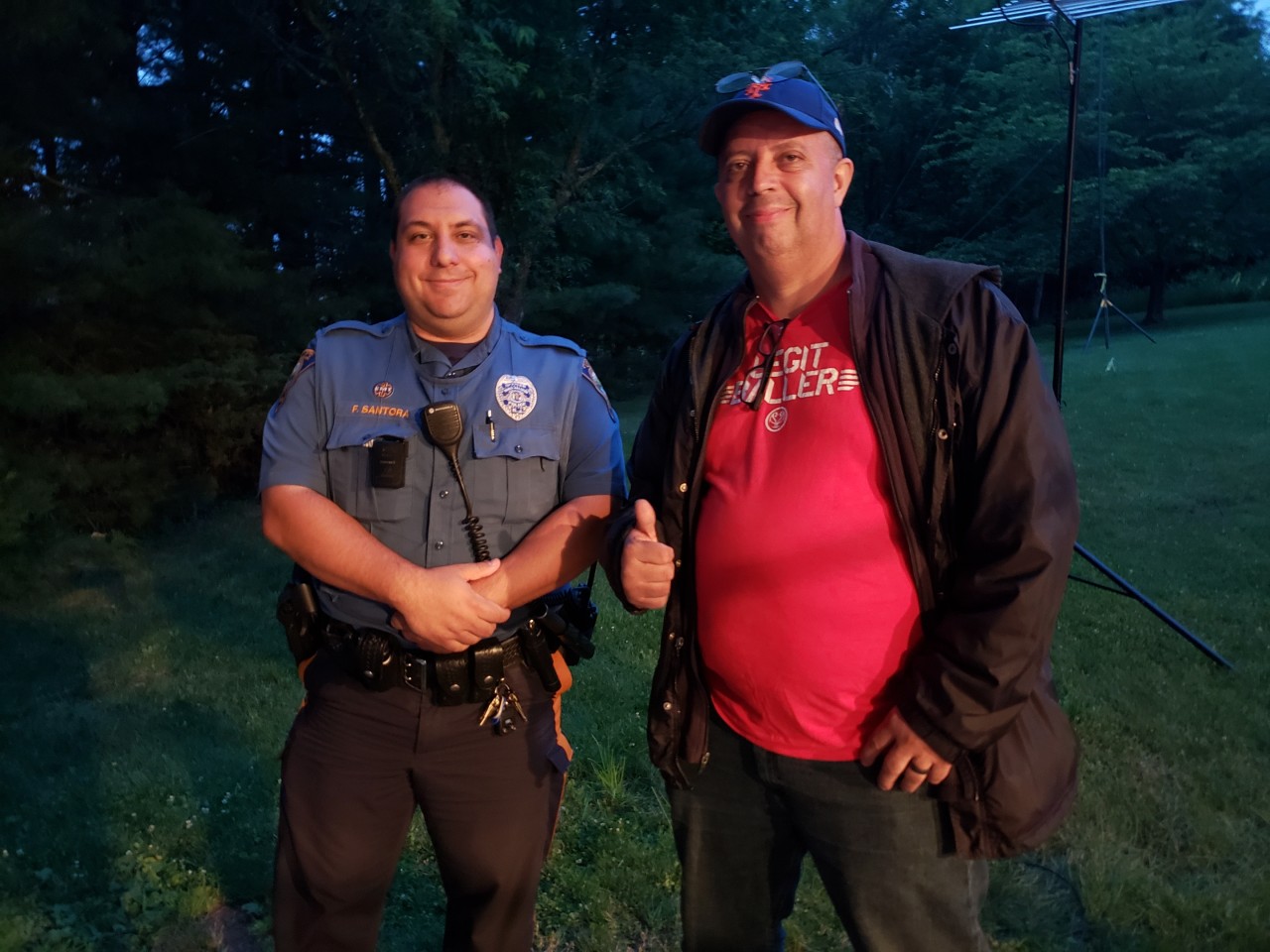
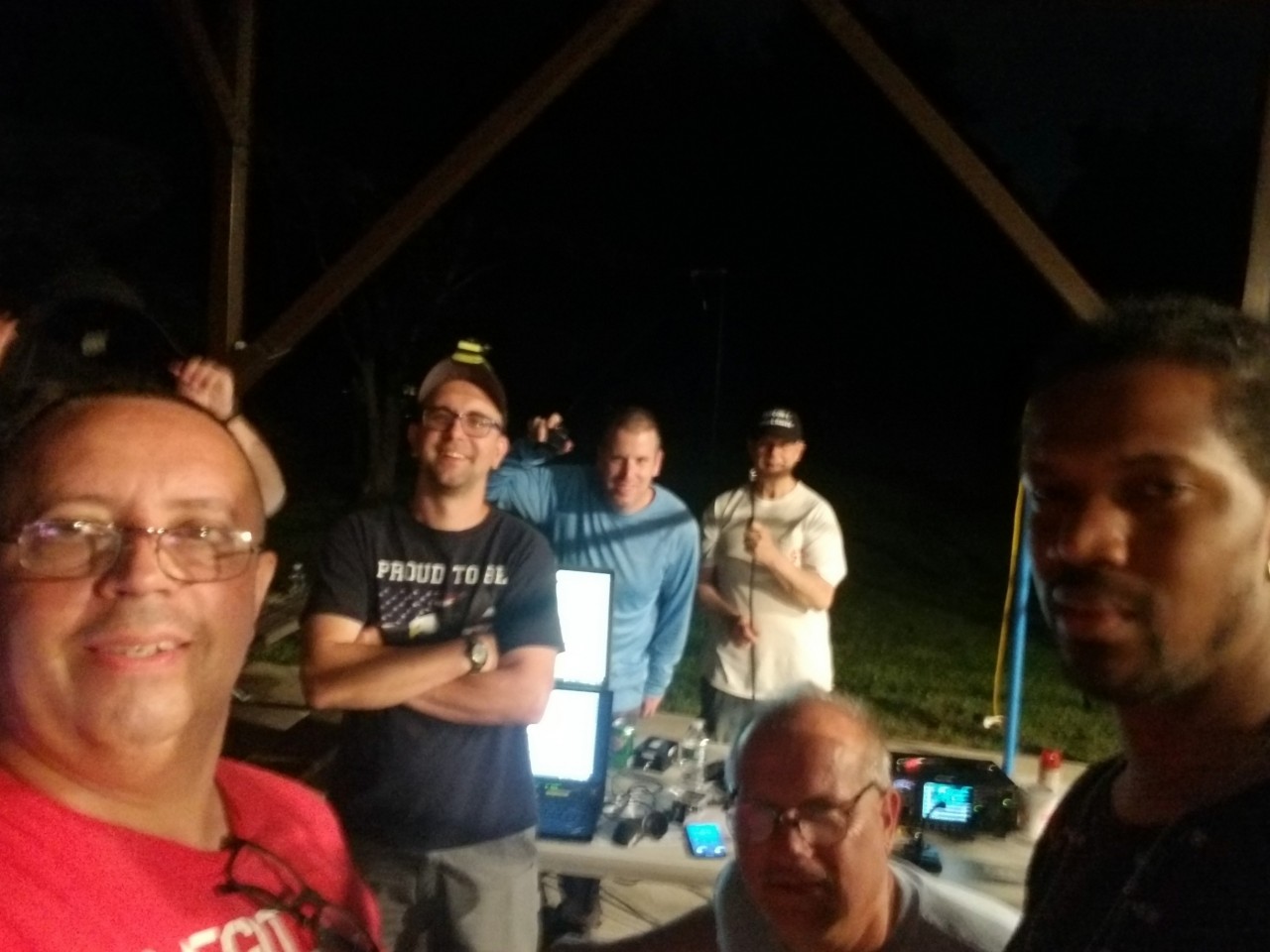
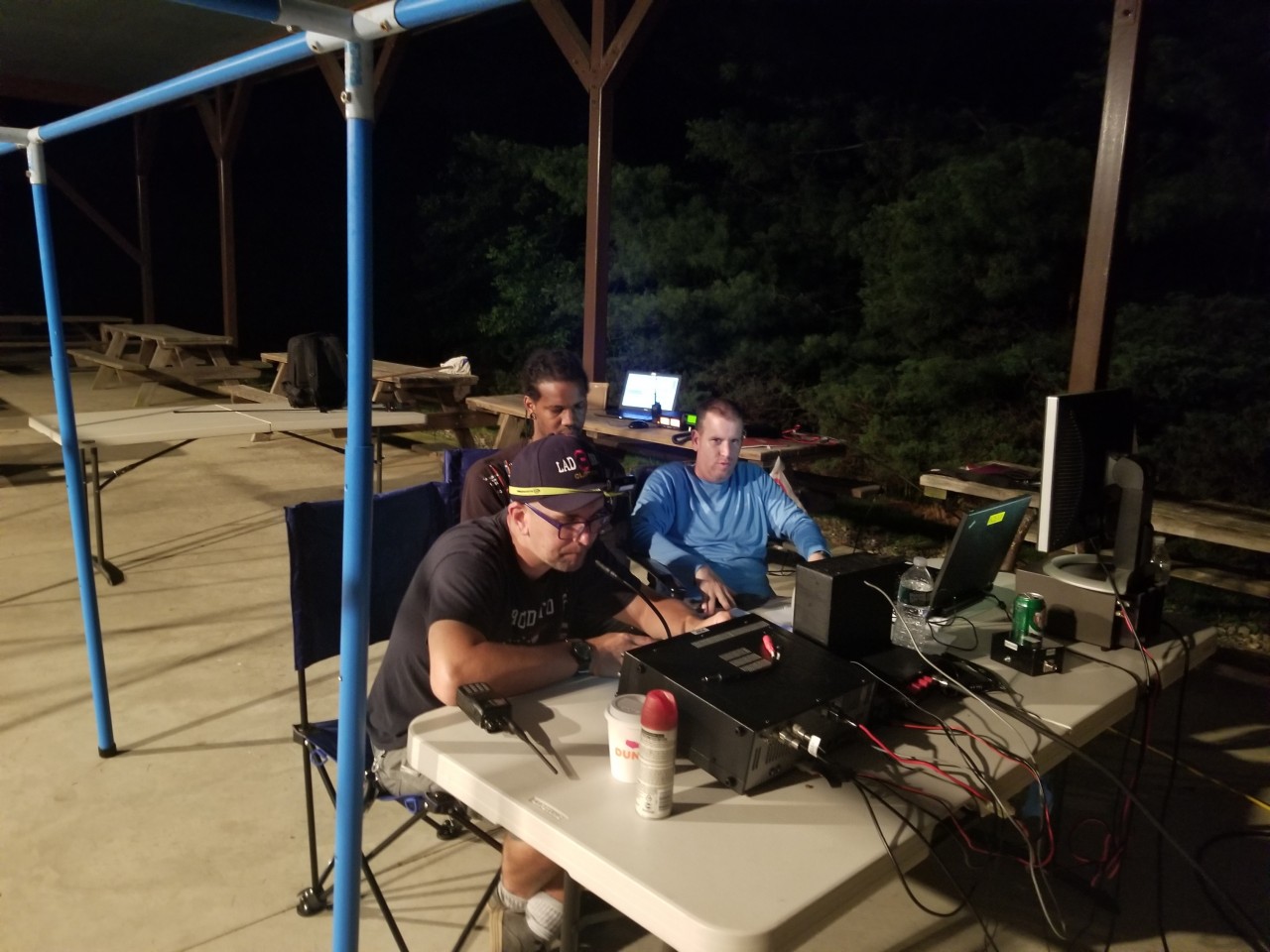
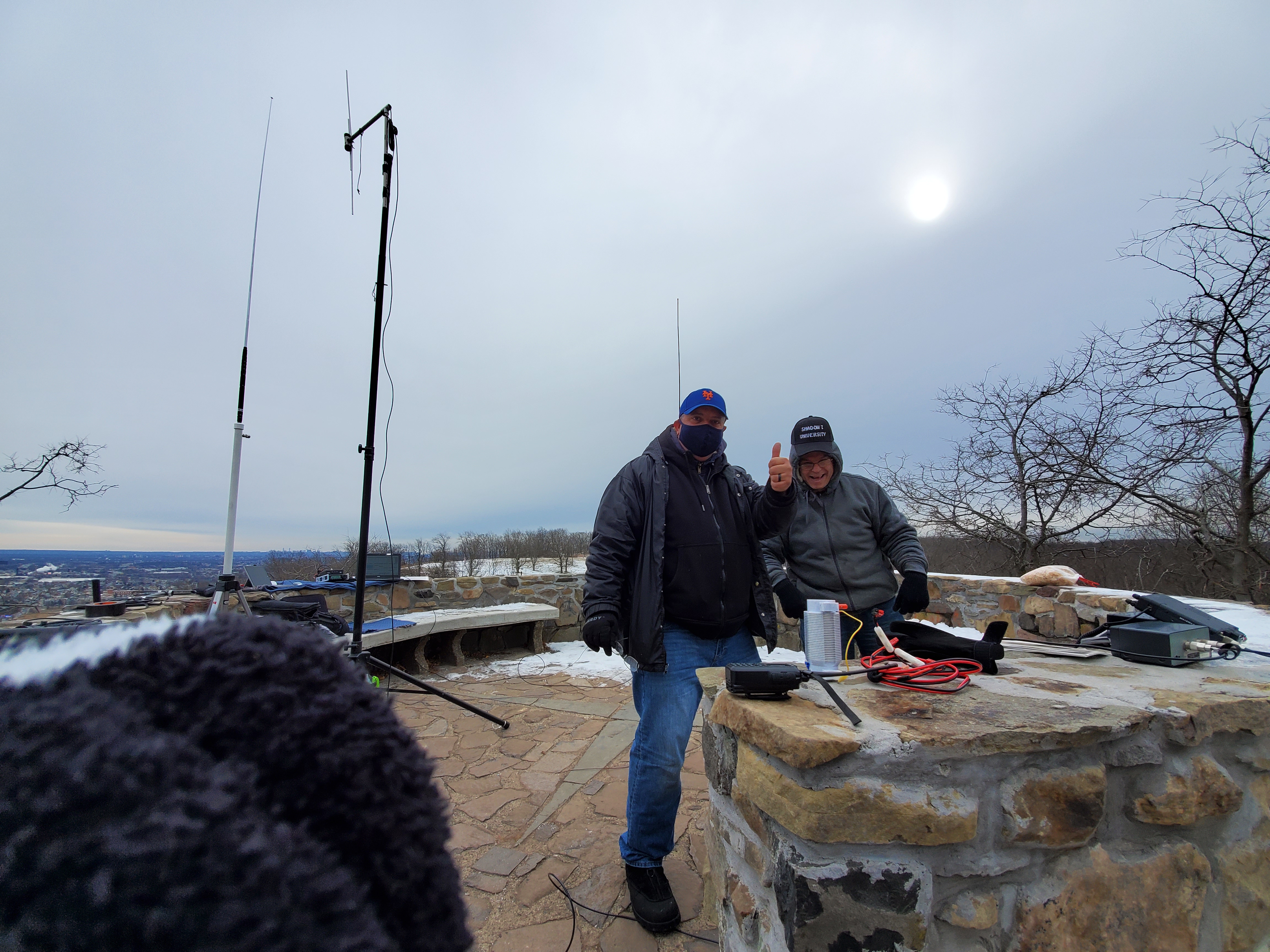
     Had a Great time at our Park’s on the Air Activation of Park K-1636 Wawayanda State Park. Thanks to Matt Kaufman, K2ATV, Metin Serdar Serbetci, KD2UAF, Rich Kopelaw, KD2WJR, and Stan Rogacki, K2EXX. And we even had our newest Member Max, K9D0G show up!! LOL!! Forecast was supposed to be rain all day, but it turned out to be a Totally AWESOME DAY! Looking forward to seeing more Members on the next Activation. Lou, K2TAC.

    The Parks on the Air platform gives Licensed Radio Operators the opportunity to take our equipment out to a remote location outside our homes.  Whether park, or parking lot, we get to test the efficiency of our gear in various configurations and locations.  We make contacts with other Operators State Side and around the World.

    Say Hi to our Newest Club Member Nominee, Max, K9D0G

  • 2021 ARRL Field Day Event

    2021 ARRL Field Day Event

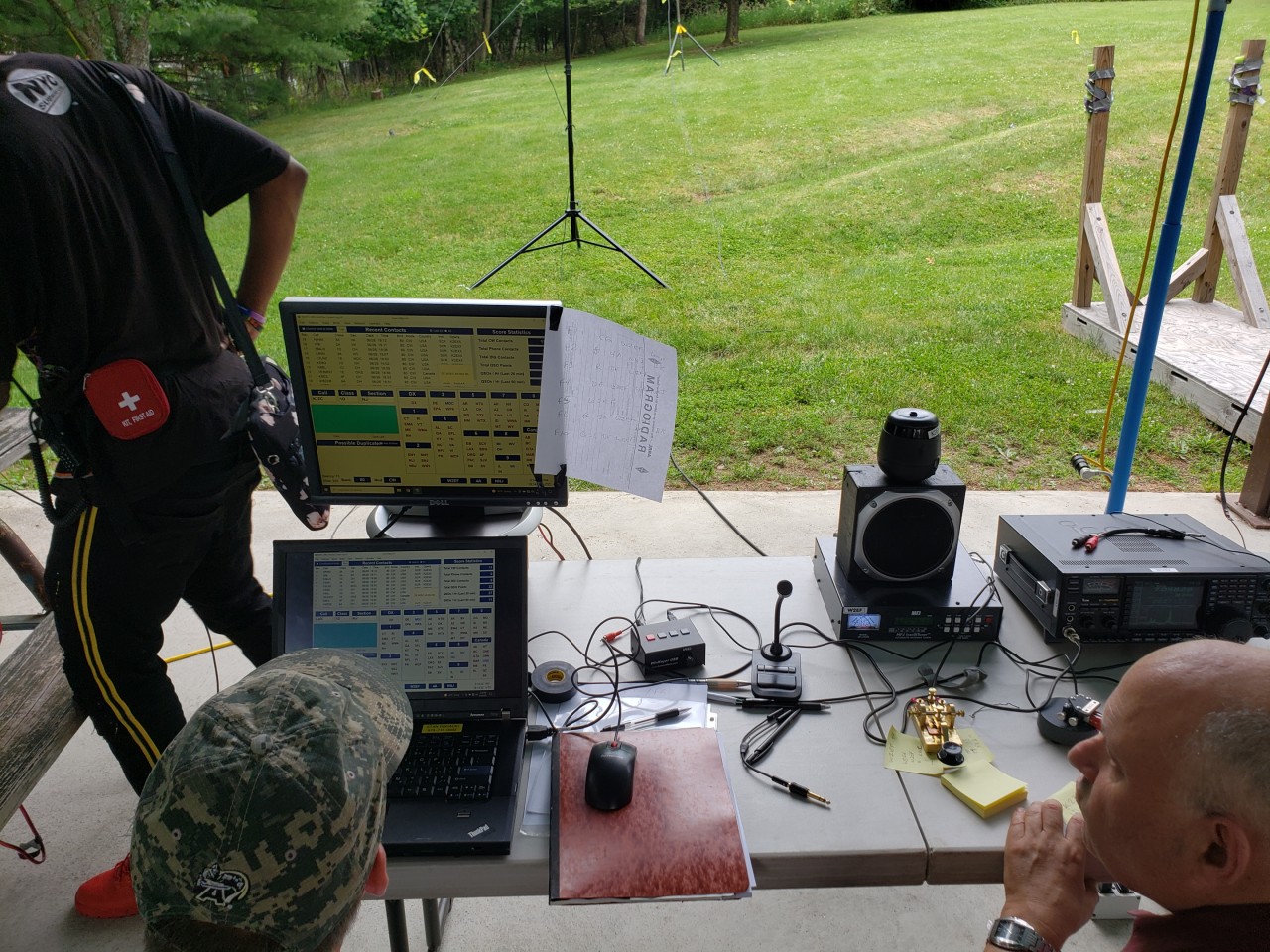
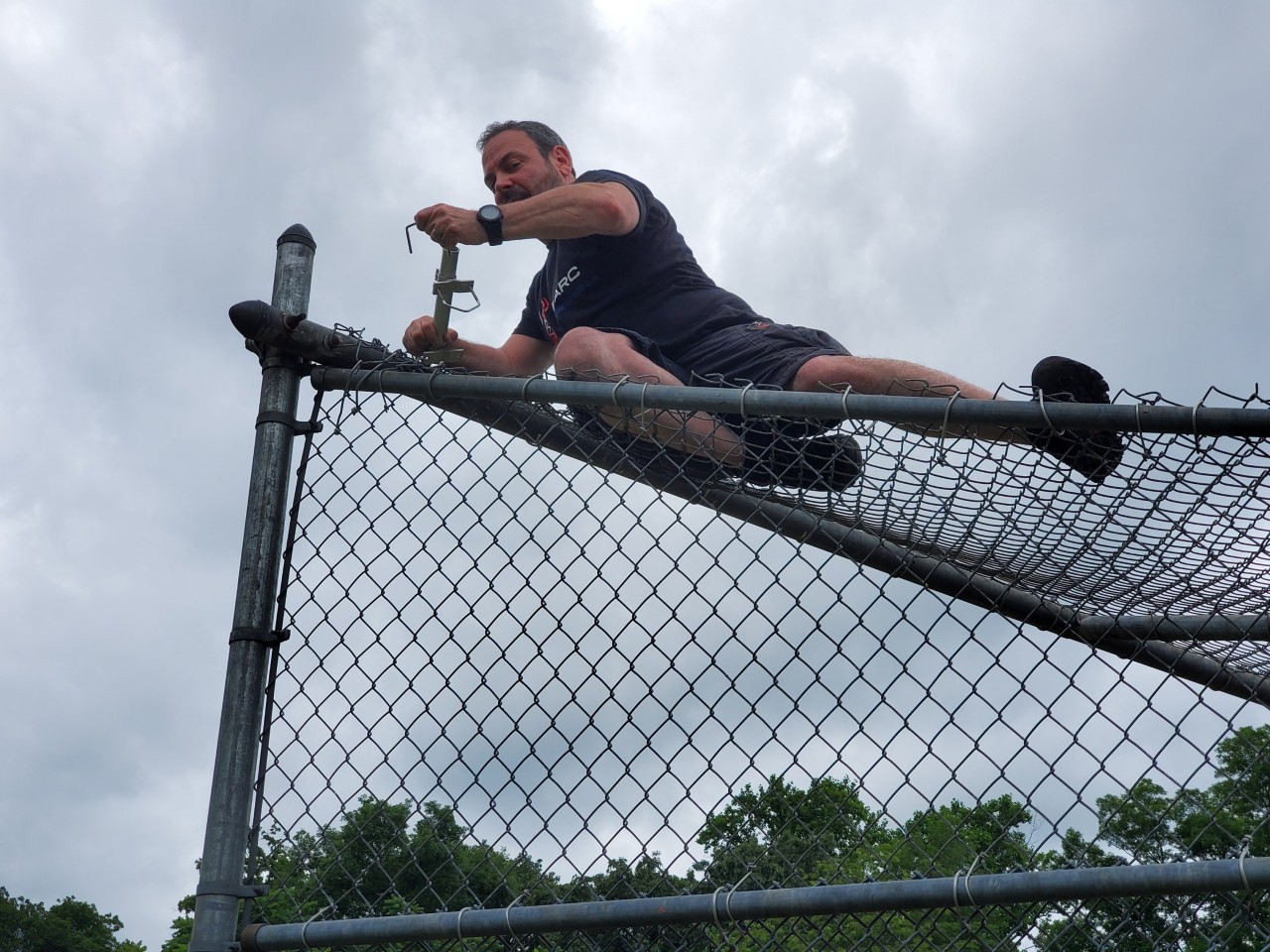
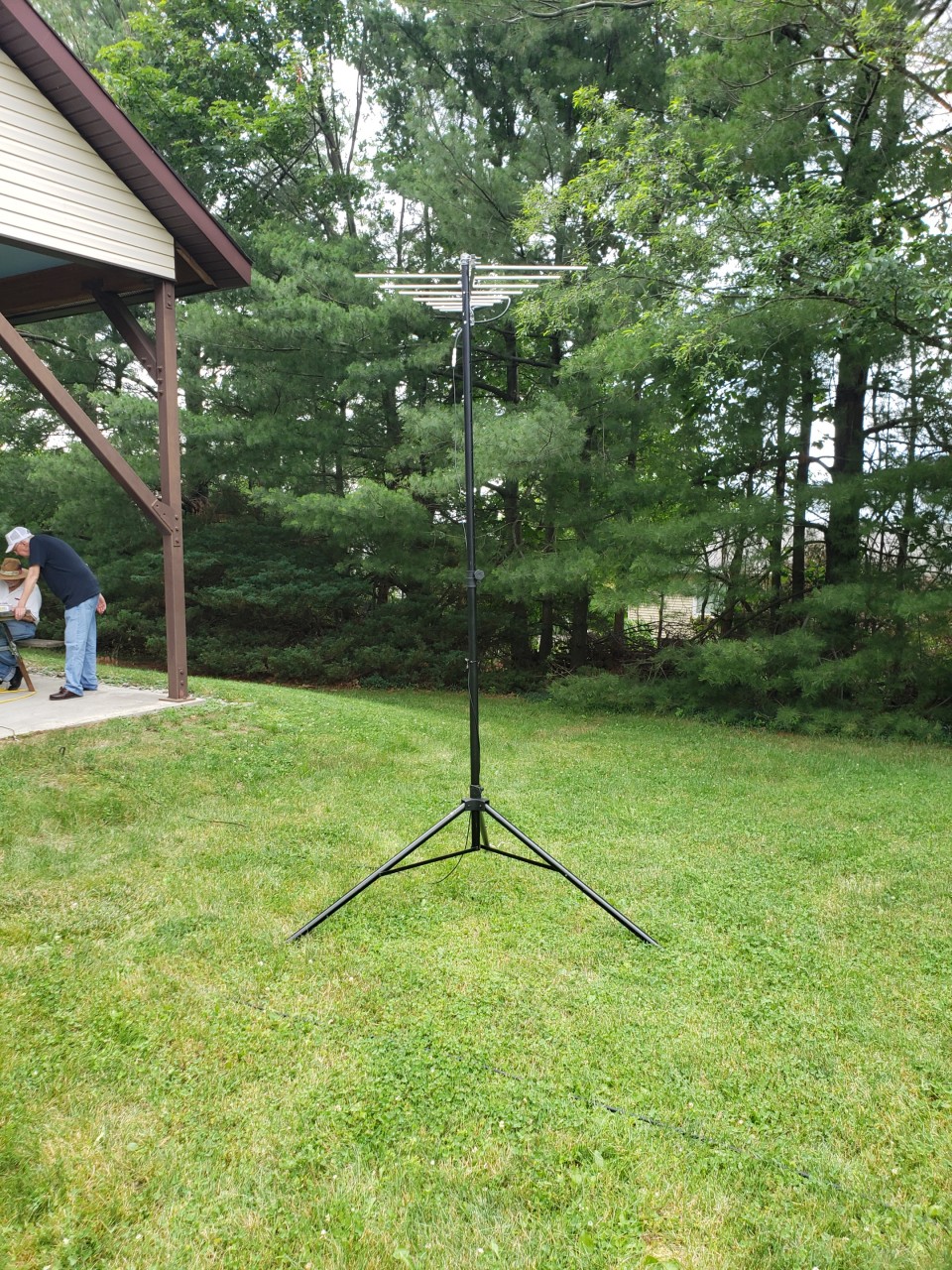
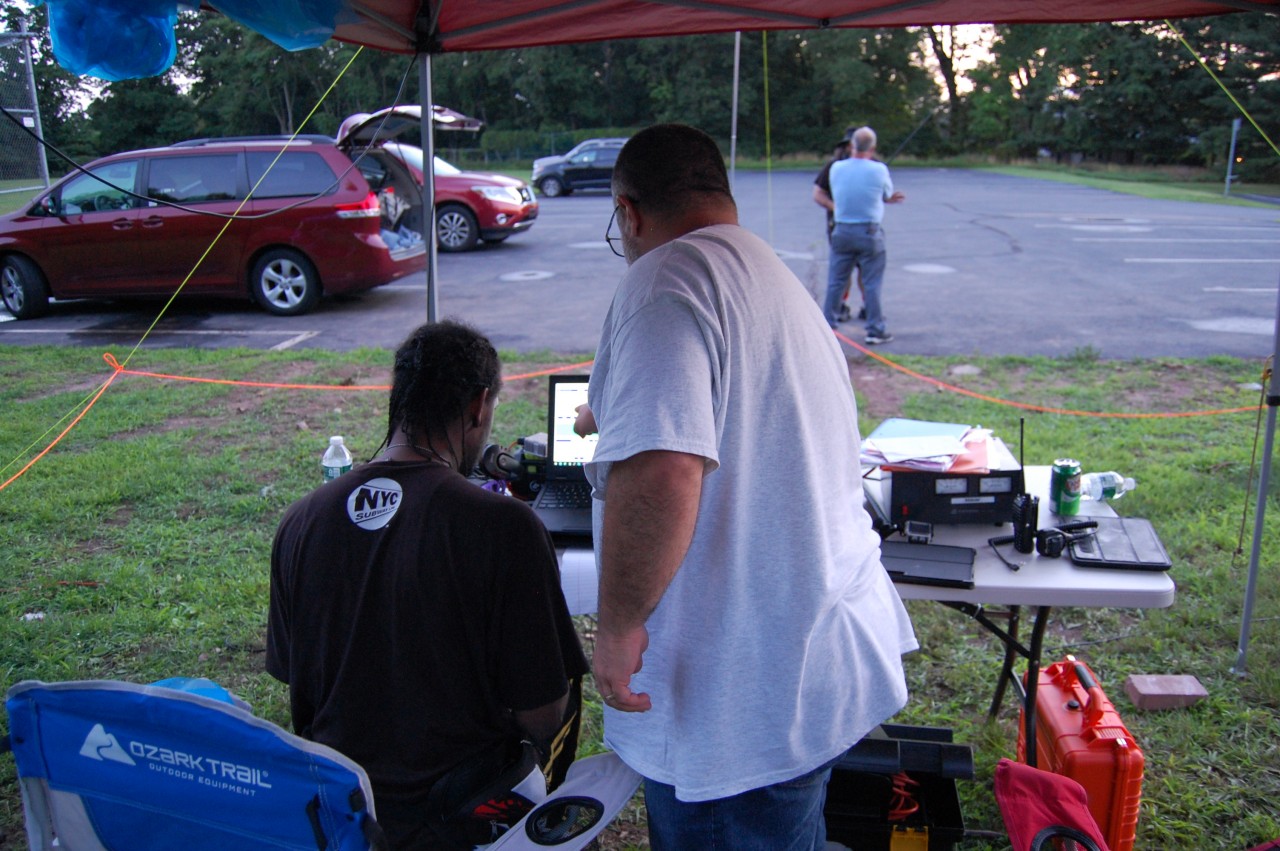
     West Essex Amateur Radio Club’s 2021 ARRL Field Day Event

    Thanks to all that showed up to make this event a memorable one. Special Thanks to all my Friends from the Montclair University Repeater Group! You guys are awesome. More pictures and videos to come.  

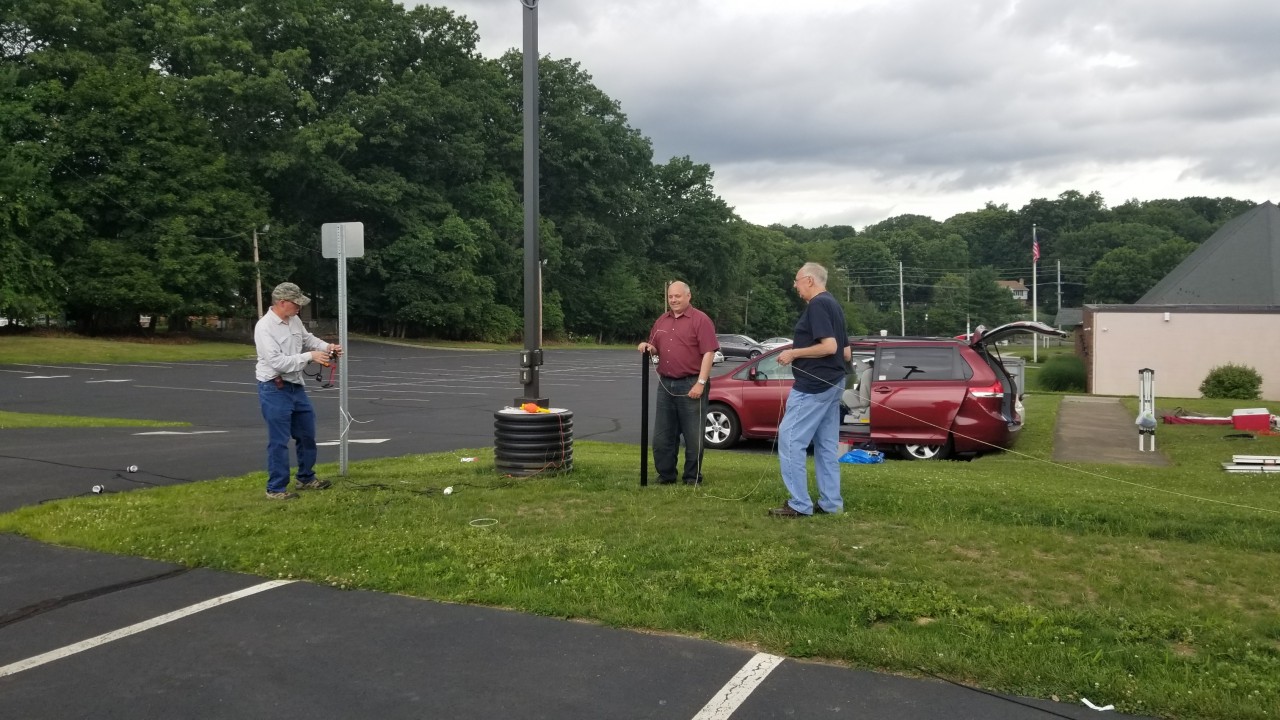
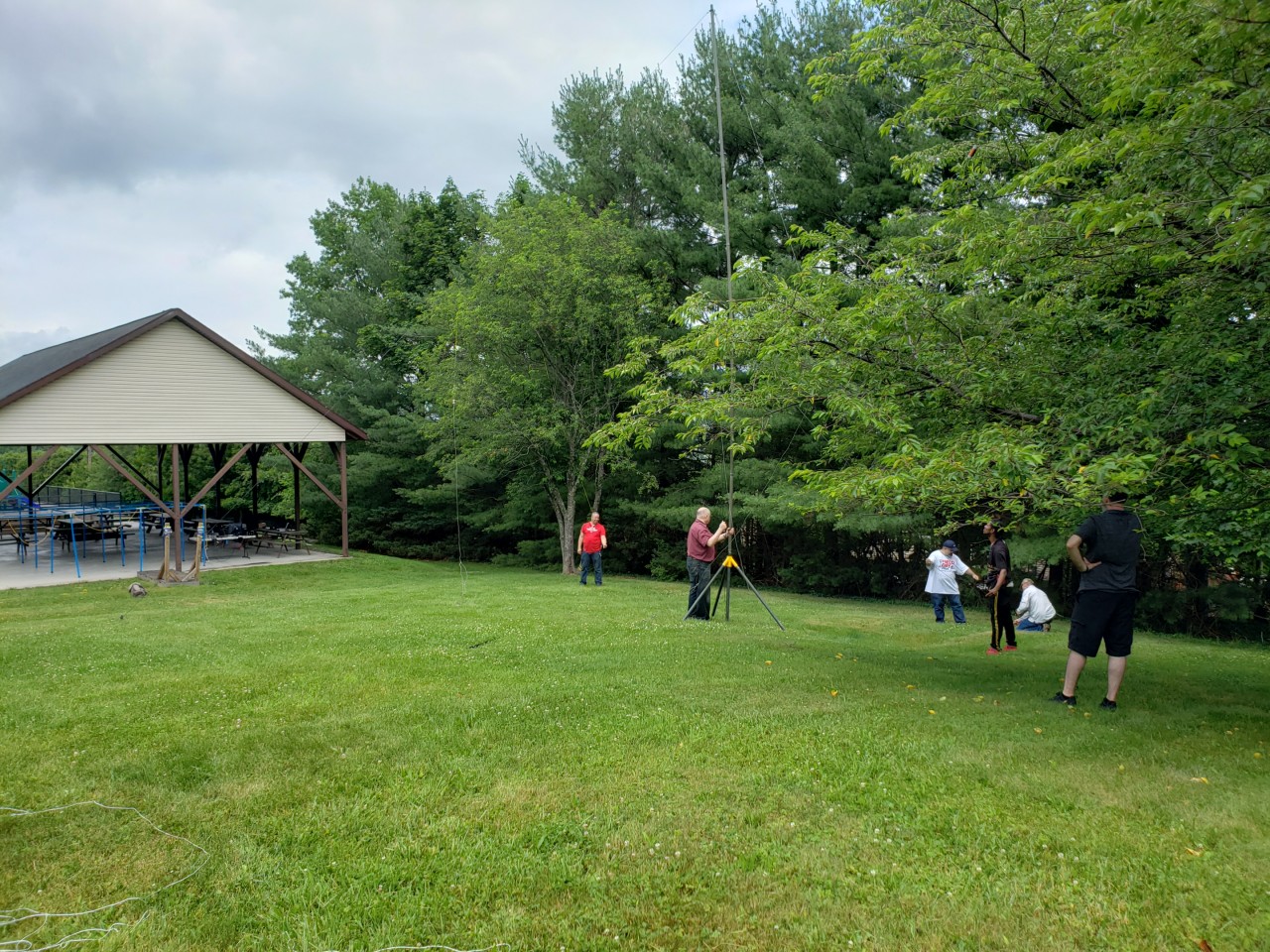
    We had a great turnout of Club Members for this years Field Day.  We were able to utilize the grounds at the Rockpoint Community Church, in North Haledon, NJ.  Several of the Pastors from the Church, as well as some of the parishioners came by to pay us a visit during our 24 hour activation.  We had several Law Enforcement Officers also stop by to see if we needed anything and said to call if we needed them for anything.  We also had North Haledon Mayor Randy George stop by and pay us a visit.  He was thoroughly impressed with our setup and the service that we provide.  He also expressed interest in using us for any future projects with the town.  

     Many came early to setup, and get everything ready.  Some were local hams that heard we were having a Field Day in their neighborhood.  Others were part of the local repeater group.  The Montclair University Repeater 443.450  We had 3 operators stay the full 24 hours.  And others came throughout the day to help.  Even though the weather was rough on Saturday, we made it through.  Lessons learned on what to improve on for next year.  Several of the Club Members operating were Rookies.  And testimonies from them concerning their first Field Day was that this definitely solidified them in the Hobby.
    We Encourage any, and ALL to next years Field Day Event.  You won’t be disappointed.  73’s.

    Lou Mercado, KD2TSC

  • 2021 Field Day

    2021 Field Day

    Come Join Us!!! We at the West Essex Amateur Radio Club, will be having a Field Day Event at Rockpoint Community Church, 400 North Haledon Avenue, North Haledon, NJ 07508 starting at 2PM Saturday, June 26th, and continue through the night for a full 24 hours, until 2PM Sunday, June 27th. All are invited!! Come see us operate, learn more about how you can get involved, and even make contact with other operators both here in the US, Canada, and even the World!! We look forward to seeing you there! 

    Directions

    1. Take Garden State Parkway North to Exit 160.
    2. Follow signs to Rt 4 West and Rt 208 North.
    3. Get on Rt 208 North.
    4. Exit Rt 208 North at Goffle Road, North Haledon/Hawthorne/Paterson Exit.
    5. Go 3 lights on Goffle Road and make a Right Turn onto Rea Ave.
    6. Go uphill for about 1/2 to 3/4 mile.
    7. Rockpoint Community Church will be on your Left side.
    8. Go all the way up to the upper parking lot.

  • New Operator Considers HF Antenna Options

    New Operator Considers HF Antenna Options

    For someone that has no technical background in engineering or electronics, getting started in amateur radio during a global pandemic presents some unique challenges over and above that which would normally be faced by such an individual. This blog post will chronicle one man’s journey through the uncharted waters (for him) of getting started in amateur radio.

    As background, I spent my entire professional career in corporate finance. As such, I am far more comfortable discussing the capital asset pricing model than the intricacies of HF propagation. To me, the closest I ever came to anything resembling a Smith Chart was dabbling with my children’s spirograph when they were toddlers. But the idea of communicating with others in distant locations via transmission of radio frequencies (i.e., ragchewing) always intrigued me, and so upon retirement, I decided to finally explore the hobby.

    The first Covid-related challenge I faced was finding a location to take the licensing exam, as testing was suspended at most of the amateur clubs near me due to societal lockdowns. This was actually how I found WEARC, as they managed to overcome this particular hurdle by administering testing outside.

    The next hurdle I faced after getting licensed was a similar suspension of formal Elmering programs in clubs near my home for the same reason that testing was suspended. (To be fair, I have found that Hams are generally a very friendly lot that seem to freely offer their counsel and guidance and genuinely want to help newbies get on the air, but through no one’s fault, there’s a limit to how effective that counsel can be if it is limited to exchange of emails to answer specific questions. Perhaps the best way to describe these limitations is to borrow a quote from former Secretary of Defense Donald Rumsfeld when he famously stated:

    <<“there are known knowns; there are things we know we know. We also know there are known unknowns; that is to say we know there are some things we do not know. But there are also unknown unknowns—the ones we don’t know we don’t know.”>>

    It is the last category, the so-called “unknown unknowns“, that pose the greatest challenge.

    With a newly minted license that affords HF privileges in hand, one thinks all that’s necessary is to buy a rig and an antenna, and jump on the air to start making distant contacts. Things like power supply (i.e., linear vs switching), antenna tuners (manual vs automatic), SWR/Watt meters, etc. are not top of mind at the outset. To some extent, finances can be rate-limiting insofar as the HF rig and antenna system one chooses, but setting aside finances for the moment assuming no budgetary constraints, there nevertheless remains a myriad of issues and decisions to be made, particularly with respect to antenna systems and the limitations therein for a given property. And this is to say nothing of the aesthetics involved with converting a serene bucolic garden setting into an HF antenna farm.

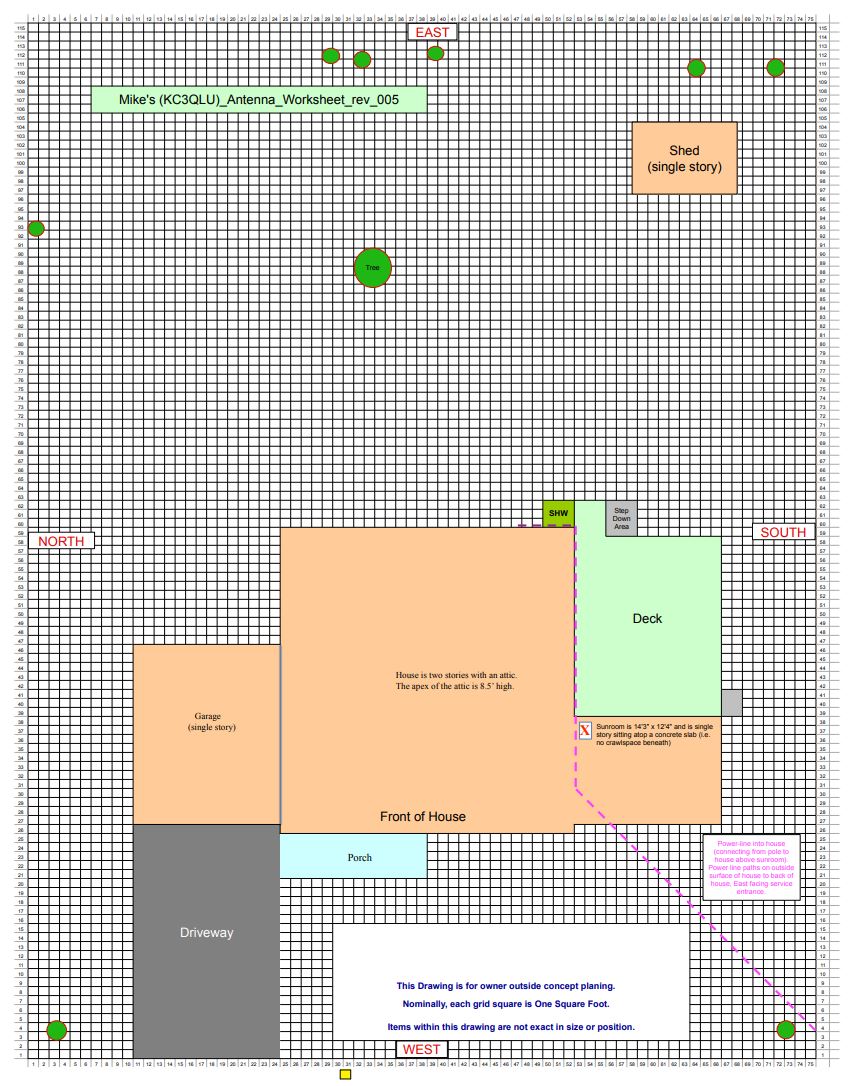
    When starting to evaluate antenna options, a newbie naively thinks this is merely a choice of a wire, a vertical/radial, or a beam antenna. But in addition to logistical limitations that may limit one’s options with respect to an HF antenna, there are many other corollary implications associated with each that soon come into play and need to be thought through. For example, one needs to think about and decide:

    • where exactly in your home will you set up your radio shack?
    • how will your transmission line(s) exit?
    • what shall be the path the transmission line(s) will take to the exit point?
    • if a wire antenna, what type?
    • what bands do you want to work?
    • if contemplating a wire antenna, do you want one of its ends to be at or near the house for support and connection to the transmission line and lightning protection,

    or

    • do you want the antenna to be located some distance from the house in the yard, and if so, what path will the transmission line travel to reach it (e.g., right out of the shack by way of a crawl space, by way of an attic)?
    • what type of lightning protection, and how will it be installed, recognizing there may be no ‘perfect’ lightning protection; just mitigation?
    • if a vertical antenna, where can it be located on the property to allow for 360 degree radials, or if it will be along a property line, what will be the RF implications of radials with a 180 degree arc?

    These are just a few of the various considerations that come to mind in deciding on the optimal antenna system and its installation. Indeed, many items listed above are interdependent of one another, and while every consideration may not be of critical importance, the new Ham oftentimes ‘doesn’t know what he doesn’t know’, and he therefor approaches each and every issue similarly. This is just one example of how an Elmer could be invaluable.

    And so the journey continues. Perhaps the most sage advice offered by one experienced Ham was to adopt a ‘satisficing’ antenna solution to get on the air on a single band rather than seeking the perfect multi-band solution. But a ‘perfect’ solution would enable the Ham the flexibility to work multiple bands to exploit current atmospheric conditions, and psychologically, it would fulfill an innate desire to work the full range of bands and frequencies to which one’s FCC license affords privileges. At least this is the rationale I have used thus far to continue my quest for a truly optimal antenna system.

    In conclusion, while it is a veritable certainty that I will never advance the art and science of amateur radio, and it is highly unlikely that I will ever compete, much less win, any amateur radio contests, I still hope to experience the enjoyment of ragchewing on HF bands in the near future.

  • Neither Cold, Nor Snow, Nor Howling Winds!

    Neither Cold, Nor Snow, Nor Howling Winds!

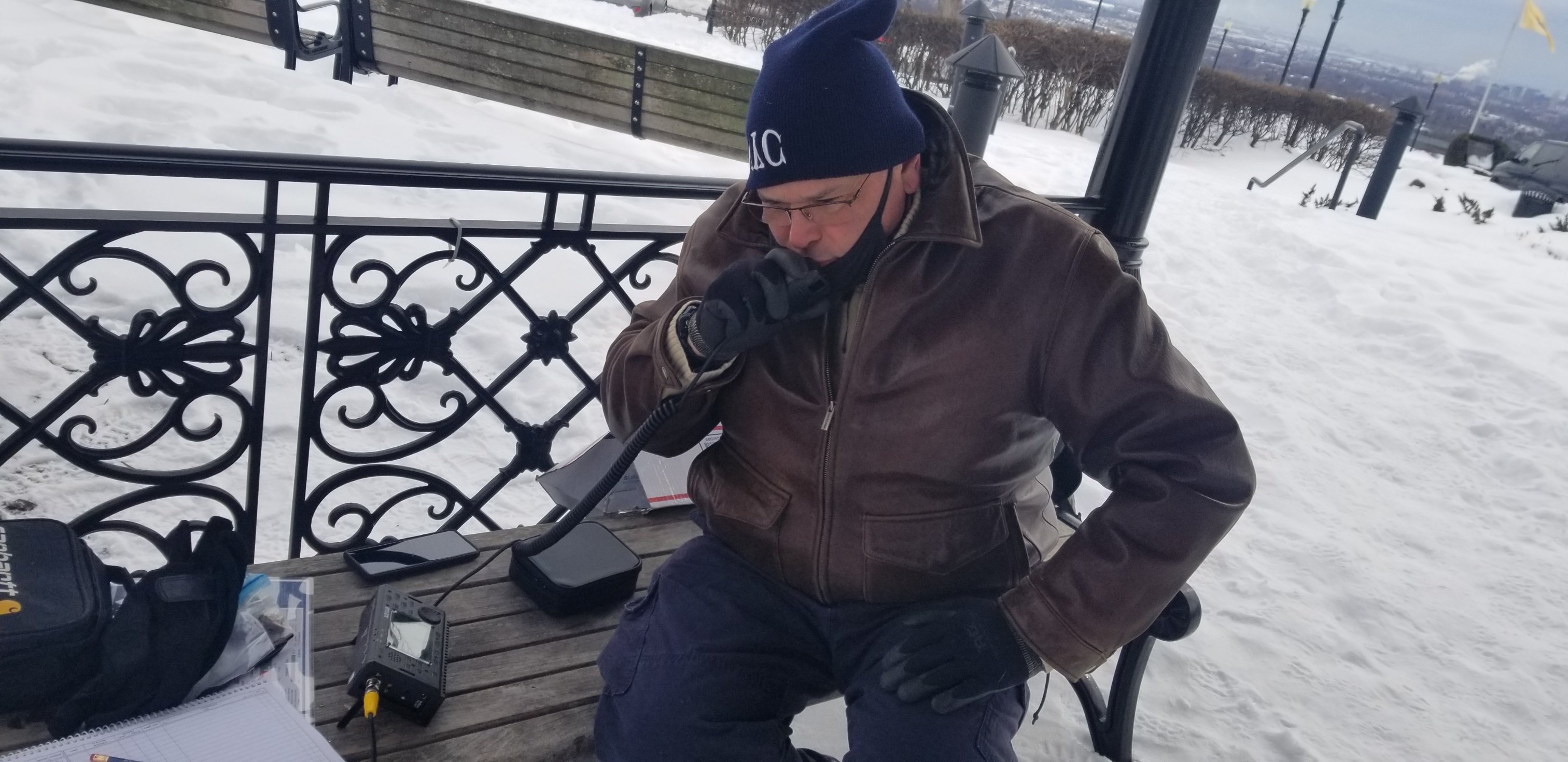
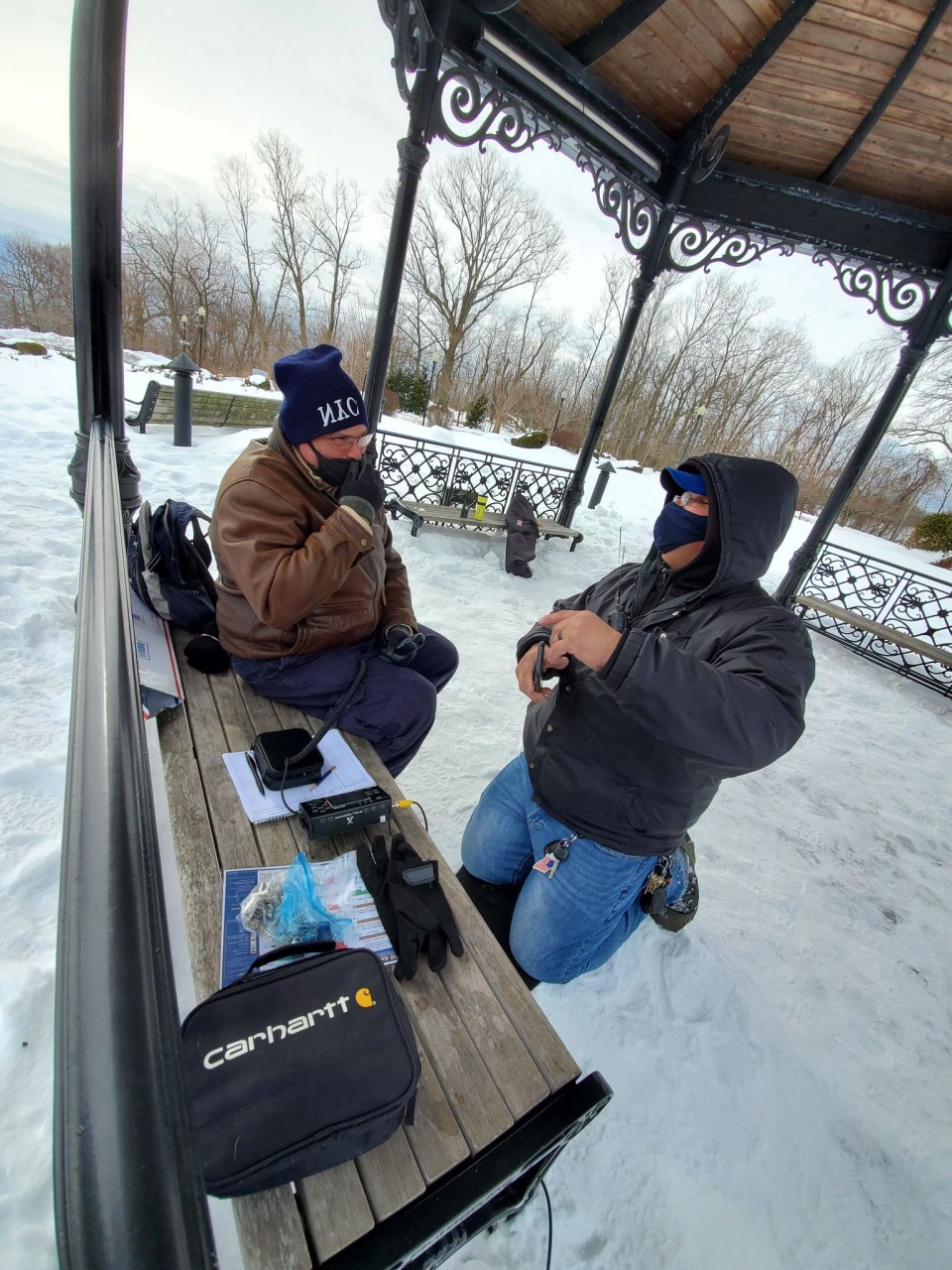
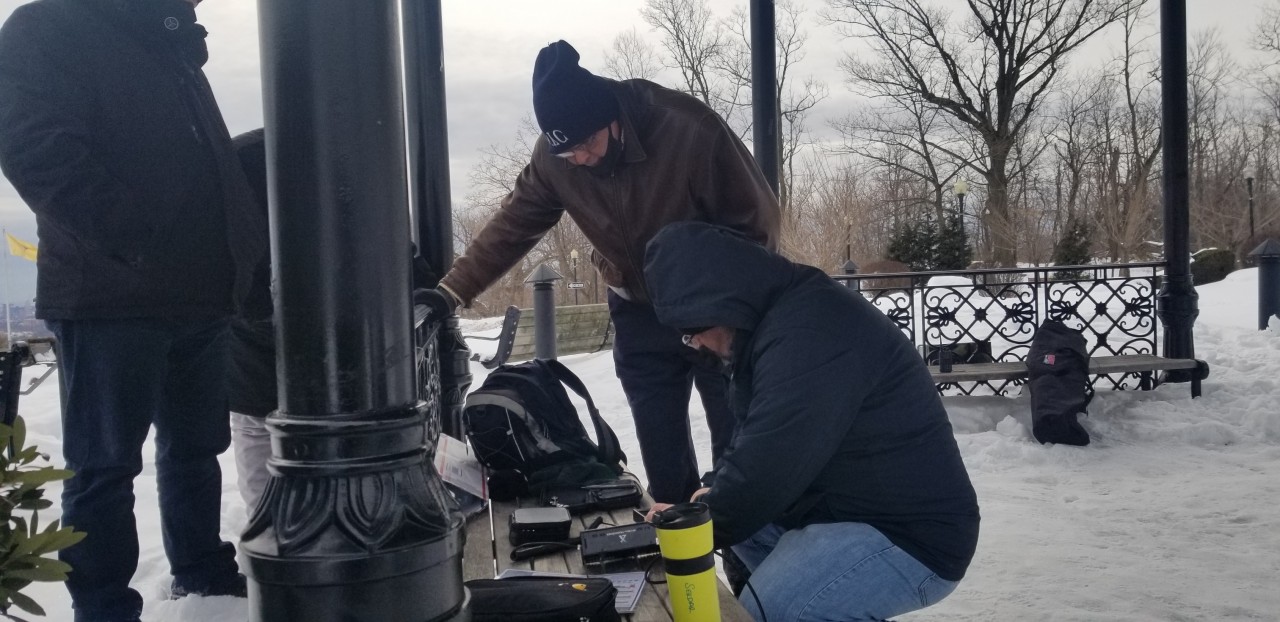
    That’s right! Neither Cold, Nor Snow, Nor Howling Winds, will keep these Hams from going out and testing their gear and making contact. The same held true for a couple of us WEARC Club Members. Lou Mercado – KD2TSC, Wayne Oshin – KD2UXU, and Metin Serdar Serbetci – KD2UAF.

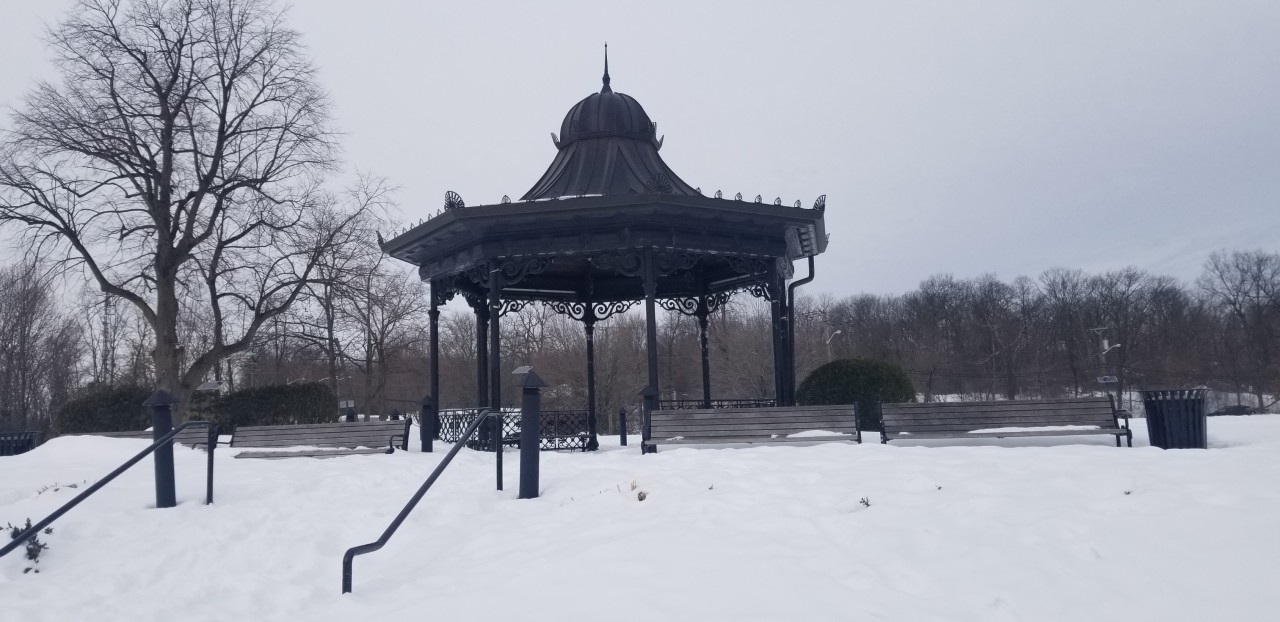
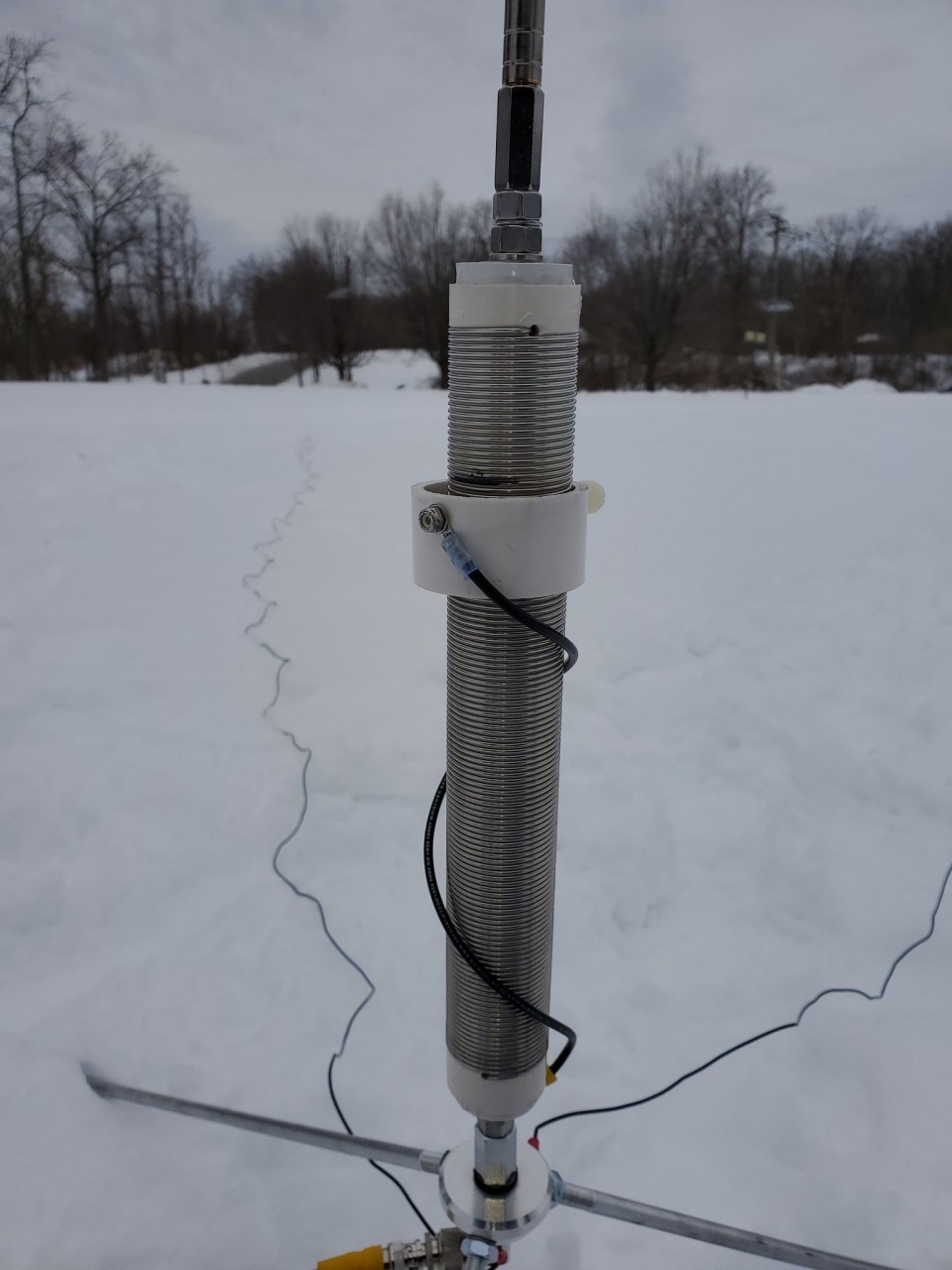
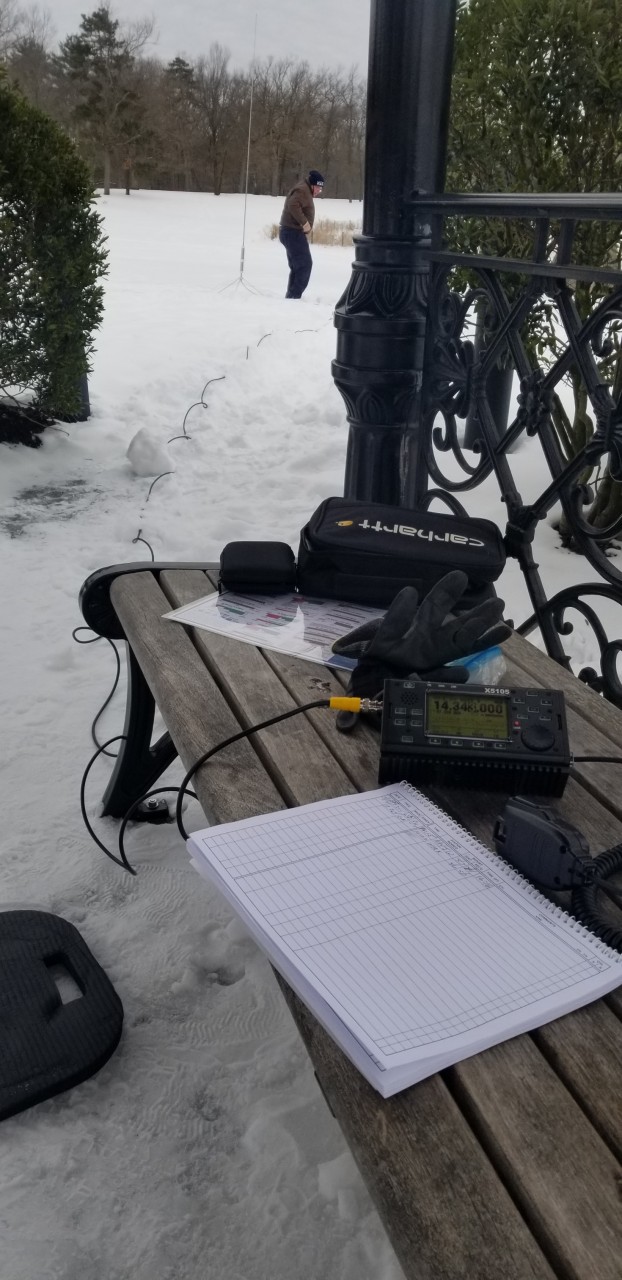
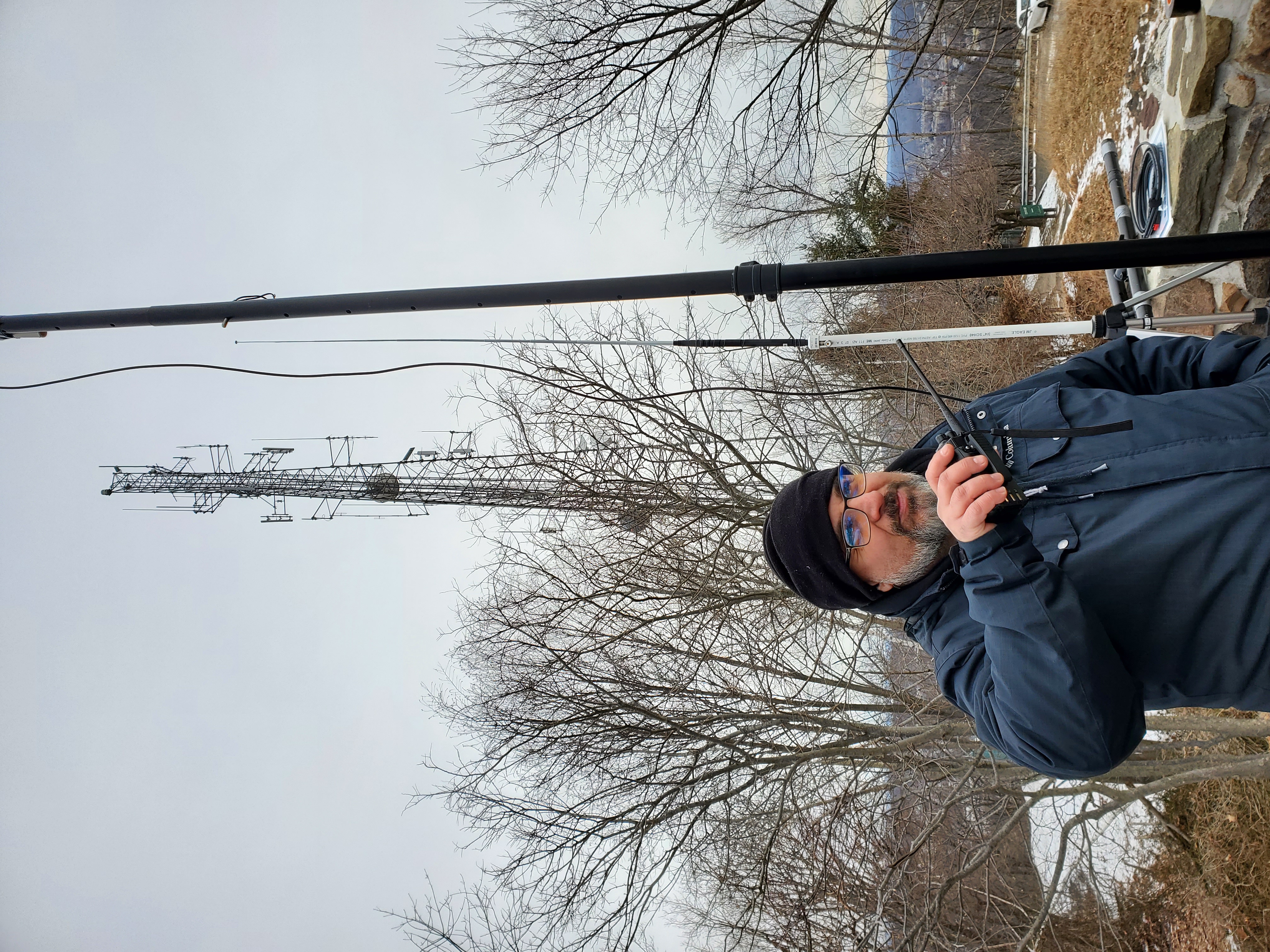
    This past Saturday we packed our gear and went to Eagle Rock Reservation, in West Orange, NJ to test out our gear. KD2UXU has just upgraded to General Class, and wanted to test out his newly arrived Xiegu 5105, and his new Wolf River Coil antenna setup. So off we went into the Wild! Man was it cold! But if you don’t train in bad conditions, how well do you think you’ll do under real pressure.

    We were able to get his antenna tuned to 40 and 20 meters and get him to help in a Parks on the Air activation. He made his first ever HF Contact to South Carolina running QRP at 5 watts! Great Work Wayne! He say’s he hopes to do more POTA activations in the very near future. Looks like we have a POTA Team in the making!!!

    Wayne says, ” I just want to let everybody know that I had a great time. Lou and Metin both helped me get up and running, as this was my first outing on HF as a new general class. I can’t say enough of how great it was and exciting to get my first two QSOs. Being a new member of WEARC I feel fortunate to have found a great club with great members who are very supportive, and willing to take time to help the new guys.”

    While we ARE STILL dealing with a Global Pandemic, we continue to practice Safe Operating Skills. Using masks, reasonable distancing, and awareness of others. We can continue to learn and teach others during this time. As long as we remain Responsible in our actions, I firmly believe we CAN make it through the Storm.
    In the meantime, Get Out There, and get in some air time!!

    73’s.Lou, KD2TSC.

  • 2021 Winter Field Day – The Rookie’s First

    2021 Winter Field Day – The Rookie’s First

    Winter Field Day 2021 was a new experience for me in my Ham Operators Journey.  This was my first Contest that I ever participated in. Had no idea what to expect.  Except, that I was going to have a Blast!  While no Records were broken, Lessons were Learned.  New Friendships were started.  Old Friendships were Fortified.  And the Hobby was well promoted to those that dropped by to see what it was that we were up to.

    Only had four hours to setup and operate in.  Unfortunately, I had to work the Saturday.  And a Long Day it was……  So it was All-In Sunday!!!  While I was there to primarily work the Contest, I also had to be the Host to the event at the area I chose.  That meant coordinating with those that showed to help.  Greet the guests.  And several other duties.  None the less I totally enjoyed every moment.

    We had a few Elmers show up, so definitely Learned a lot.  From proper placements of antenna’s.  To good etiquette when working hf and ht’s.  Encouraged a few of the guests to go and get licensed. While others watched from far.
    Had a Fellow Club Member, Metin Serbetci, KD2UAF, join the fun.  Talk about a Stand Up Guy!  Gave 100% of himself to help out with the setup, and breakdown.  He’s currently studying for his General License.  But I’m sure he’s going way over to Amateur Extra Class with absolutely no problem.

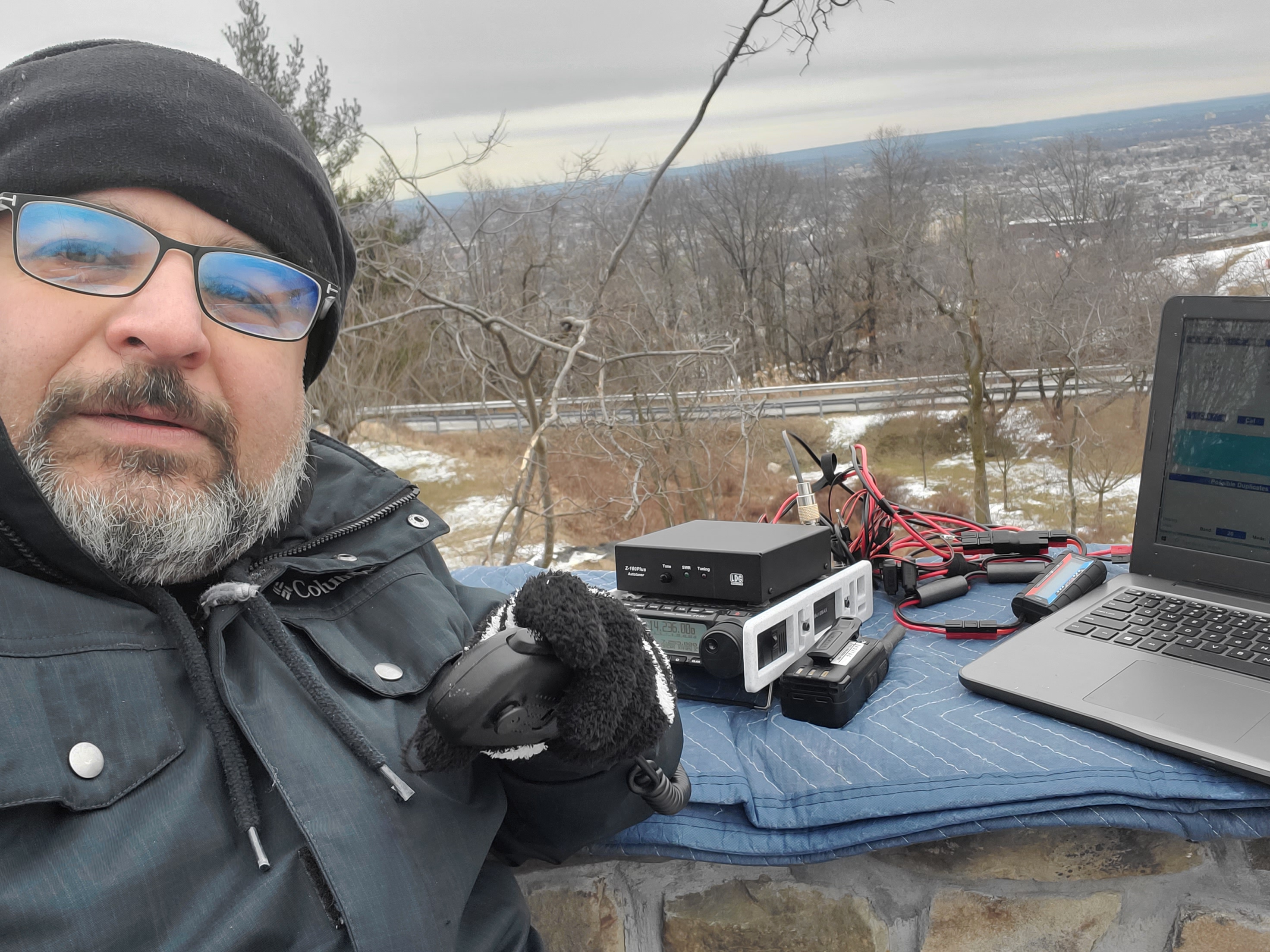
    Used my Yaesu FT-891, with an LDG Z-100 Plus Auto Antenna Tuner, and my BuddiStick Antenna.  Worked 20 meters on 100 watts.  Powered by my Bioenno Lithium Iron Phosphate (LiFePO4) 12V 12Ah battery.  And used the N3FJP logging software for my logs.  At the end of the Day I only made 18 contacts on 20 meters.  But for my first time Contesting, I had a BLAST!!

    I encourage everyone that would like to learn more about Amateur Radio to contact any club and get all your questions answered.  You may also contact our club and I’m sure one of us would be more than happy to lead you in the right direction.

    73’s,

    Lou Mercado

    KD2TSC

    Metin Serbetci, KD2UAF on the Yaesu FT-891.

    Boy, if we could only tap into that antenna!!

  • Starting a New Life for the Clubs Donated IC-701

    Starting a New Life for the Clubs Donated IC-701

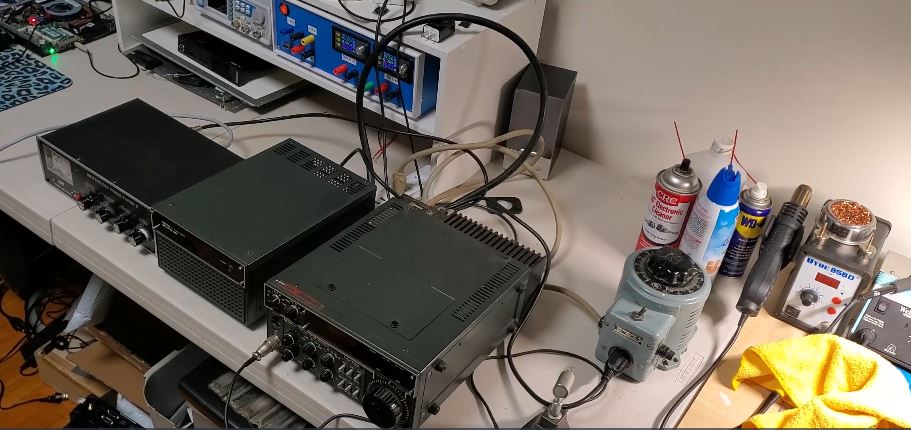
    Long before I joined the club a couple of years ago, a club member, now a silent key, donated his IC-701. He was Harold K2IBM an active member who recently went silent key. Since we have been getting some new club members there is a need for a “loner HF station” so a new member who has not yet invested in a rig can get on the air. In the past these members would have used the Club Station, but we are still in semi-lock-down because of COVID-19. Don K2DEG and a few other club members managed to get into the Club Room and retrieve some items, the IC-701 and an Antenna Tuner were part of that raid. 

    These parts were passed to me for a look over and check if everything was working. This Blog is my first switch on and test. You get to see me thrash about powering it up safely, learning how to operate it on receive and transmit. 

    IC-701

    This Icon radio was manufactured in japan somewhere between 1978-1979. Apparently (Google search) the IC-701 was built when Icom was just entering the US amateur market and this was their Flagship HF radio.

    Part One “The Switch On”

    Part 2 – Power Output Test

    This next video shows me testing the power output using a set of attenuators and a true RMS power meter. The test shows that on 14MHz. the unit produced just under 100Watts of power. The actual results had a attenuation of -55dB between the TX output and RMS power meter. The meter showed a -5.2dBm level so after the maths we have a recorded output of 49.8dBm. Since 50dBm is 100Watts, we did pass test by producing 100W of power.

    Part 3 Transmitter Harmonic Test

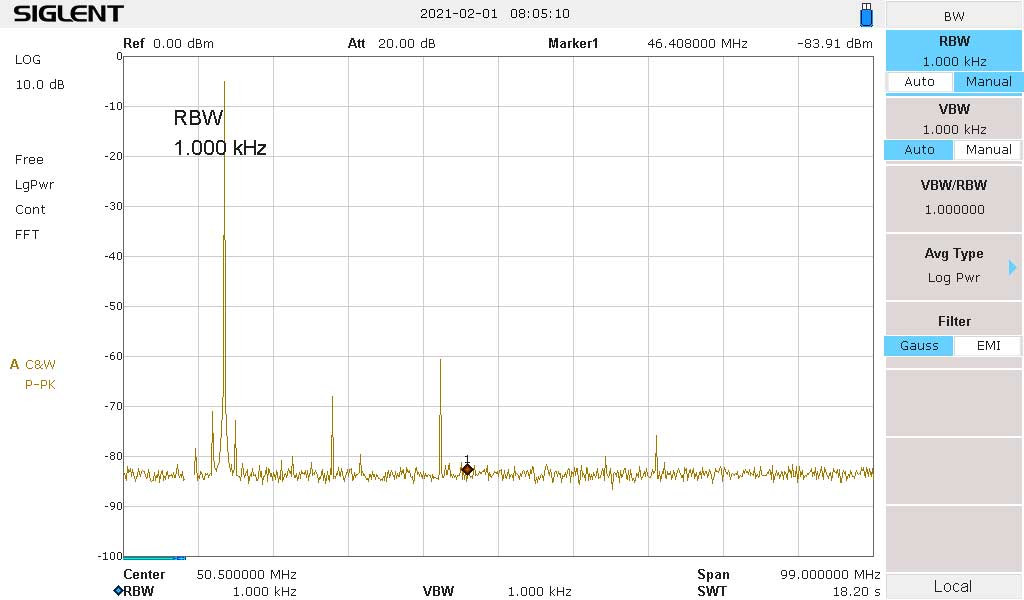
    We now use the Spectrum Analyzer to double check our power measurement and also measure the 2nd and 3rd harmonics. This test validated the previous power measurement and that my cheap RF power meter worked accurately. It also showed the IC-701 had 2nd harmonics at -62dB and 3rd at -56dB. The spec sheet states a Spurious Emissions of less that -60dB so, by my measurement a just pass result although the third is a little high. 

    This was the plot of the Harmonic measurement.

    The video of me taking the measurement can be seen below, but the plot above was not taken at that time.

    Part 4 RX Issues

    I spent some time with the receiver and concluded it was sometimes sensitive but most of the time just a deaf noisy receiver. I tested it using a signal generator providing -60dBm which gave a consistent S5 on my two radios. However I screwed up the recording of that video. We pick up the story again with the radio under test and working as well as I have been able to make it…

    See the RX testing video below.

    So, there you have it. This is the end of this first Blog. You have seen that the Club loaner HF station is a bit deaf right now and what I think is wrong with it. The next blog will be me taking it apart, repairing the switch and, with luck, making it work again. Until then 73’s from me.

  • How to Set-Up and Test Your Station

    How to Set-Up and Test Your Station

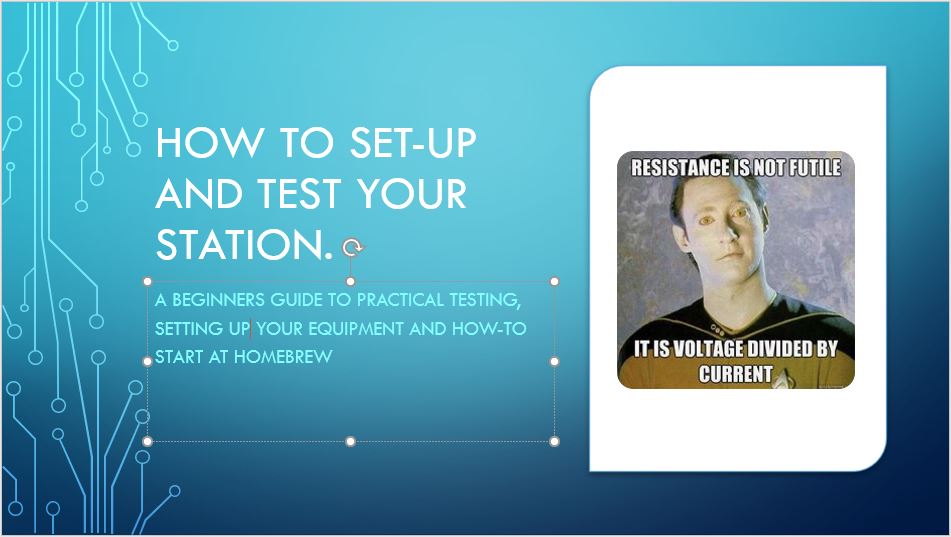
    A beginners guide to practical testing, setting up your equipment and how to start at Homebrew.

    This is a blog of the first run of this presentation captured from a Skype Club Meeting held Wednesday January 27th, 2021. The recorded video and a downloadable set of slides are below. 

    Part One – How to set-up and test your station • We review typical buy / make decisions for radio equipment • Go over the basic test equipment needed to support and build radios • Examples of using basic tests to ensure your station is operating correctly. • 

    Part Two – How-to Start at Homebrew • Discuss and recommend basic tools for construction • Introduce some favorites in available equipment – the cools stuff. • Look at available radio kits and design suitable for a new operator 

    Watch the Presentation – click video below

  • Ideas for Your First HF Station

    Ideas for Your First HF Station

    • New to Ham Radio?
    • Questions about setting a up station?
    • Which radio do I buy?
    • Which antenna should I use?

    WEARC will help you find the answers to these questions and more. This is not a sales pitch. This presentation will highlight the options available for setting up a station in your home or apartment. You can enjoy all of the fun of communicating hundreds, even thousands of miles with no wires. Join us and we will give you ideas to get your station up and running.

    First presented online by Mike Luongo K2NNN at a meeting through Skype on Jan 20th 2020 which was recorded live.

      Watch the Presentation – click video below

  • Sharing my antenna tuner

    Sharing my antenna tuner

    After a club.meeting some members asked for a demonstration of using an antenna tuner. Although there are a lot of YouTube videos and articles online I did not see an example like the one I was given as a young operator.

    Loading an incandescent light bulb

    Using a light bulb as a dummy load is a good way of seeing how tuning affects power. Fun as well. But note the bulb will still transmit so use your call sign and watch what you say.

    Tuning an Antenna

    Showing me tune the antenna tuner to get a good match, eventually. 

    First I tuned the receiver to a noisy signal on the band, then I tried various tuner settings to find one where the noise/signal from the radio could be peaked, this became my starting point for tuning with a real transmission.